Critically ill patients in intensive care units (ICUs)
Healthcare professionals — physicians and nurses
Hospitals and medical institutions
HiThings (Healthcare Internet of Things) is a unified medical IoT platform built on Wi-Fi and FHIR international standards. It brings together real-time data from a wide range of medical devices to support clinical decision-making in critical care, enabling patient-centric and digital-twin applications across healthcare informatics.
Built on Wi-Fi and FHIR international standards for seamless data exchange and interoperability
Equipped with a no-code/low-code automated FHIR translator
High-performance, cost-effective integration architecture: containerized and open-source design, scalable to 60,000 medical devices, with 2.5 ms latency, over 3 years of data retention, and carrier-grade reliability
Flexible connectivity and expansion on both device and application sides Real-time video streaming powered by go2rtc, with latency reduced to 0.4 seconds (compared to 5–10 seconds in traditional systems)
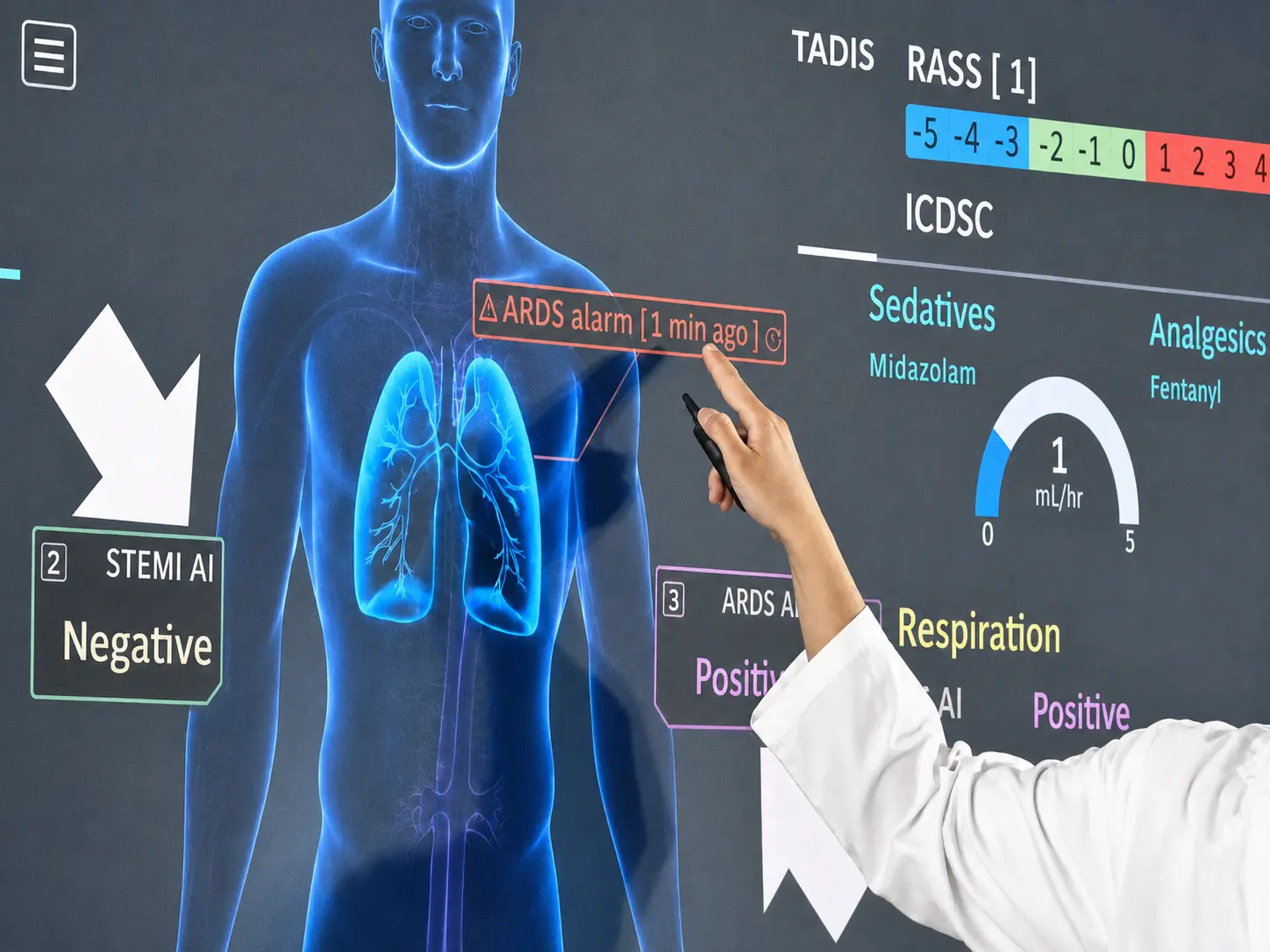
Combines IoT and AI to enable early detection of ARDS and timely clinical intervention
Currently integrated with 6 types of medical devices, comprising 650 units in total
Annual data accumulation (compressed): 334 million records / 5.98 GB from patient monitors, 147 million records / 4.27 GB from ventilators, and 900,000 records / 5.27 GB from hematology analyzers
Platform latency of 2.57 ms; scalable to 50 device types and up to 60,000 devices, with reliability reaching 99.9999%
Integrated with 6 medical AI services — LungGuard AI, Antibiotic AI, Cardio Rescue AI, NeuroCare AI, NutriGuide AI, and the MIRA Smart Medical Record Assistant — accumulating 2,243,179 uses as of May 31, 2025
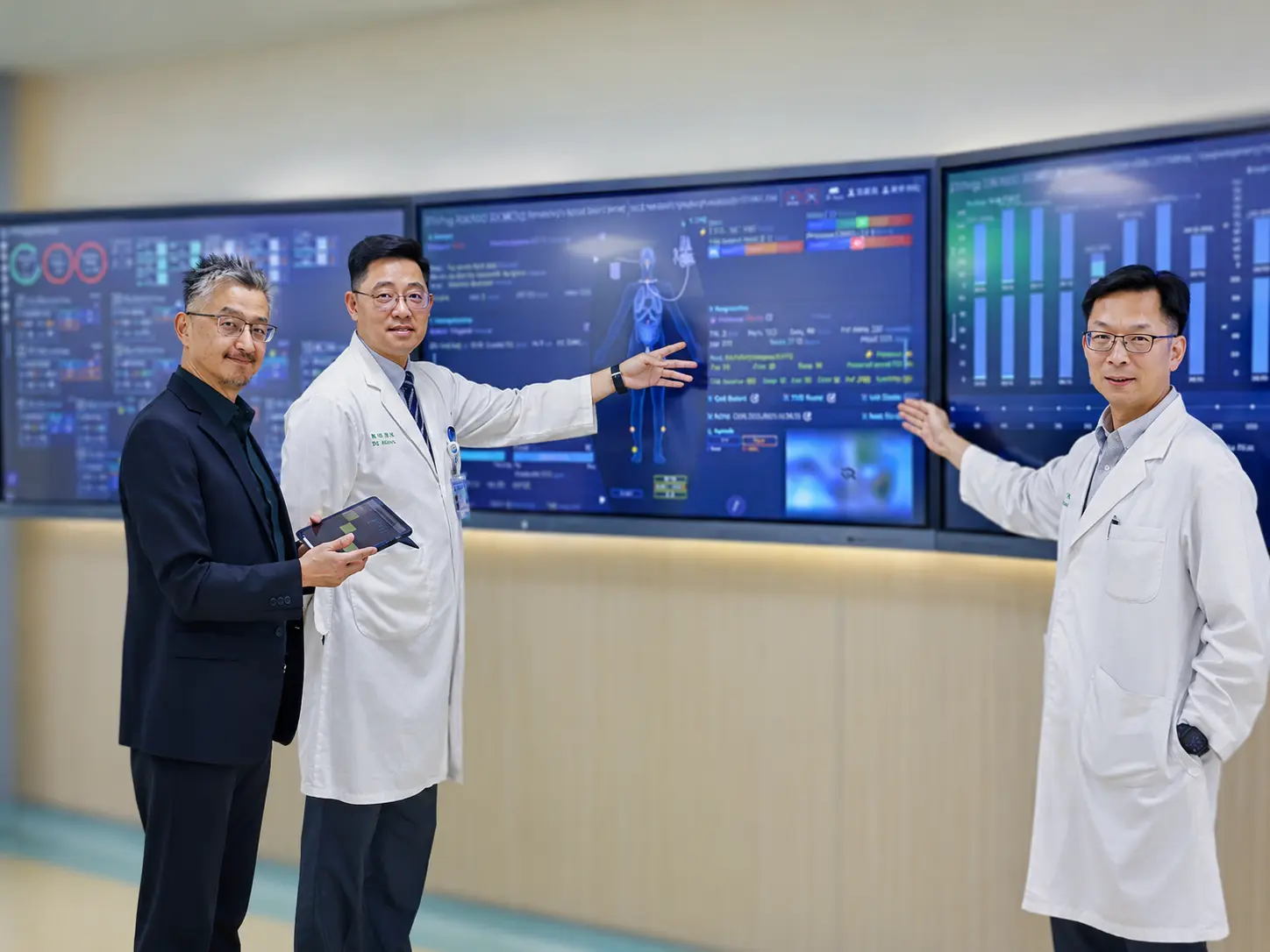
Deployed across 6 ICUs at the hospital, including RICU, CCU, SICU, PICU, NICU, and NSCU
2024 rollout and pilot operation: 5 system hospitals, 17 healthcare institutions, and 2 strategic partner hospitals
ARDS in-hospital mortality declined from 55% to 38%, a 17-percentage-point reduction
Compliance with lung-protective ventilation within 24 hours rose from 52.2% to 90.7%
Physician time spent retrieving patient data was reduced by 44%, saving each intensivist 16.75 hours per month; across the hospital's 50 critical care specialists, this amounts to 10,050 hours annually
Nursing time spent on equipment checks at shift handover was reduced by 62%, saving 22.81 minutes per shift; across the hospital's 14 ICUs, this amounts to 5,827 nursing hours annually
System reliability reaches 99.9999%, meeting telecom-grade standards
Built on a three-node Kafka distributed architecture, achieving 99.9999% reliability in line with telecom-grade standards
Governed by the hospital's Medical Data Application Policy; all data requests must obtain IRB approval and include signed confidentiality and conflict-of-interest declarations
Standard operating procedures for de-identification of clinical data warehouse records and medical imaging datasets are established in accordance with ISO/IEC 29100, ISO/IEC 29191, and CNS 29100-2
AI inference results serve solely as clinical decision support and are not used as the sole basis for diagnosis; all outputs require physician confirmation prior to clinical adoption
Patients: ARDS in-hospital mortality declined from 55% to 38%, substantially improving outcomes for critically ill patients
Physicians: Real-time integrated dashboards during ICU rounds reduced patient data retrieval time by 44%, alleviating cognitive workload
Nurses: Manual transcription of physiological and device data is no longer required, and equipment-checking time at shift handover was reduced by 62%
Multidisciplinary adoption: Deployed across 6 ICUs, with users including intensivists, infection-control physicians, pharmacists, respiratory therapists, perfusionists, dietitians, and nurses; each unit maintains a dedicated communication channel for continuous feedback
External recognition: Received the 2023 HIMSS Davies Award (the sole recipient in Asia) and was invited to present at the HIMSS Global Health Conference and the HIMSS CIO Masterclass Malaysia
Received the 2023 HIMSS Davies Award of Excellence, the sole recipient in Asia, recognized alongside leading institutions such as the Cleveland Clinic and UCLA Health
International publications:
W.-S. Feng et al., "Design and Implementation of an Intensive Care Unit Command Center for Medical Data Fusion," Sensors, vol. 24, art. 3929, 2024
H.-Y. Tseng et al., "Using a Real-Time Visualization System for Data-Driven Decision Support to Achieve Lung-Protective Strategy," Critical Care, vol. 26, art. 253, 2022
Invited international keynotes:
HIMSS Global Health Conference & Exhibition, March 2024: "Use of Data and AI for Improved Patient and Population Health"
HIMSS CIO Masterclass Malaysia, July 2024: "Building Analytics Maturity"
Clinical impact: ARDS mortality was reduced by 17 percentage points, and lung-protective ventilation compliance increased to 90.7%, substantially improving critical-care outcomes
Workforce efficiency: An estimated 10,050 physician-hours of data retrieval and 5,827 nursing-hours of equipment checks are saved annually, alleviating clinical workload
Standardization: The FHIR Observation format has been adopted by device manufacturers, including the B.Braun Infusomat Space infusion pump and the Beckman Hematology Analyzer DxH 900; FHIR for AI specifications have been submitted to the Electronic Medical Record Exchange Center (EEC) under the Ministry of Health and Welfare
Expansion: Planned rollout to affiliated hospitals, including the An Nan, Beigang, and Hsinchu branches of China Medical University Hospital