FullHope Biomedical has developed a unique immune system analysis that measures proportional changes in immune cell populations. This method offers a precise profile of the human immune system, enabling customized evaluation and insights into clinical medication-mediated immune regulation. By comprehensively assessing the immune system, it advances precision medicine. Based on different functions, immune cells can be classified into three categories:
(1)Protective Immunity • Function: Responsible for clearing foreign pathogens (such as viruses and bacteria) and suppressing tumor development. • Cell Types: Includes monocytes, T cells, B cells, natural killer (NK) cells, and dendritic cells.(2)Regulatory Immunity • Function: Modulates excessive responses of protective immune cells to prevent autoimmune diseases and allergies. • Cell Types: Includes regulatory T cells (Tregs) and regulatory natural killer T (NKT) cells.
(3)Immune Checkpoints • Components: Includes key cellular molecules such as PD-1, PD-L1, and MHC-I/II.
Laboratory Development Tests and Services;LDTS (Registration Number: LDT0012)
TAF ISO 17025 Accreditation for Testing Laboratory (Accreditation Number: 3155)
Japan Accreditation of Foreign Cell Processor (Accreditation Number: FB8160004)
Manufacturing Pharmaceutical License (License Number: 6131022025)
Sales Pharmaceutical License (License Number: 623102J259)
FullHope Biomedical Co., Ltd.
6131022025
GTP
1. Immunoprofiling
Our Immunoprofiling service received ISO/IEC 17025 accreditation in the testing field from the Taiwan Accreditation Foundation (TAF) in 2016 (Accreditation No. 3155). To maintain rigorous quality control and provide highly reliable test reports, we use non-certified reference materials (NCRMs) of human peripheral blood mononuclear cells (PBMCs) for immunoprofiling, fully adhering to ISO/IEC 17025 standards. Additionally, the laboratory ensures ongoing validation of its testing operations processes by actively in proficiency testing (PT).
2. Cell Products
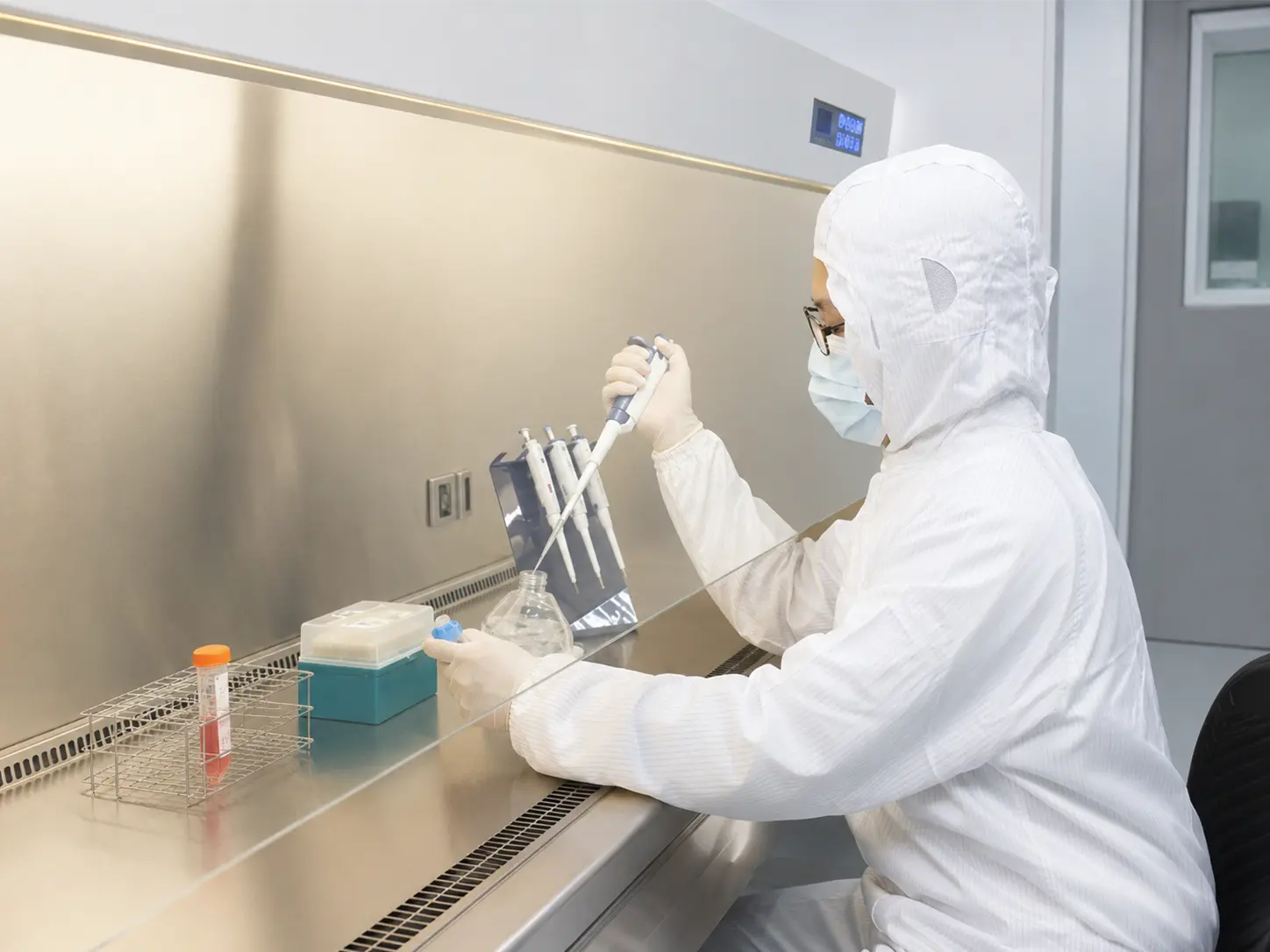
The production of all cell products adheres to stringent CMC (Chemistry, Manufacturing, and Controls) protocols, covering cell isolation, culture, and expansion. All processes are conducted in a GTP-certified cell processing unit (CPU) following standard operating procedures (SOPs) to ensure that every cell product meets the standards required for regenerative medicine.
Every cell product must be evaluated in the following criteria before shipping:
Safety is evaluated according to pharmacopeial standards, including endotoxin, mycoplasma, and sterility. All shipped products must test negative for these contaminants.
Efficacy & Quality: Key parameters—including cell number, viability, phenotype, identity, and purity—must strictly conform to product specifications to guarantee the stability and consistency of the cell products.
FullHope Biomedical Co., Ltd. operates a comprehensive quality management system (QMS) built on the PDCA (Plan-Do-Check-Action) cycle to drive continuous improvement and guarantee exceptional product and service quality.
Our core quality controls include:
Regulatory Compliance: All immunoprofiling and cell product processes strictly adhere to ISO/IEC 17025 and Good Tissue Practice (GTP) standards.
Equipment Maintenance: Laboratory instruments undergo regular supplier maintenance and calibration, with official reports issued to verify stable, optimal performance.
Material Control: We source from long-term suppliers requiring a Certificate of Analysis (COA) for every shipment. Materials face internal quality testing before use, such as antibody titration testing to minimize batch-to-batch variation.
Professional Expertise: Specimen analysis, cell culture, and reporting are handled exclusively by full-time biomedical professionals, ensuring maximum consistency, reproducibility, and reliability.
Through this rigorous QMS, FullHope Biomedical enforces strict oversight to ensure unmatched excellence across our entire analytical and production workflow.
The operations of the laboratory are complied with Good Tissue Practices (GTP) and our company's internal requirements, and have also passed Taiwan Food and Drug Administration (TFDA), Taiwan Accreditation Foundation (TAF) ISO/IEC 17025 Testing Laboratory Certification. Maintain laboratory quality documentations, specimens and product quality control, environmental monitoring, regular equipment calibration, material verification, annual internal audits, quarterly quality management meetings, and annual laboratory management review meetings are overseen by the dedicated Quality Assurance Department.
To ensure our services consistently meet customer requirements, maximize customer satisfaction, and maintain strict confidentiality, the laboratory has established a robust mechanism to handle and resolve customer complaints, driving continuous quality improvement. Upon receiving any customer complaint, appeal, or feedback, our personnel will immediately report the matter. Management will then designate dedicated personnel to investigate the root causes and deficiencies. Following the investigation, management will be responsible for complaint resolution, feedback, and subsequent communication. Furthermore, based on the impact of the complaint on the laboratory's quality management system, personnel will evaluate whether to initiate risk management protocols, thereby proactively preventing potential nonconformities or recurrent complaints.
(2026) J Leukoc Biol. AI-based cytometric immunoprofiling in Taiwanese rheumatoid arthritis patients.
(2025) BMC Cancer. Machine learning for immune profiling in HCC treated with pembrolizumab/lenvatinib.
(2024) J Cell Mol Med. Flow cytometry and machine learning for immune cell profiles in NPC patients.
(2024) BMC Cancer. Anti-mPD-L1 antibody and APC-like NK cells enhance tumor control in allograft models.
(2022) Front Med. AI immunoprofiling as a predictive biomarker for nivolumab in advanced HCC.
(2022) Lupus Sci Med. Novel immunoprofiling method for SLE diagnosis and therapeutic response.
(2021) J Formos Med Assoc. Peripheral immune cell characteristics in advanced HCC patients.
(2021) J Chin Med Assoc. Circulating immune cells as biomarkers for nivolumab efficacy in advanced HCC.
Republic of China (I702290): Modified Natural Killer T Cells, Pharmaceutical Compositions and Uses Thereof
The People's Republic of China (CN106047808B): Modified Natural Killer T Cells, Pharmaceutical Compositions and Uses Thereof
United States of America (US10864232B2): Modified Natural Killer T Cells, Pharmaceutical Compositions and Uses Thereof
Republic of China (I840994): Modified T Cells, Pharmaceutical Composition, Manufacturing Method Thereof, and Method of Using the same
United States of America (US11999968B2): Modified T Cells, Pharmaceutical Composition, Manufacturing Method Thereof, and Method of Using the same
Republic of China (I847775): Method for Inducing Antigen-Specific T Cell and Use Thereof in Treating Cancer or Virus Infection