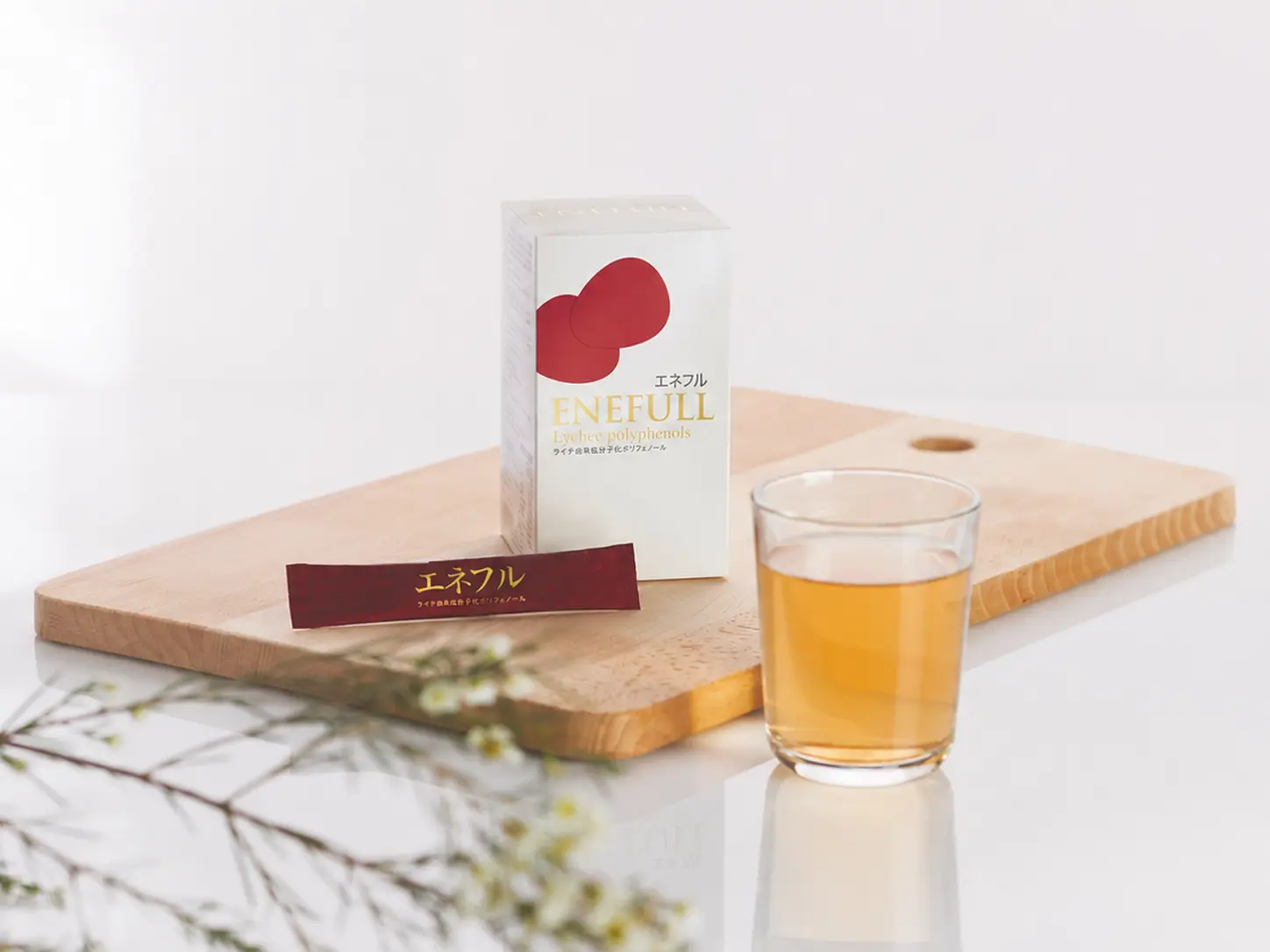
ENEFULL (Lychee Polyphenols) is a nutritional supplement derived from natural lychee fruit and formulated with Oligonol®, a low-molecular-weight lychee polyphenol ingredient produced through a proprietary oligomerization technology. This unique process converts naturally occurring polyphenols into smaller molecular forms, enhancing solubility and utilization characteristics.
Developed to meet the growing demand for convenient daily nutritional support, ENEFULL combines natural botanical ingredients with innovative processing technology. It offers consumers an easy and enjoyable way to incorporate lychee polyphenols into their daily routines.
Packaged in convenient single-serving sachets, ENEFULL dissolves readily in both hot and cold water, making it suitable for modern lifestyles. The formulation has also been carefully developed to provide a refreshing taste and pleasant lychee aroma.
The key ingredient has received U.S. New Dietary Ingredient (NDI) notification, relevant safety assessments, and recognition through numerous domestic and international awards.
To ensure quality and consumer confidence, ENEFULL undergoes comprehensive quality and safety testing by independent laboratories, including microbiological, heavy metal, and other food safety evaluations. Guided by the principles of quality, safety, and innovation, ENEFULL provides a reliable option for daily nutritional supplementation.
U.S. New Dietary Ingredient (NDI) Notification
Xylo-oligo saccharide, Powdered Sugar, Flavoring, Citric Acid, Malic Acid, Lychee Fruit Extract, Neotame, Green Tea P.E.
Oligonol (Lychee & Green Tea Extract)
I. Post-Import Product Management Ingredient Verification Verify ingredient sources and ensure compliance with applicable food safety regulations. Manufacturer Compliance Review manufacturing qualifications and certifications, including GMP where applicable.
II. Inspection and Testing Finished Product Inspection Conduct sampling inspections to verify product quality and labeling compliance. Safety Testing Perform microbiological and heavy metal testing to ensure product safety.
III. Warehouse Management Storage Control Maintain suitable storage conditions, including temperature and humidity control. FIFO Management Apply the First-In, First-Out (FIFO) principle to ensure proper inventory rotation.
IV. Traceability and Documentation Product Traceability Implement a traceability system covering importation, storage, and distribution. Record Keeping Maintain complete records of receiving, inspection, and distribution activities.
V. Employee Training Quality Management Training Provide regular training on quality control and food safety requirements. Incident Response Training Conduct training for handling quality-related issues and corrective actions.
VI. Internal Review Periodic Self-Inspection Perform regular internal audits to verify compliance and support continuous improvement.
Microbiological and Heavy Metal Testing
I. Goods Receiving Inspection Upon receipt, product packaging, labeling, and country of origin are verified to ensure consistency with purchase specifications. Product shelf life and storage requirements are reviewed and confirmed.
II. Periodic Quality Testing Products are periodically tested through random sampling, including ingredient analysis and microbiological testing. Additional quality evaluations may be conducted based on market feedback and consumer comments.
III. Production Process Monitoring Critical Control Points (CCPs) are monitored throughout the production process to minimize the risk of contamination and non-conformities. Good Manufacturing Practice (GMP) standards are implemented, including regular cleaning of production facilities and ongoing personnel training.
IV. Labeling and Advertising Compliance All product labeling and advertising materials are reviewed to ensure compliance with applicable regulations and industry standards, preventing misleading or inaccurate information.
V. Traceability and Recall System A comprehensive product traceability system is maintained to track products throughout the distribution chain. In the event of a quality concern, product recall procedures are promptly initiated, and consumers are notified as appropriate.
WO/2006/090830:METHOD OF PRODUCING PROANTHOCYANIDIN OLIGOMER