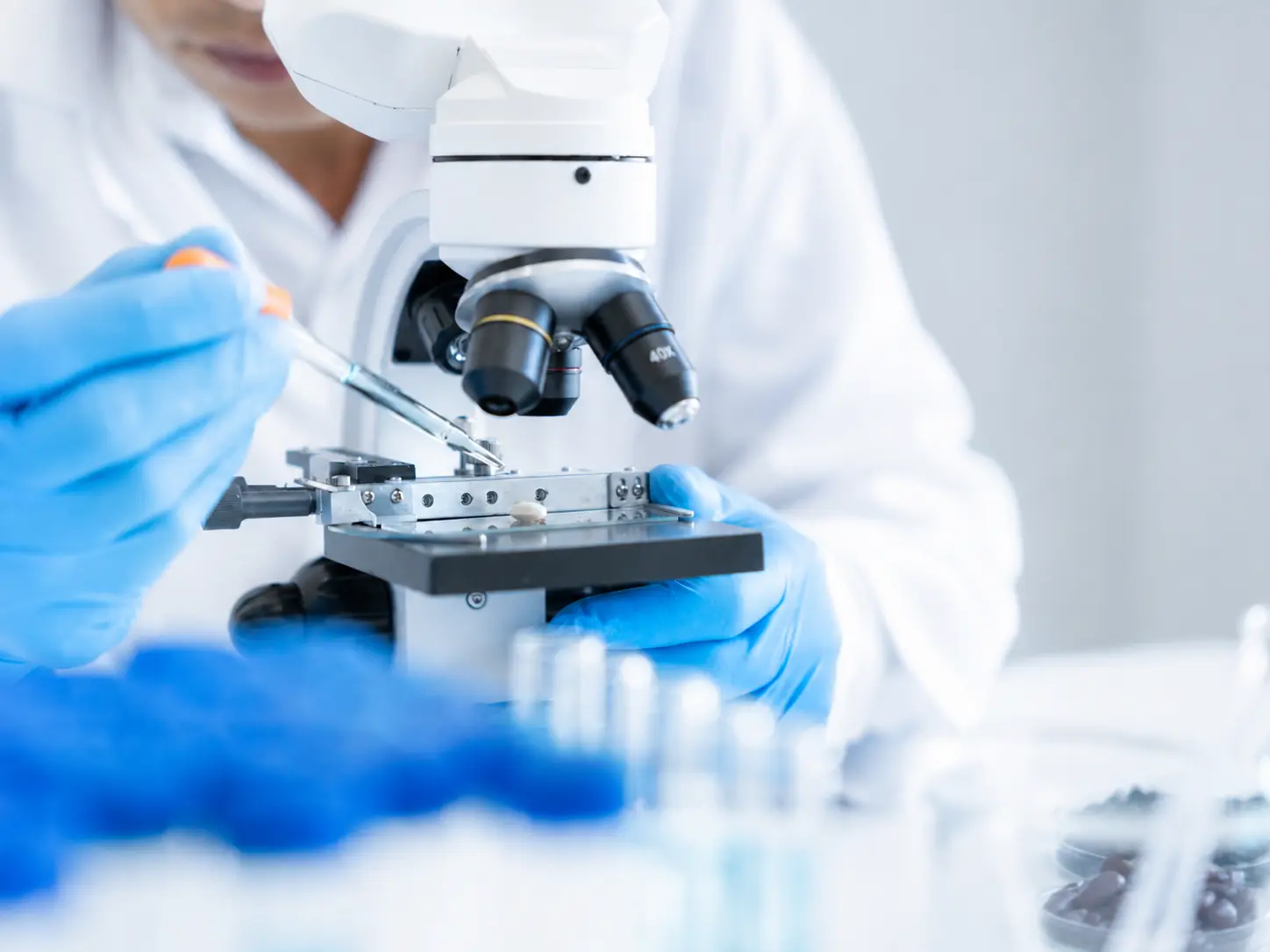
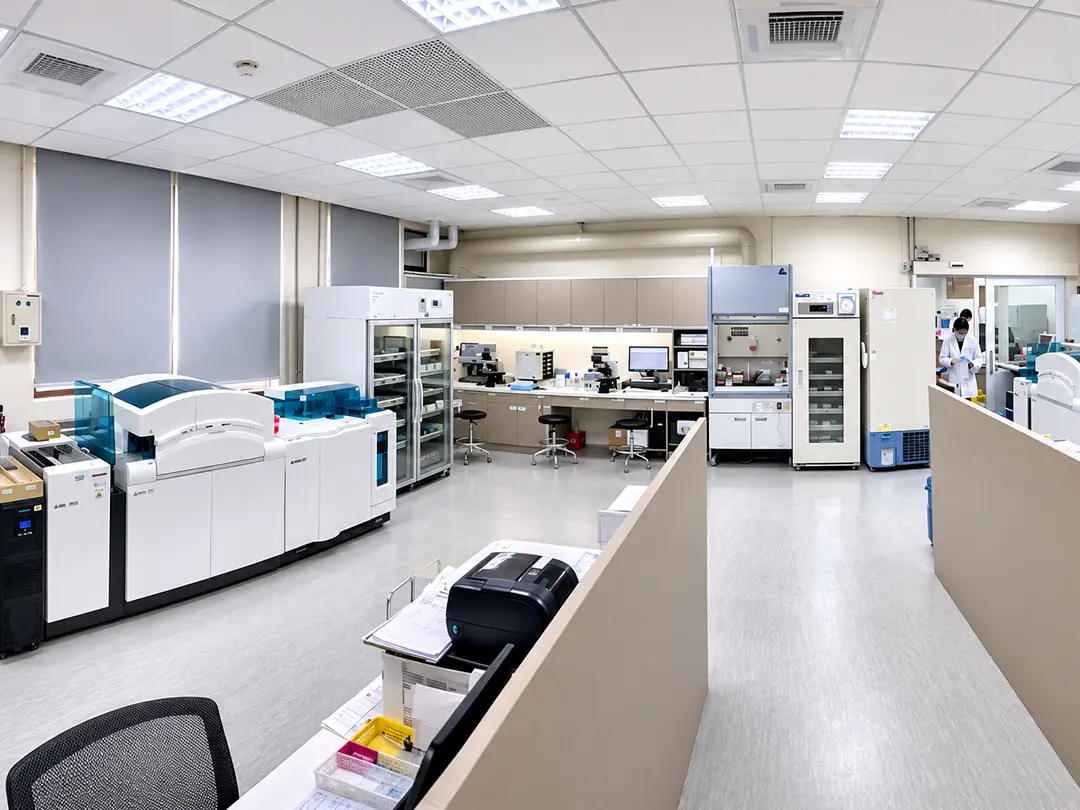
Provide laboratory services for outpatient, inpatient, and emergency patients, including health exams, cancer screening, employee health exams, and health examinations for foreign workers
This laboratory upholds the quality policy of "Top-notch quality, zero customer complaints." Certified under ISO15189 for medical laboratories, it ensures standardized processes through comprehensive quality control and assurance, delivering efficient clinical services. Its core missions include clinical testing, education, and research, supporting the advancement of precision medicine by integrating advanced equipment, technologies, and artificial intelligence (AI) to enhance testing accuracy and efficiency.
The laboratory regularly engages in interdisciplinary collaboration to foster talent development, conduct academic research, and publish papers, continuously improving the team's professional capabilities. Services provided include blood cell analysis, urine chemistry and sediment testing, clinical chemistry, microbiology, serology, molecular diagnostics, and anatomical pathology. It serves internal units, community residents, rural patients, and student health management.
Molecular Diagnostic Technology
Establishing PCR technology for the detection of pathogens (e.g., viruses, bacteria) through nucleic acid amplification, enabling rapid and sensitive detection of low concentrations of DNA or RNA fragments.
AI-Assisted Testing Processes
Leveraging AI technology to enhance testing workflows, improving the accuracy and efficiency of test results, reducing human errors, and assisting physicians in making more precise clinical diagnoses.
Automated Testing Equipment
Automated equipment includes blood analyzers, automated urine analyzers, biochemical and immuno-combined analyzers, automated nucleic acid testing systems, automated nucleic acid extractors, automated microbial identification instruments, fully automated blood culture instruments, fully automated immunochemical fecal hemoglobin analyzers, glycated hemoglobin analyzers, automated coagulation analyzers, blood gas analyzers, multiplex PCR instruments, rapid nucleic acid testing instruments, and blood glucose POCT analyzers.
Key Quality Management Practices in the Laboratory
Establishment of Quality Indicators:
Defined 32 quality indicators to monitor and control pre-analytical, analytical, and post-analytical processes, ensuring accuracy and consistency in test results.
Participation in External Proficiency Testing:
Verified the accuracy and reliability of laboratory tests through external proficiency assessments.
Instrument Calibration and Maintenance Plan:
Developed and regularly implemented calibration, maintenance, and servicing plans for testing equipment to ensure optimal functionality.
Automated Critical Value Notification System:
Established an automated system to promptly alert medical personnel of critical values and significant results, enabling timely medical intervention.
Comprehensive Quality Documentation:
Developed 215 manuals, including Quality Procedures (QP) and Standard Operating Procedures (SOP), to ensure process consistency and compliance.
Laboratory Biosafety Standards:
Implemented biosafety protocols to protect personnel from biological hazards, ensuring a safe working environment.
Overall TAT Achievement Rate: 94.1%
Report Revision Rate Improved by 92.6%
Consumable Cost Reduced by 34.3%
Quality Indicator Achievement Rate: 90%
Customer Satisfaction Rate: 97.6%
Emergency TAT Achievement Rate: 97%
Critical Value Notification Rate: 100%
Laboratory Quality Target Achievement: 100%
CBC 30-Minute Completion Rate: 97%
Biochemistry 8-Hour Completion Rate: 100%
Critical Value Reporting Rate: 100%
Overall Quality Indicator Rate: 88%
Overall TAT Achievement Rate: 82%
External PT Pass Rate: 99.6%
Internal QC Compliance Rate: 99.2%
Report Revision Rate: 0.002%
Specimen Rejection Rate: 0.36%
Emergency CBC TAT Rate: 97.4%
Blood Bag Waste Rate: 0.08%
Transfusion Reaction Rate: 0.07%
External Customer Satisfaction: 97.6%
Very Satisfied Rate Increased to 65%
Blood Collection Service Satisfaction: 99%
Phlebotomy Skill Satisfaction: 99%
Laboratory Service Satisfaction: 97%
Report Turnaround Time Satisfaction: 95%
Critical Value Notification Satisfaction: 96%
Telephone Courtesy Score: 83.6
Improved Satisfaction with Report Turnaround Time
Improved Satisfaction with Critical Value Notification
Improved Satisfaction with Telephone Courtesy
Improved Satisfaction with Communication and Consultation
Continuous Improvement in Clinical Service Satisfaction
Published Research in the Journal of the Chinese Medical Association (JCMA)
The laboratory has achieved significant academic excellence with two research papers published in the internationally recognized Journal of the Chinese Medical Association (Impact Factor: 3), demonstrating its commitment to high-quality research and innovation.
1.Yang Wan-Hua, Yun-Hsiang Chan, Huang Cheng-Pin, Tzeng-Ji Chen:
Comparative Analysis of GPT-3.5 and 4.0 in Taiwan’s Medical Technologist Certification: A Study in AI Advancements,
J Chin Med Assoc, 2024 May 1;87(5):525-530.
DOI: 10.1097/JCMA.0000000000001092
2. Wan-Hua Yang, Yi-Ju Yang, Tzeng-Ji Chen:
ChatGPT's Innovative Application in Blood Morphology Recognition,
J Chin Med Assoc, 2024 Apr 1;87(4):428-433.
DOI: 10.1097/JCMA.0000000000001071
Improved laboratory efficiency and healthcare accessibility in rural areas
Enhanced patient safety and laboratory quality management
Reduced report turnaround time and supported clinical decision-making
Established a smart laboratory operational model
Reduced consumable costs and improved resource utilization
Promoted smart healthcare and sustainable medical development