Providing Artificial Intelligence of Things (AIoT) and telecare services for ICU care teams aims to improve healthcare quality.
Critical Care Clinicians
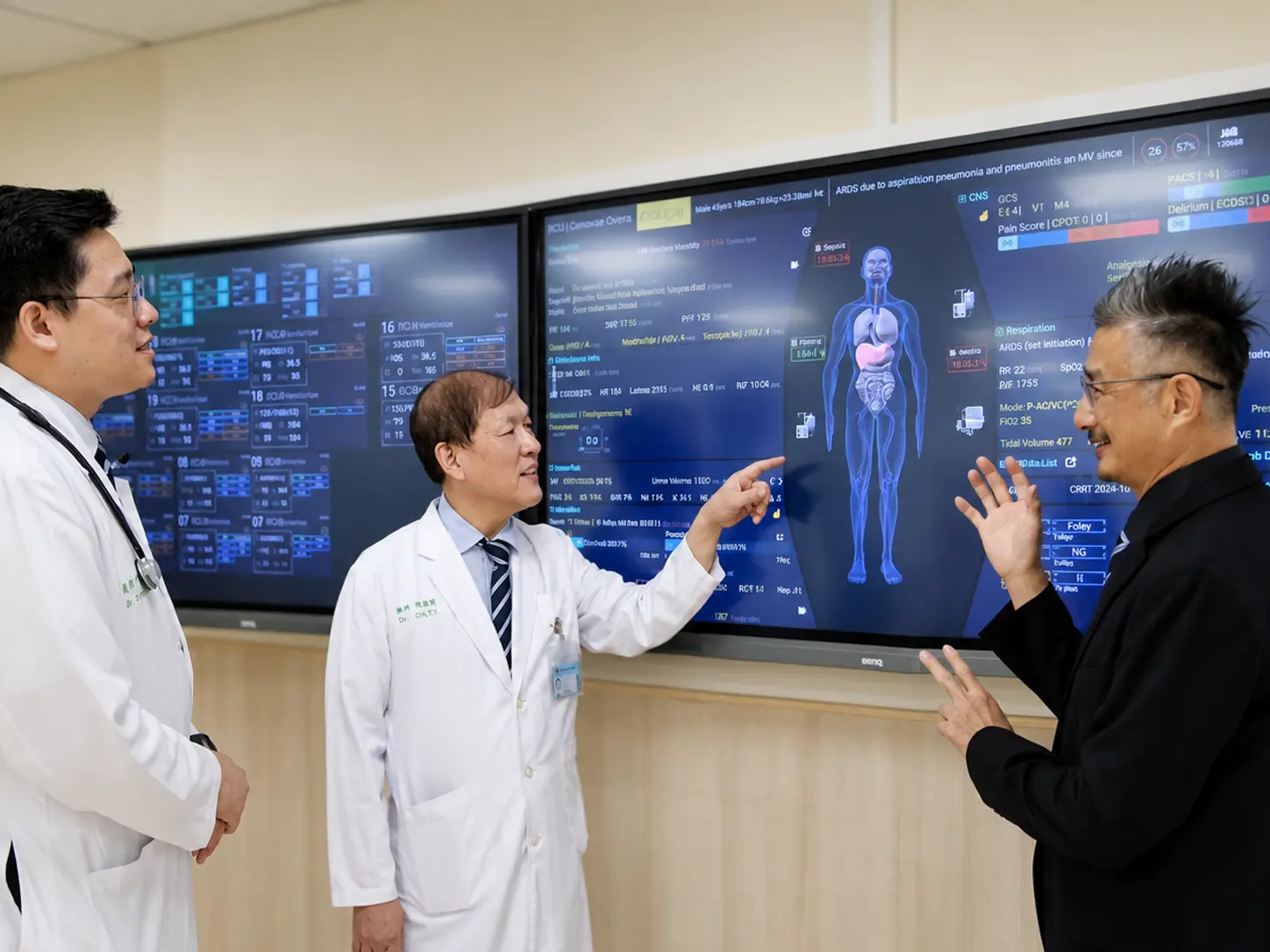
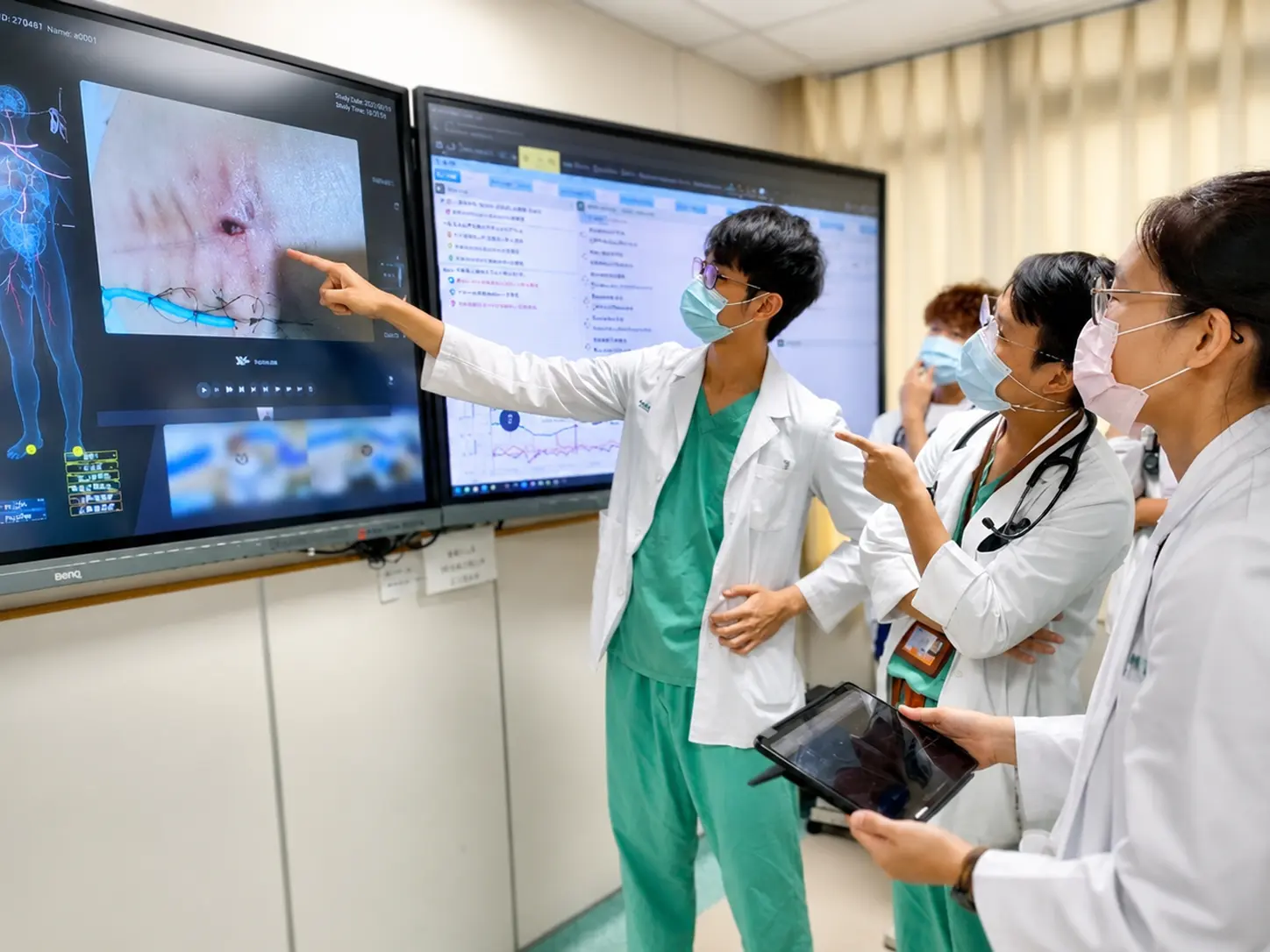
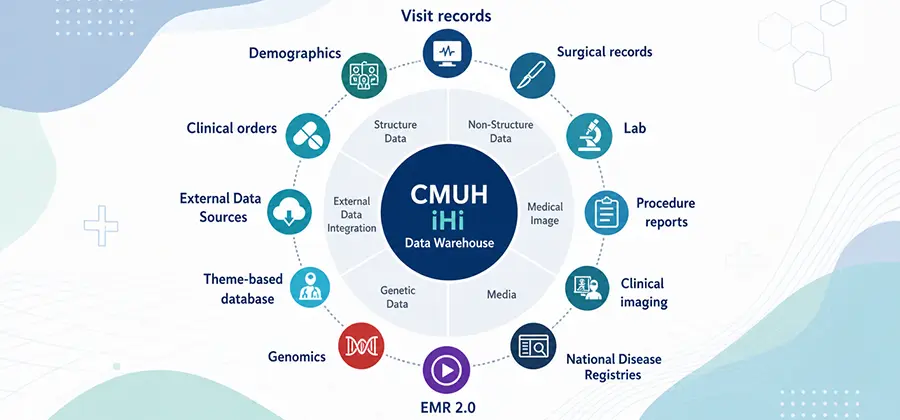
HiThings Tele-ICU is a state-of-the-art remote intensive care command center powered by artificial intelligence (AI) and the Internet of Things (IoT). It can simultaneously process real-time data from up to 60,000 medical devices. The platform seamlessly integrates medical records, imaging, prescriptions, and treatment plans, securely storing data for up to 10 years to enable comprehensive analysis. Its intuitive 3D human body model dynamically visualizes physiological data, offering clinicians deeper insights into patient conditions.
The system features AI-driven diagnostic modules specifically designed for critical conditions, including acute respiratory distress syndrome (ARDS), sepsis, myocardial infarction, and ischemic stroke. Generative AI capabilities could enhance medical record creation. These AI modules accelerate and improve the accuracy of clinical decision-making while enabling earlier interventions when necessary.
HiThings Tele-ICU is also equipped with high-definition video systems for remote consultations and provides real-time access to patient data via mobile devices. This ensures continuous monitoring and immediate response, even when physicians are off-site.
System architecture: Comprises a FHIR translator, load balancer, three-node Kafka message queue, MongoDB database, WebRTC real-time video server, and message dispatcher, forming a complete AIoT Tele-ICU technology stack
Platform scalability: Supports up to 50 device types and 60,000 medical devices, with 10-year data retention; video latency of only 0.4 seconds (compared to 5-10 seconds for conventional video)
Deployment: Implemented across 6 ICUs at the hospital, including the Respiratory, Cardiac, Surgical, Neurosurgical, Pediatric, and Neonatal ICUs, covering internal medicine, surgery, and pediatric specialties
Integrated with 6 critical-care AI services (LungGuard AI, Antibiotic AI, Cardio Rescue AI, NeuroCare AI, NutriGuide AI, and the MIRA Smart Medical Record Assistant), accumulating 2,243,179 uses as of May 31, 2025
Research outcomes published in Sensors (IF=3.4), with 9 peer-reviewed publications, 6 patent applications, 4 trademarks, and 6 medical device approvals5.4% reduction in overall ICU mortality rates
HiThings Tele-ICU overall impact: Reduced ICU mortality by 4%
LungGuard AI (ARDS): Reduced ARDS mortality by 17% and diagnosis time by 98%
Antibiotic AI (Sepsis): Increased one-year survival rate for MRSA bacteremia by 17.6%
Cardio Rescue AI (STEMI): Reduced acute myocardial infarction mortality by 2.2%
NeuroCare AI (Stroke): Reduced ischemic stroke diagnosis time by 98%
NutriGuide AI: Increased caloric target achievement by 70.9% and protein target achievement by 48.2%; reduced assessment time by 35.5%
MIRA Smart Medical Record Assistant: Reduced physician documentation time by 94% and nursing documentation time by 51.4%
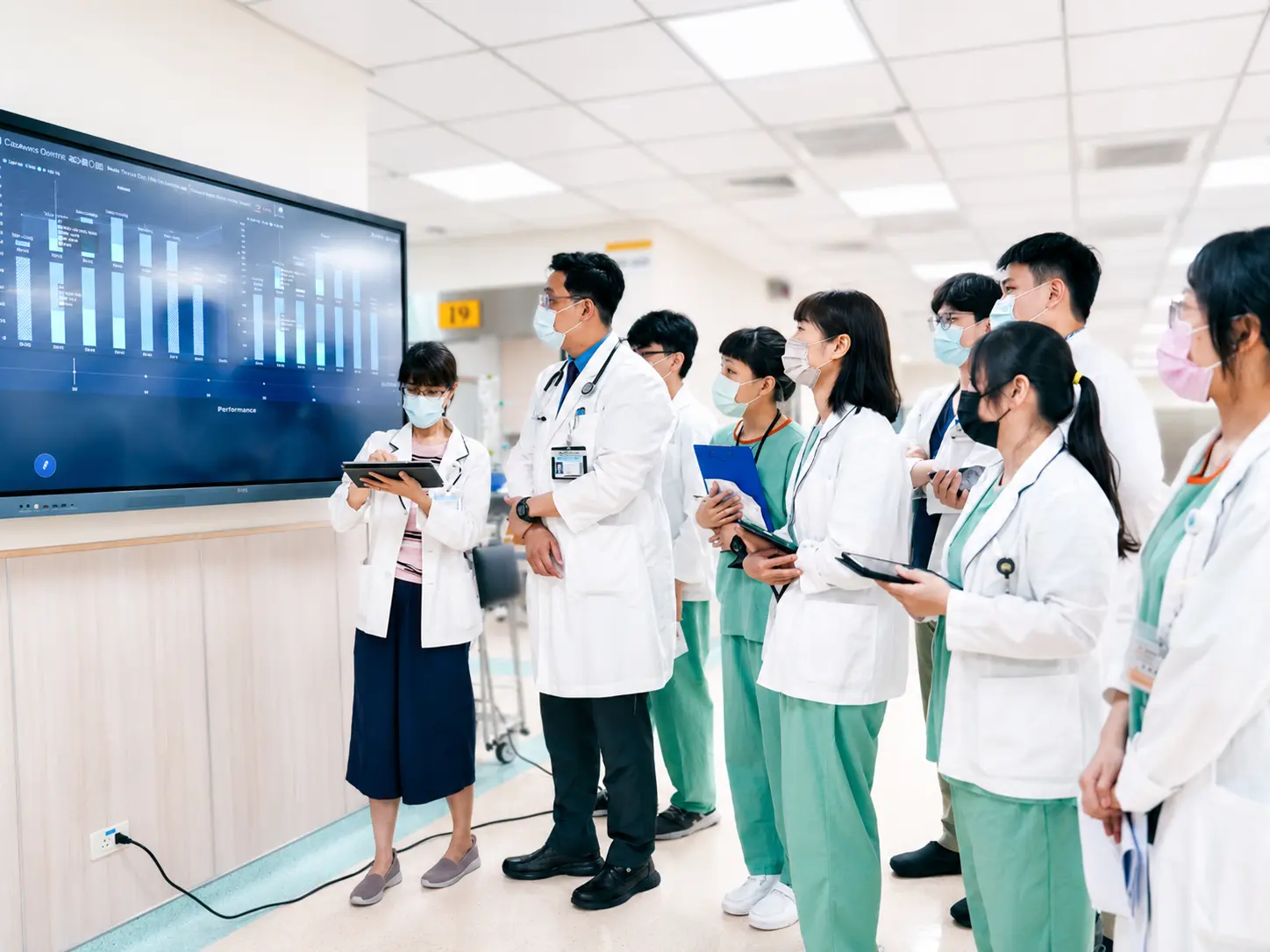
Digital Twin Dashboard: Reduced physician data retrieval time by 44.1%
Equipment Location Map: Reduced nursing equipment-checking time by 62.7%
Certified under ISO 27001 Information Security Management System, ensuring system and data security
Certified under ISO 27701 Privacy Information Management System, safeguarding personal privacy
Compliant with ISO 29100 and ISO 29191 medical data de-identification standards, ensuring regulatory conformity in data use
Established a Quality Management System (QMS) for medical devices, ensuring AI model development, validation, and deployment meet regulatory requirements
Multidrug-resistant organism incidence reduced by 9.8‰, and quarterly delirium events reduced by 52.9%, materially improving patient safety
AI inference results serve solely as clinical decision support; all outputs require physician confirmation prior to clinical adoption
Patients: Overall ICU mortality reduced by 4%, ARDS mortality reduced by 17%, and one-year survival rate for MRSA bacteremia increased by 17.6%, substantially improving outcomes for critically ill patients
Physicians: Documentation time reduced by 94% and data retrieval time reduced by 44.1%, enabling greater focus on clinical decision-making
Nurses: Equipment-checking time reduced by 62.7% and nursing documentation time reduced by 51.4%, alleviating clinical workload
Dietitians: Assessment time reduced by 35.5%, with significant improvements in caloric and protein target achievement
Multidisciplinary adoption: Deployed across 6 ICUs, with users spanning intensivists, infection-control physicians, pharmacists, respiratory therapists, perfusionists, dietitians, and nurses
External recognition: Invited to present at HIMSS Global Health Conference, HIMSS APAC, MEDICA, and APEC Smart Hospital; featured in Los Angeles Times, Business Today, Common Health, and Storm Media
Nine peer-reviewed publications in international journals, representative works including:
W.-S. Feng et al., "Design and Implementation of an Intensive Care Unit Command Center for Medical Data Fusion," Sensors, vol. 24, art. 3929, 2024
L.-C. Ho et al., "Impact of the Intelligent Antimicrobial System on Clinical Outcomes Among Patients with MRSA Bacteremia," International Journal of Antimicrobial Agents, vol. 63, art. 107142, 2024
Y.-C. Wang et al., "Implementation of an All-Day AI-Based Triage System to Accelerate Door-to-Balloon Times," Mayo Clinic Proceedings, vol. 97, no. 12, pp. 2291-2303, 2022
Holds 6 patents (including 1 US patent), 4 trademarks, and 6 medical device approvals (including 2 US FDA clearances)
Invited keynotes at multiple international conferences:
HIMSS Global Health Conference, USA, 2024
HIMSS APAC, Korea (2024) and Malaysia (2025)
MEDICA, Germany, 2024
APEC Smart Hospital, Taiwan, 2024
Featured in international media coverage, including the Los Angeles Times
Clinical impact: Reduced overall ICU mortality by 4%, ARDS mortality by 17%, and myocardial infarction mortality by 2.2%, while increasing one-year survival for MRSA bacteremia by 17.6%
Workforce efficiency: Substantially reduced time spent on physician documentation (-94%), nursing equipment checks (-62.7%), and nutritional assessment (-35.5%)
Smart healthcare advancement: Integrated six critical-care AI services with an IoMT platform, establishing a scalable intensive-care ecosystem supporting up to 60,000 devices and 10-year data retention
Expansion: Planned rollout to affiliated hospitals within the China Medical University Health System and to international partner institutions