MacKay Medical College M2/M3 students
Senior students, interns & residents
Attending physicians (OR planning/CE)
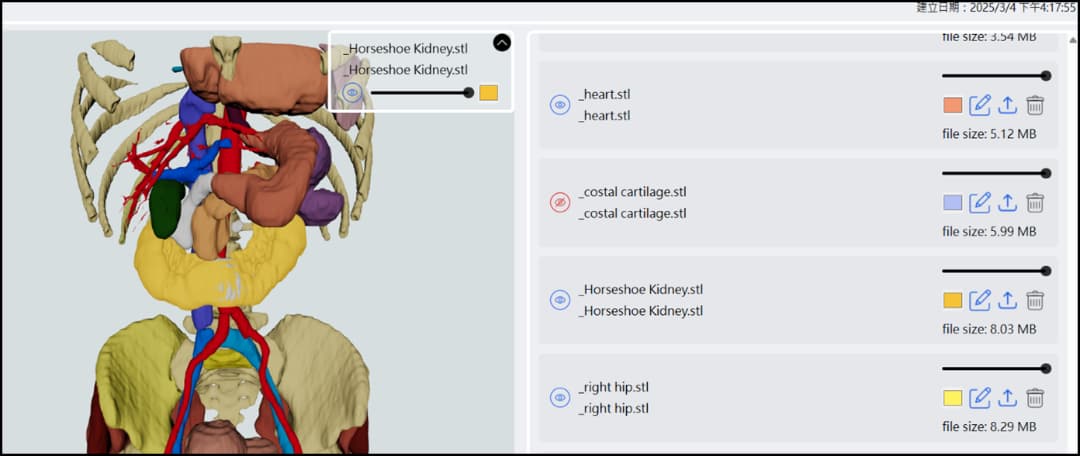
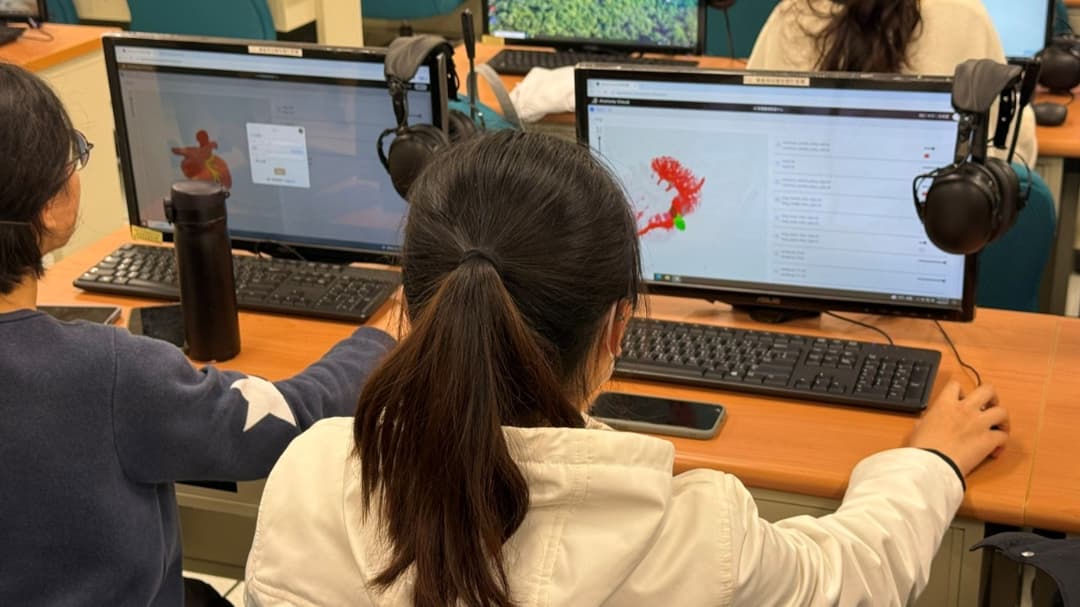
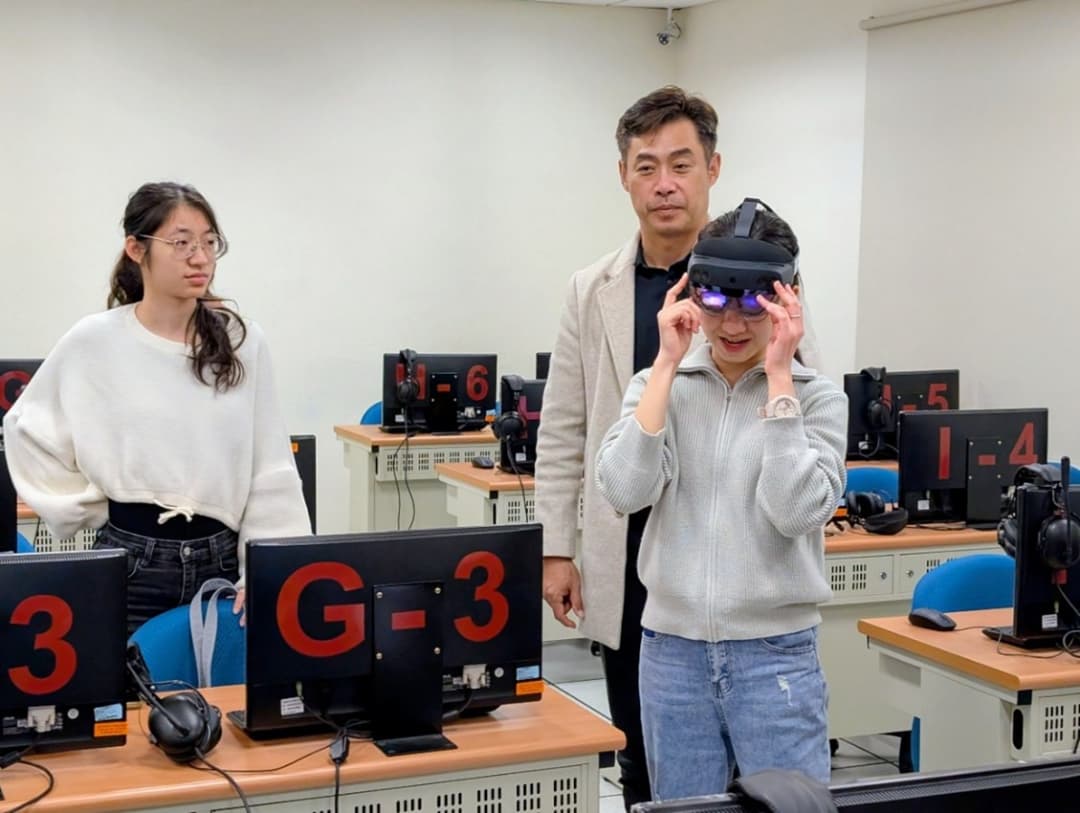
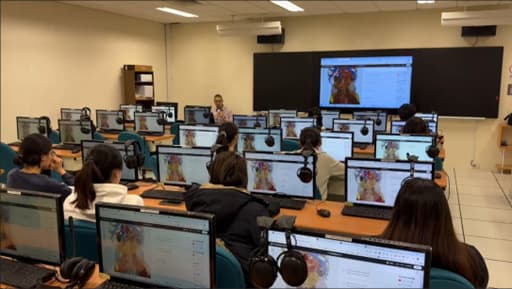
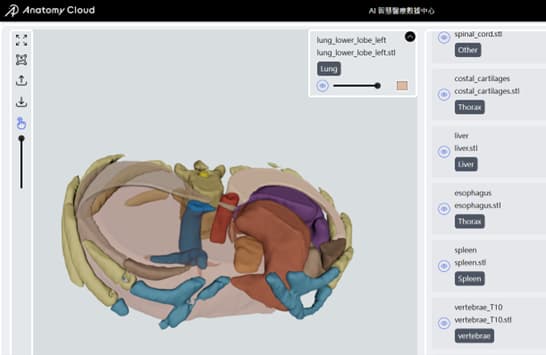
Traditional anatomy education faces three core challenges: scarcity of cadaveric resources, limited spatial comprehension from two‑dimensional materials, and insufficient diversity of clinical cases. To address these bottlenecks, this project leverages the NVIDIA MONAI framework to perform fully automated organ segmentation and high‑fidelity three‑dimensional reconstruction on de‑identified in‑house computed tomography scans, rapidly generating reusable digital teaching assets. The platform supports cross‑device interactive learning in web, virtual reality, and mixed reality environments, following a progressive pathway that integrates normal anatomy, anatomical variations, and clinical pathologies. Since its deployment in March 2025 for second‑ and third‑year medical students at MacKay Medical College, the project has demonstrated notable improvements in academic performance and learner satisfaction.
Clinically driven three‑dimensional models
Fully automated artificial intelligence segmentation
Cross‑platform interaction for web, virtual reality, and mixed reality
Deployed in March 2025 for second‑ and third‑year courses
Session duration exceeding thirty minutes in ninety‑two point nine percent of users
Service uptime of ninety‑nine point nine percent
Average score increased by three point three (seventy‑five point four to seventy‑eight point seven)
Pass rate increased from eighty point five percent to ninety‑eight point zero percent
Low‑score group reduced from nineteen point five percent to two point zero percent
Strict de‑identification of imaging data
Encrypted transmission via Hypertext Transfer Protocol Secure
Role‑based access control and audit logging
Overall satisfaction of four point eight out of five
Eighty‑five percent perceive time saving
Ninety‑two point nine percent are willing to recommend
Active engagement with the NVIDIA MONAI medical open‑source community
Planned submissions to international journals on pedagogy and outcomes
Planned cloud platform for case exchange and resource sharing
Enhance medical education quality: Integrates real clinical imaging with AI technology to bridge the gap between basic science and clinical practice, strengthening spatial understanding and applied competence.
Improve learning outcomes: Average score increased by 3.3 points; pass rate rose from 80.5% to 98.0%; low‑score group significantly reduced; overall satisfaction reached 4.8 out of 5.
Promote healthcare sustainability and digital transformation: Reduces reliance on cadaveric specimens, minimizes printed materials and physical resources, aligning with ESG sustainability goals.