Patients with Chronic Obstructive Pulmonary Disease and moderate to severe asthma
This project aims to introduce artificial intelligence (AI)-based image recognition technology, integrated with routine X-ray imaging, to screen for osteoporosis risk in patients with chronic obstructive pulmonary disease (COPD) and those with moderate to severe asthma. The goal is to enable early disease warning, optimize clinical decision-making for timely intervention, and establish an innovative model that integrates chronic disease care pathways. By predicting osteoporosis risk at an earlier stage, the project seeks to enhance care strategies for COPD and asthma, improve the quality of life of high-risk populations, and reduce healthcare resource utilization.
Existing literature indicates that patients with COPD and moderate to severe asthma face a significantly increased risk of bone loss due to long-term use of inhaled or systemic corticosteroids. Currently, clinical assessment of osteoporosis primarily relies on dual-energy X-ray absorptiometry (DXA). However, limitations such as uneven distribution of equipment, patients’ willingness to undergo testing, and insurance reimbursement criteria often result in delayed diagnosis and treatment for many high-risk individuals.
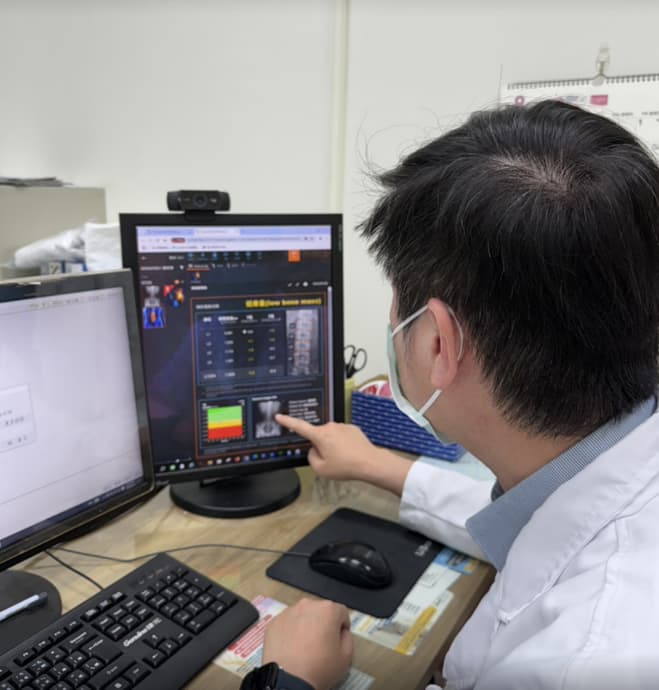
The adoption of the Deep Xray™ AI Medical Imaging Automated Analysis System for Osteoarthritis, developed by Cai-Feng Smart Health, enables precise assessment of axial bone mineral density.
It allows simultaneous bone analysis using existing chest X-ray images, making it particularly suitable for routine examinations of patients with COPD and moderate to severe asthma.
Balancing technological innovation with clinical practicality, this system facilitates the real-world implementation of AI at the frontline of healthcare, while emphasizing “patient-friendly,” “seamless workflow,” and “point-of-care usability” features.
Screening volume: 6
Number of patients treated:3
Among patients with COPD and asthma who have undergone long-term corticosteroid therapy, the proportion identified with low bone mass (high risk) is 50%.
Following detection of low bone mass and subsequent interventional care, the symptom improvement rate is 100%.
Using the osteoporosis AI platform to analyze patients’ KUB X-ray images, the accuracy of osteoporosis risk assessment is 83%.
For individuals aged 50 and above, both the positive predictive value and negative predictive value exceed 90%.
Proper implementation of pre-examination preparation and patient briefing: 100%
Patient identification and confirmation of consent during the examination: 100%
Adherence to procedural steps during the examination: 100%
Post-examination feedback and explanation provided by the physician: 100%
For patients identified with low bone mass, implementation of nutritional interventions resulted in symptom improvement.
For patients identified with low bone mass, medication adjustments resulted in symptom improvement.
For patients identified with low bone mass, referral to orthopedic treatment resulted in symptom improvement.
The DeepXray™ system participated in the 'Taiwan-Japan Startup Summit' organized by the National Development Council (NDC) in Tokyo, and is currently preparing for the application of relevant clearances from the Pharmaceuticals and Medical Devices Agency (PMDA).
By integrating Taiwan’s National Health Insurance system with its high-coverage medical imaging examinations, this project has successfully obtained medical device clearances from both the Taiwan FDA (TFDA) and the U.S. FDA.
Technological Leadership: This project has undergone clinical validation and secured medical device certifications. It has been deployed across hospitals and primary care screening sites, achieving a level of large-scale application that is rare globally.
Institutional Integration: Leveraging Taiwan’s unique National Health Insurance (NHI) system, AI diagnostic results can be swiftly translated into clinical treatment decisions and reimbursement strategies. This creates an implementation model that is difficult for other countries to replicate.
Public Health Impact: This project marks the first integration of AI into community screening and outpatient workflows for COPD and asthma. By extending early warning systems from hospitals to communities, it enhances diagnostic accessibility and health equity, serving as a high-value international benchmark.