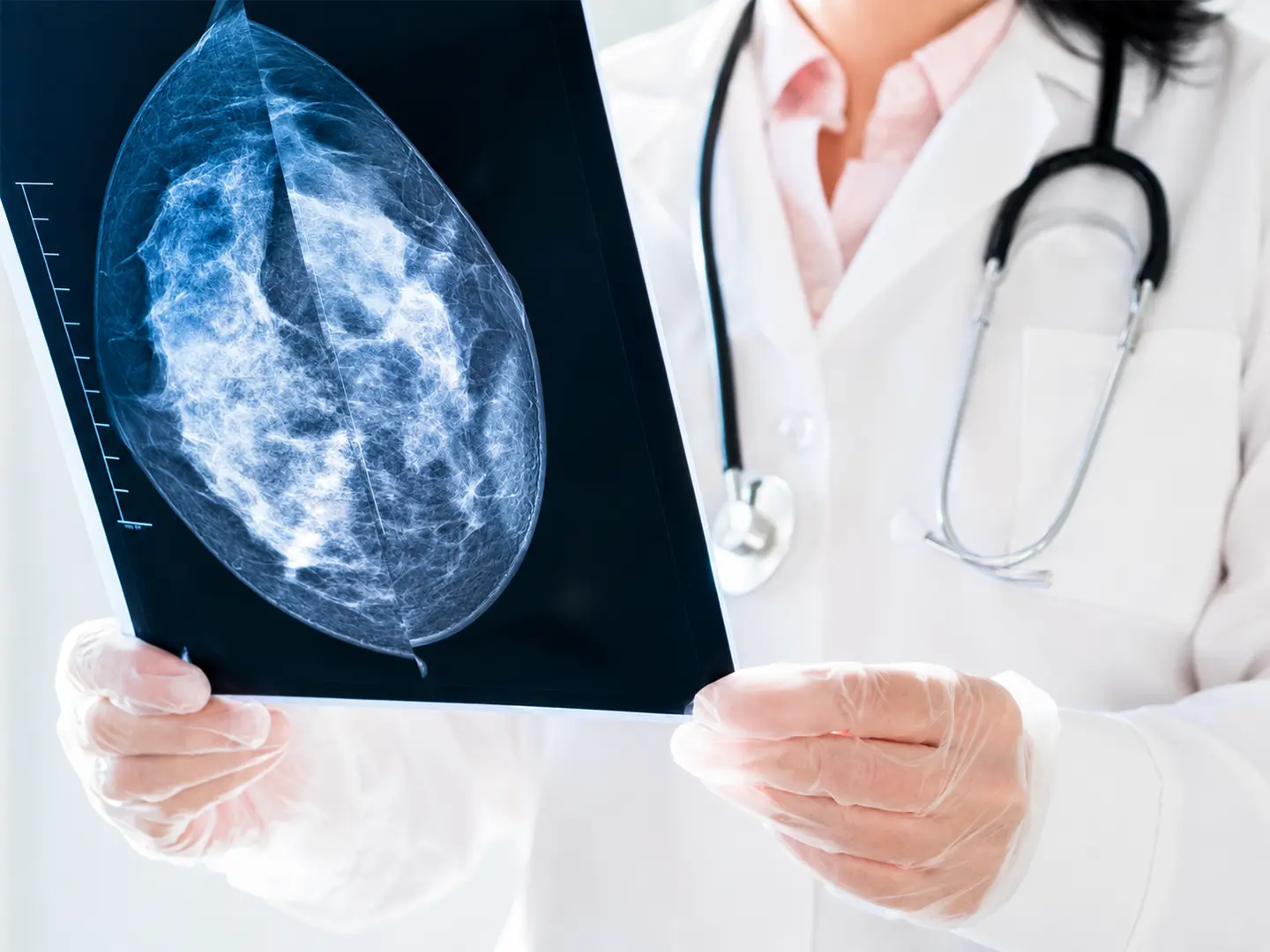
Patients with newly diagnosed breast cancer and
treatment
Breast cancer survivor
Breast cancer screening
High-Risk Breast Cancer Family Members
Our Service is built upon the philosophy of “Once a patient of our hospital, always a patient of our hospital” and a patient-centered approach. We also provide continuous support throughout the entire breast cancer journey. In 2016, we treated 847 newly diagnosed breast cancer patients, representing 7.23% of all new breast cancer cases in Taiwan. The nursing team includes Screening nurses, Patient Advocacy Service nurses, Care managers,Nurse Practitioners, PICC nurses,Aadvanced Practice nurses, Survivorship nurses, Palliative shared-care nurses, and Home-based palliative care managers. Innovative initiatives include the establishment of breast cancer screening nurse training, PAS service pathways, Advanced Practice Nurse training programs, and Taiwan’s first Breast Cancer Navigator Program. To enhance care quality, we revised breast cancer care management processes and nursing assessment information system. We also established Taiwan’s first Breast Cancer Survivorship Clinic, providing long-term follow-up care, recurrence surveillance and chronic disease managemen. Standardized assessments include pain, functional status, nutritional status, and psychosocial distress screening. Through proactive monitoring and coordinated interventions, patients receive comprehensive support throughout treatment and survivorship. Evidence shows that effective care management improves treatment adherence, completion rates, symptom control, patient satisfaction, and survival outcomes.
Once a patient of our hospital, always a patient of our hospital
Comprehensive Breast Cancer Care Across the
Continuum
Screening to survivorship and palliative care
Patient Advocacy Service (PAS) Nurse Program
Advanced Breast Cancer Nurse Training
Survivorship Clinic for long-term follow-up
Four standardized assessments for complication
monitoring and supportive care
Integrated Medical–Nursing Patient Information
System
Comprehensive Education and Training Program for
Specialized Nursing Roles
•847 newly diagnosed breast cancer patients,
representing 7.23% of all new breast cancer cases in
Taiwan200 beds.
•The breast cancer long-term follow-up clinic has
more than 10,000 visits each year.
Program Achievements (2018)
Screening-positive follow-up rate: 93.6%
Treatment completion rate: 97.05%
Loss-to-follow-up rate reduced from 0.33% to 0.07%
Treatment adherence: Surgery 99.52%,
Chemotherapy 93.16%, Radiotherapy 96.64%
Patient satisfaction:92.3%
Healthcare team satisfaction: 4.71/5
Time to diagnosis reduced from 8.18 to 7.27 days
after PAS implementation
Postoperative lymphedema rate: 6.88% (vs. 21.4%
reported internationally)
Only 1.97% of survivorship clinic patients requested
follow-up with their original physician
The 5-year treatment dropout rate for breast cancer
patients was 13.9%, compared with 21% reported in
international literature.
•Compliance with patient identification procedures
achieved 100% accuracy and implementation.
•Patient education on fall prevention and
environmental safety inspection compliance reached
100%.
•Daily pre-clinic equipment inspections achieved a
100% completion rate.
•A comprehensive risk management system was
maintained, encompassing hazardous materials
management, emergency preparedness, fire safety,
medical equipment maintenance, utility management,
security systems, medical gas systems, air-
conditioning equipment, and building infrastructure
safety. Regular inspections, maintenance, and staff
training contributed to the successful maintenance
of Joint Commission International (JCI) accreditation
for 12 consecutive years.
•Completeness of advanced practice nurse
documentation reached 98.9%, compliance with
guideline-based physical assessments reached
99.4%, completeness of diagnostic and procedural
records reached 100%, accuracy of follow-up
scheduling records reached 100%, completeness of
abnormal result management reached 99.4%, and
medication documentation completeness reached
99.4%.
•Each advanced practice nurse completed at least 100
breast assessments annually, with imaging
correlation and physician verification.
•The incidence of postop – related lymphedema was
6.88%, lower than the 21.4% reported in
international literature.
•The incidence of severe radiation-induced dermatitis
was only 1%.
• In 2018, patient satisfaction reached 92.3%, while
healthcare team satisfaction achieved 4.71 out of 5.
•In 2011, it was honored with the Gold Magnet Award
for Excellence in Nursing Practice Environment,
presented by the Taiwan Nurses Association,
recognizing its positive and supportive nursing
workplace.
•In 2016, the breast cancer program received first
place among regional hospitals in the National Breast
Cancer Screening and Treatment Quality
Improvement Program, awarded by Taiwan’s Health
Promotion Administration. This award recognized
exceptional performance in ensuring timely follow-up
and treatment for patients with abnormal breast
cancer screening results. Further recognition was
received in 2017 and 2018 through the Taipei City
Cancer Prevention Best Partnership Award and the
Cancer Prevention Progress Award. We also received
the Cancer Prevention Angel Award for achieving a
follow-up completion rate exceeding 90% among
patients with positive cancer screening results.
•In 2011, its care management achievements
were featured in a special interview by
CommonWealth Magazine.
•In 2016, the multidisciplinary breast cancer team
published Understanding Breast Cancer: A
Comprehensive Guide through Common Health
Magazine, providing evidence-based information and
education to patients, families, and healthcare
professionals.
KFSYSCC has developed an integrated breast cancer care model incorporating multidisciplinary care coordination and value-based reimbursement strategies. This innovative approach was recognized internationally and selected as a Harvard Business School teaching case, highlighting its contribution to healthcare management and value-based cancer care.
KFSYSCC has continuously maintained Joint Commission International (JCI) accreditation, demonstrating excellence in patient safety that support high-quality breast cancer care.
KFSYSCC has also served as a benchmark institution for healthcare organizations and academic groups worldwide, including Austria, Vietnam, Thailand, Japan, Hong Kong, and mainland China.
As a leading cancer center in Asia, KFSYSCC actively contributes to cancer research, genomic medicine, clinical trials, and quality improvement initiatives. Its scientific achievements have been published in international peer-reviewed journals and recognized by global research databases.
KFSYSCC maintains long-term collaborations with leading cancer institutions in the United States and across Asia, supporting international research, professional training, and educational exchange programs.
In 2018, the 5-year survival rate for breast cancer reached 93%, exceeding the 91% reported in the American Cancer Society’s Breast Cancer Facts & Figures 2017–2018. Survival outcomes were also higher than those reported in Japan and Australia (90%) and South Korea.
KFSYSCC has gained international recognition for its innovative, patient-centered, and value-based care model. The Center’s integrated breast cancer care program, combined with a bundled payment and pay-for-performance reimbursement system, was selected as a Harvard Business School teaching case entitled “Koo Foundation Sun Yat-Sen Cancer Center: Breast Cancer Care in Taiwan.” The case has been recognized as an important example of healthcare management, quality improvement, and value-based cancer care. As Taiwan’s first specialty cancer hospital, KFSYSCC pioneered a comprehensive breast cancer care model that spans the entire continuum of care. The Integrated breast Cancer Clinic Service incorporates multidisciplinary team care, patient navigation services, case management, survivorship care, and palliative care, providing coordinated and seamless support from screening and diagnosis through treatment and long-term follow-up. This model has subsequently influenced care development across other cancer specialties in Taiwan.