This service covers patients requiring contrast administration across outpatient, emergency, and inpatient settings.
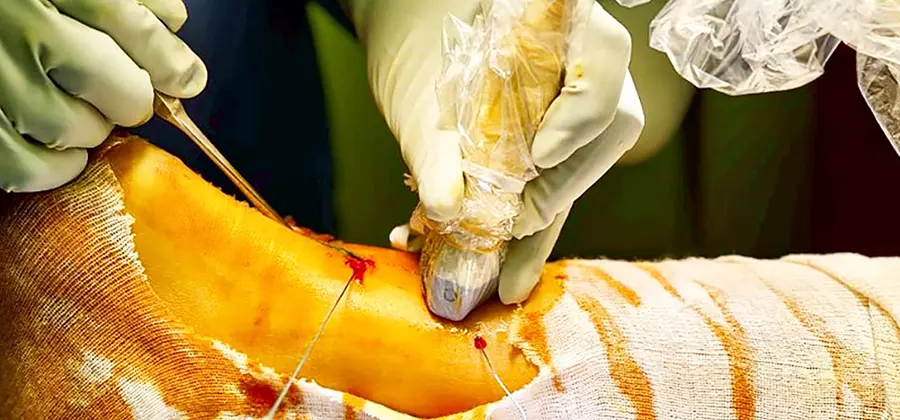
The Department of Medical Imaging at Taipei Tzu Chi Hospital provides over 260,000 imaging services annually, including more than 40,000 CT and MRI examinations, 44% of which require contrast administration. Since contrast injection may cause extravasation or allergic reactions, the department has implemented standardized workflows and monitoring mechanisms since 2019. From 2021 to 2025, the average extravasation rate was only 0.025%, a 71% reduction compared with 2019–2020 and far below the international benchmark of 0.1%–1.2%. The average allergy rate was 0.15%, also lower than the international range of 0.2%–0.7%. The department established quantitative standards for injection line pressure and collaborated with the original manufacturer to upgrade contrast injectors, enabling flow rate, injection volume, and pressure data to be uploaded to PACS. A Bluetooth-based monitoring system was also developed, allowing staff to remotely track pressure changes and intervene immediately when abnormalities occur. HIS alerts display renal function and allergy history before examinations to enhance medication safety. Clinical protocols were updated: metformin discontinuation is no longer required; only cardiac, abdominal, and pelvic CT examinations require 4-hour fasting, while fasting is waived for other CT examinations. The department will continue to advance clinical practice, education, and research, aiming to become a leading team in contrast administration safety.
Intelligent Information System: HIS provides real-time renal function data, allergy history, and high-risk alerts.
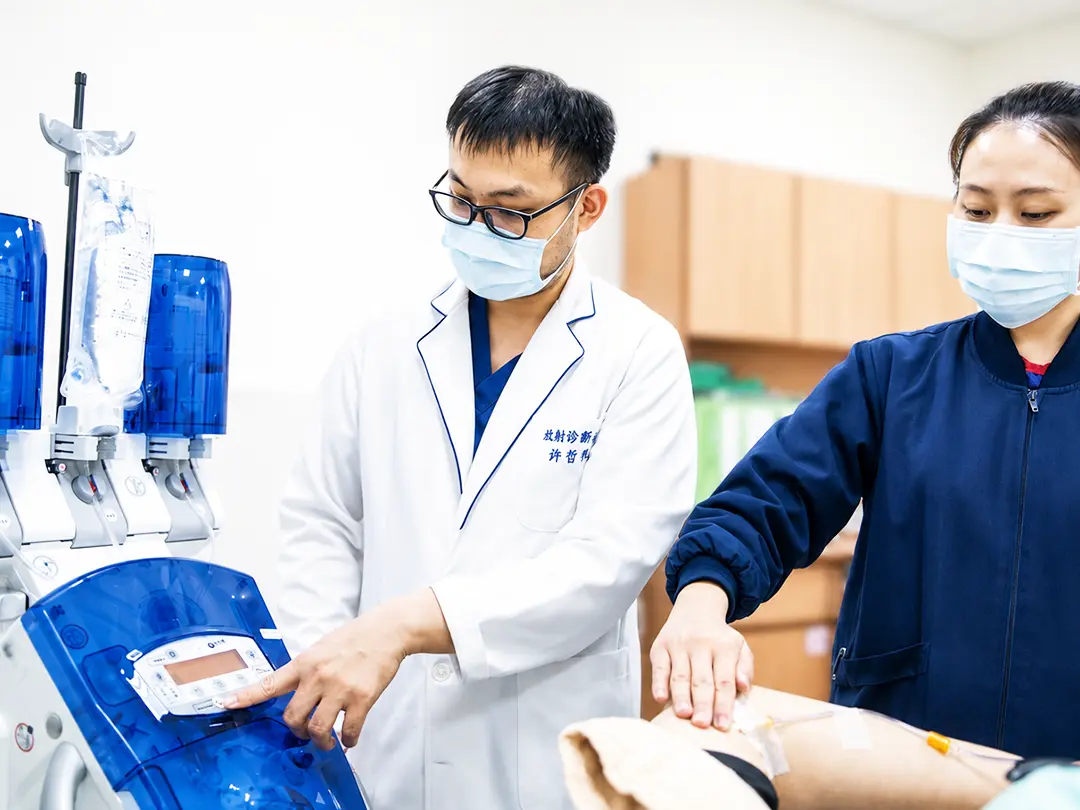
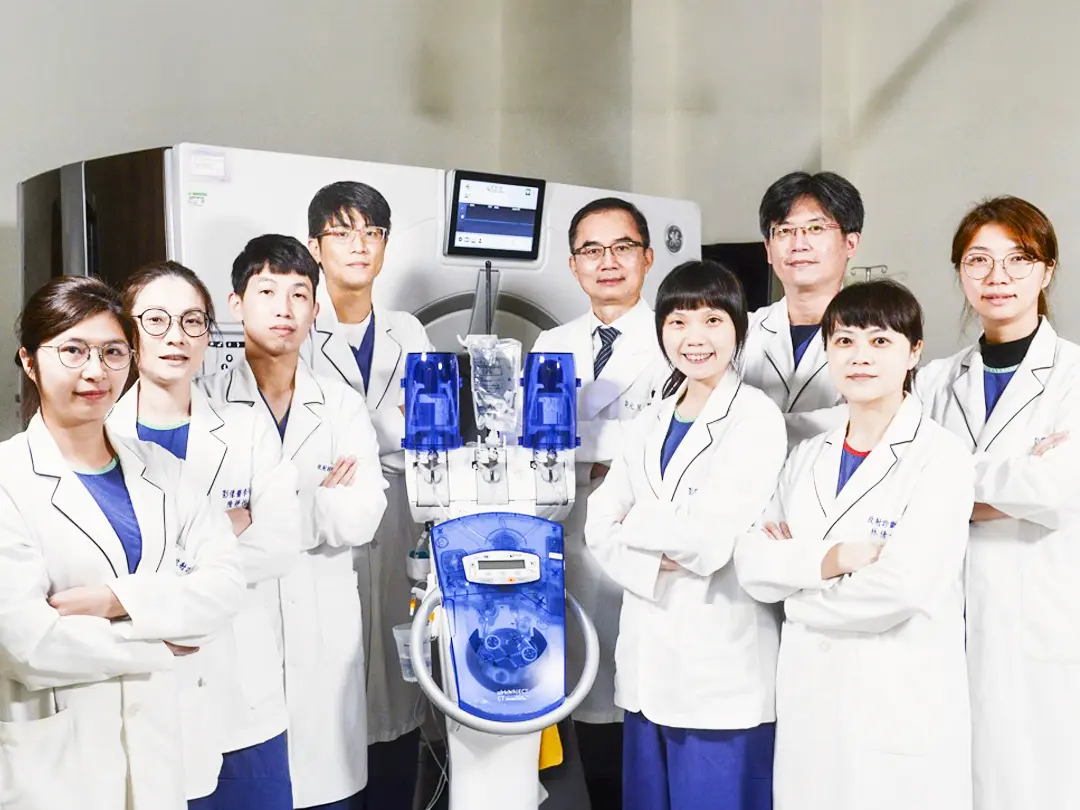
Advanced Contrast Injector: Built-in pressure detection and automatic shut-off functions, with injection data uploaded to PACS.
Quantitative Pressure Standards: Reference values were established, identifying flow rate, catheter gauge, saline pressure, and body weight as key factors.
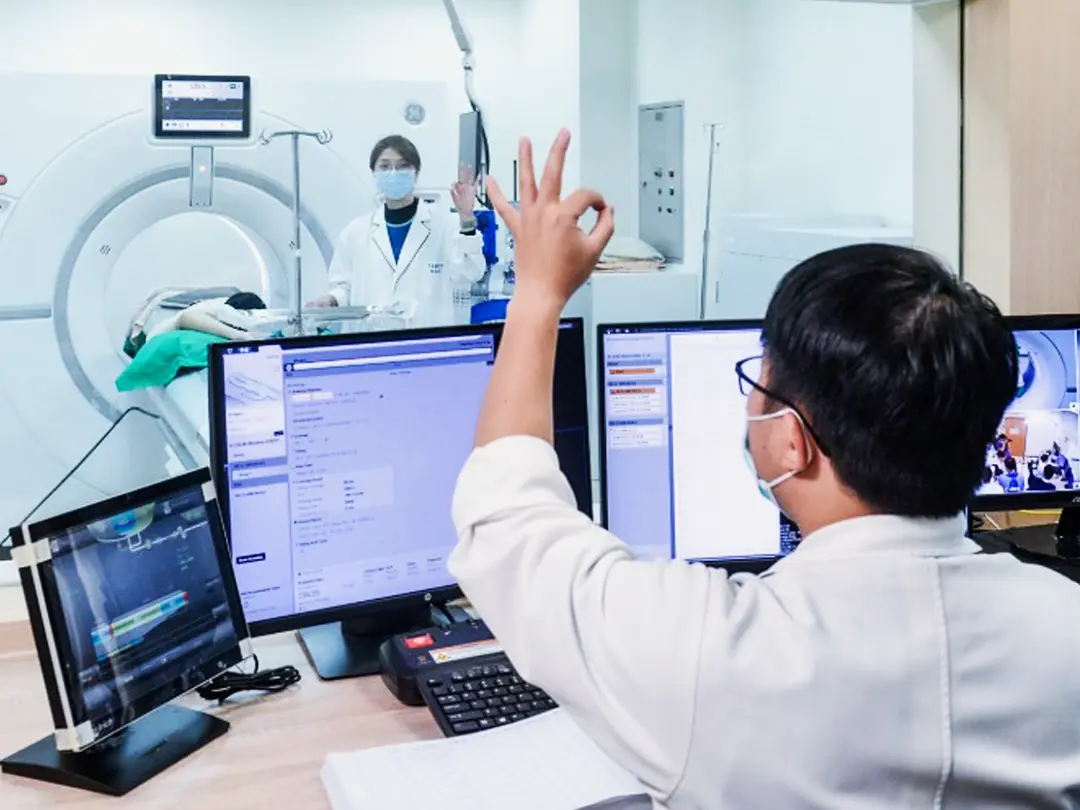
Triple Safety Verification: Nurses assess blood return and pressure values, while radiologic technologists monitor the entire injection process.
Real-Time Remote Monitoring: Pressure values are transmitted via Bluetooth, allowing immediate intervention or termination when abnormalities occur.
Updated Clinical Protocols: Metformin discontinuation is no longer required. Fasting is limited to cardiac, abdominal, and pelvic CT examinations.
Education and Dissemination: Internal and external courses and seminars are held to promote contrast safety nationwide.
From 2019 to 2023, the Department of Medical Imaging provided an average annual service volume of approximately 261,163 examinations, reaching 293,456 in 2023. CT examinations averaged 27,668 cases per year, and MRI examinations averaged 10,941 cases per year, representing key advanced imaging services.Approximately 44% of CT and MRI patients required contrast administration, making contrast safety a major patient safety priority. During 2019–2023, 65,257 patients received contrast-enhanced examinations, with 25 extravasation events and an average extravasation rate of 0.038%, lower than the reported benchmark of 0.1%–1.2%. A total of 129 allergic reactions were recorded, with an average allergy rate of approximately 0.20% and a severe allergy rate of approximately 0.010%.The department also achieved 421 consecutive days without contrast extravasation from February 5, 2022 to April 2, 2023, demonstrating the effectiveness of standardized workflows, blood-return assessment, and pressure monitoring.For public health services, the department supported 10,786 mammography screening cases from 2020 to 2023. In the past three years, mobile mammography services completed 105 community and remote-area sessions, serving 7,099 people. During COVID-19, the department supported 12,986 X-rays, 142 CT scans, 20 MRI scans, and 6 angiography or special radiography examinations.
Contrast Safety Outcomes Reducing contrast extravasation is the core safety indicator of this service. From 2019 to 2023, 65,257 patients received contrast-enhanced examinations, with only 25 extravasation events. The average extravasation rate was 0.038%, far lower than the reported benchmark of 0.1% to 1.2%. In 2022, the rate decreased to 0.01%, and the department achieved 421 consecutive days without contrast extravasation, demonstrating the effectiveness of standardized workflows, blood-return training, and pressure monitoring.
Medication Allergy Outcomes This service strengthens contrast allergy risk management through HIS5 alerts, allergy history checks, renal function review, and standardized adverse event response. From 2019 to 2023, 129 contrast-related allergic reactions were recorded. The average allergy rate was approximately 0.20%, and the severe allergy rate was approximately 0.010%, remaining below the reported range of 0.2% to 0.7%. These results reflect stable medication safety management.
Service Capacity Outcomes The Department of Medical Imaging provides stable, high-volume imaging services. From 2019 to 2023, the average annual service volume was approximately 261,163 examinations, reaching 293,456 in 2023. CT examinations averaged 27,668 cases per year, and MRI averaged 10,941 cases per year. About 44% of CT and MRI patients required contrast administration, showing the broad clinical impact of this safety service.
Patient Safety Indicators From 2019 to 2023, 65,257 patients received contrast-enhanced examinations, with only 25 extravasation events. The average extravasation rate was 0.038%, lower than the reported benchmark of 0.1% to 1.2%. The rate decreased to 0.01% in 2022 and remained at 0.03% in 2023. The department also achieved 421 consecutive days without any contrast extravasation event, demonstrating stable and effective patient safety management.
Medication Safety Indicators Through the HIS5 real-time alert system, allergy history and renal function information are actively displayed before examinations, helping staff identify high-risk patients. From 2019 to 2023, 129 contrast-related allergic reactions were recorded. The average allergy rate was 0.20%, and the severe allergy rate was 0.010%. In 2023, the allergy rate decreased to 0.13%, remaining below the reported range of 0.2% to 0.7%, showing stable medication risk control.
Risk Management Indicators The service introduced a triple-check mechanism, secondary blood-return assessment, and quantitative injection pressure monitoring to strengthen risk identification before, during, and after contrast injection. Three pressure-monitoring injectors are used clinically, and contrast agents are maintained at 30 to 37°C in warming cabinets to reduce injection resistance and pressure variation, creating a more standardized and monitorable contrast safety model.
The Department of Medical Imaging has conducted regular patient satisfaction surveys to monitor changes in service quality. The overall satisfaction score has remained above 92 points and has shown a steady upward trend, reflecting growing public recognition and trust in the department’s imaging services.
Satisfaction with Service Dimensions The department continuously evaluates four major service dimensions: environment and space, informed consent, professional competence, and service workflow. Survey results show that patients gave positive feedback on examination flow, quality of explanation, professional service, and the overall care process.
Satisfaction with Contrast-Enhanced Examinations Among patients receiving contrast-enhanced examinations, satisfaction scores across all evaluated dimensions reached above 96 points. Comprehensive pre-examination explanations, one-on-one education, intravenous catheter assessment, and continuous care during examinations helped improve patient reassurance and cooperation.
Feedback Indicators Patient feedback is collected through hospital mailboxes, public message boards, and satisfaction surveys. The department has continued to receive appreciation and positive comments regarding team care, examination procedures, and service attitude, indicating sustained improvement in patient trust and service recognition.
International Safety Performance Our contrast safety outcomes exceed international benchmarks. Reported extravasation rates range from 0.1% to 1.2%, while our hospital achieved only 0.025% from 2021 to 2025. The average allergy rate was 0.15%, with severe reactions consistently below 0.01%, demonstrating strong medication safety performance.
International Academic Presentations We continue to share contrast safety improvements internationally. In 2020, we presented CT contrast extravasation TRM experience at an international radiological technologist conference. In 2025, we presented pressure monitoring and extravasation prevention outcomes at the ICN Congress in Helsinki, Finland.
Cross-National Collaboration We collaborated with the original contrast injector manufacturer, including a visit by the German team to review our clinical pressure monitoring results. Discussions explored integrating pressure standards and reference values into future injector design.
Global Promotion Value This service replaces experience-based judgment with data-driven safety management. Through standardized injection workflows, blood-return assessment, and pressure monitoring, our model is reproducible, monitorable, and applicable to other institutions, with continued promotion through conferences, education, and journal publication.
Establishing a contrast safety care standard, integrating HIS5 real-time alerts and quantitative pressure monitoring to reduce extravasation and medication risks, enhance patient reassurance and imaging quality, and create a scalable smart healthcare safety model for domestic and international promotion, supporting sustainable care development.