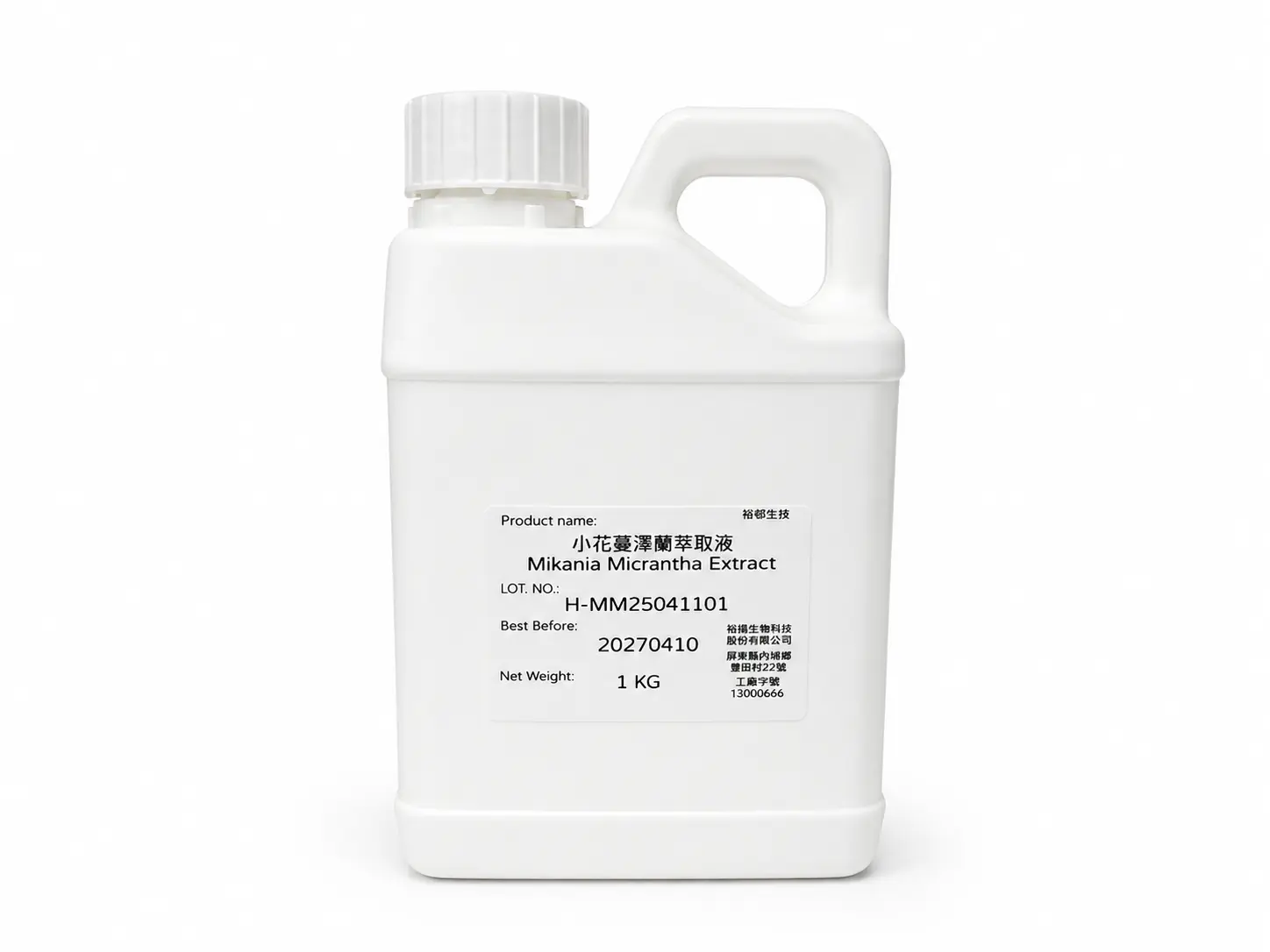
Mikania micrantha Extract is a plant-derived active ingredient developed using patented extraction technology. Traditionally regarded as a rapidly growing environmental management plant, Mikania micrantha has been transformed into a value-added cosmetic ingredient through biotechnology, supporting sustainable resource utilization and circular economy principles. The product is manufactured through a standardized extraction and purification process designed to preserve naturally occurring bioactive compounds while ensuring batch-to-batch consistency. Comprehensive quality management procedures are implemented throughout production to maintain product reliability and stability. In vitro studies and scientific evaluations indicate the potential of Mikania micrantha Extract to help soothe skin discomfort, support skin barrier function, and maintain skin stability. These properties make it suitable for formulations designed for sensitive skin and skin repair applications. The ingredient can be incorporated into serums, lotions, masks, and other skincare products. Combining botanical innovation, patented technology, and scientific validation, Mikania micrantha Extract offers a sustainable and innovative solution for modern skincare development.
ISO22176 GMP
Aqua\ Propanediol\ Mikania Micrantha Extract\ Hydroxyacetophenone\ Caprylhydroxamic Acid\ Ethylhexylglycerin\ Disodium EDTA
Total flavonoids (Calculated as Rutin)
YU-JEN BIOTECHNOLOGY CO., LTD.
A quality management system is implemented throughout raw material inspection, production, intermediate control, and final product release to ensure consistency and stability. Incoming raw materials are verified according to established specifications, including appearance, odor, and basic physicochemical properties. Batch records and traceability systems are maintained for all materials. Manufacturing is performed under standardized operating procedures (SOPs). Key process parameters, including extraction conditions, processing time, and storage conditions, are monitored and documented. Intermediate products are inspected to confirm compliance with process requirements. Before release, finished products are evaluated for appearance, pH, solid content, and microbiological quality. Only qualified batches are approved for shipment. Quality indicators such as raw material acceptance, process compliance, release approval, and customer feedback are reviewed regularly to support continuous quality improvement and product consistency.
To ensure product safety and quality consistency, the product is tested by SGS, an independent third-party testing organization. Microbiological testing includes total aerobic microbial count, Staphylococcus aureus, Escherichia coli, and Pseudomonas aeruginosa, which are commonly recognized cosmetic safety indicators. Test results demonstrated compliance with applicable requirements, and all specified pathogenic microorganisms were not detected. Heavy metal analysis includes lead (Pb), arsenic (As), cadmium (Cd), and mercury (Hg). All results were reported as non-detectable or below the analytical detection limits and met applicable safety requirements. The use of independent third-party testing provides objective verification of product safety and quality. These testing results support quality assurance activities and provide customers with confidence in the safety and reliability of the ingredient for cosmetic and personal care applications.
A risk management system has been established to address potential risks associated with raw materials, manufacturing processes, finished products, and post-market applications. At the raw material stage, supplier qualification and incoming inspection procedures are implemented to ensure source reliability and compliance with established specifications. During manufacturing, production activities are conducted according to standardized operating procedures, and critical control points are monitored and documented to minimize process variation and operational risks. Finished products are released only after passing quality inspections. Retention sample programs and batch traceability systems are maintained to support future investigations and quality monitoring activities. Internal quality audits and personnel training programs are conducted regularly to strengthen quality awareness and risk identification capabilities. Following market release, customer feedback and product performance information are continuously reviewed. A structured incident reporting and response process is implemented, and corrective and preventive actions (CAPA) are initiated when necessary. These measures support continuous improvement and effective management of potential quality and safety risks throughout the product lifecycle.
Republic of China Patent No. I643629