Home hemodialysis patients
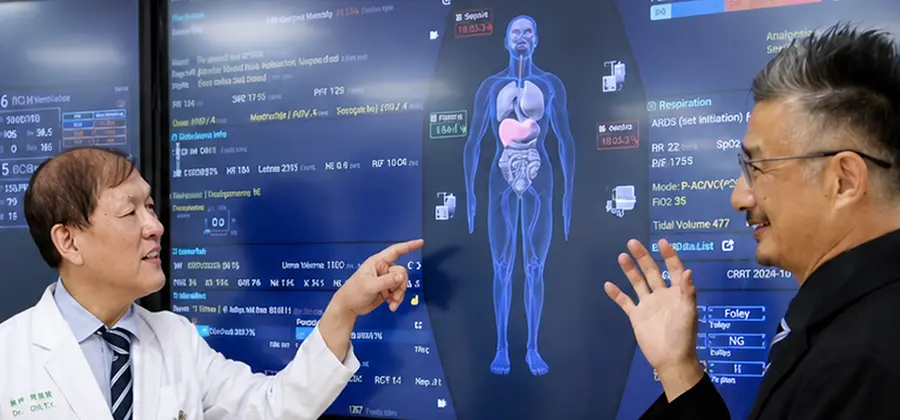
Hemodialysis is traditionary considered as a risky treatment, making it difficult to promote home hemodialysis. Our hospital has created a remote monitoring and alert system that can monitor the home hemodialysis in real time and improve the patients' compliance and safety.
Home hemodialysis is considered one of the most effective forms of dialysis therapy. By delivering treatment at a slower rate and over longer sessions, it more effectively removes excess fluid and uremic toxins, reducing the burden on the heart while improving long-term survival and quality of life. Integrated remote monitoring and real-time alert systems further enhance treatment adherence and patient safety. Once training is successfully completed, patients can confidently perform dialysis independently in the comfort of their own homes.
Export operational information from the home hemodialysis machine.
Transmit the home hemodialysis machine's signal back to the hospital via the network.
Design a set of hazard value reporting system and sent alarm automatically to patints and on-call nurse and doctor.
Currently 35 patients were treated with home hemodialysis in our hospital.
The furthest distance between a patient's home and our hospital is 170 kilometers.
Monitored over 10,000 home hemodialysis sessions without any incidents.
A total of 38 patients received home hemodialysis training, of whom 3 did not complete the training; the remaining 35 patients successfully completed the training and returned home for home hemodialysis.
96% of patients were included in remote monitoring and alert system with improved safety and effective supervision.
100% adherence to dialysis prescriptions resulted in outstanding dialysis outcomes.
The survival rate of patients undergoing home hemodialysis is far higher than that of patients undergoing traditional center hemodialysis.
69% of patients achieved dry weight and normal blood pressure, so no need for antihypertensive medication.3. No hemodialysis related life threatening accidents occurred since the application of the monitoring and alert system in past 7 years.
None hypotension, cramps, or bleeding occurred during home hemodialysis.
The quality of life index (SF-36) for home hemodialysis patients is better than that for traditional hemodialysis.
Patient satisfaction with home hemodialysis is far higher than that of traditional hemodialysis.
No patients withdrew from treatment due to poor dialysis results.
KDIGO Workshop Report on the Implementation and Expansion of Home Hemodialysis (HHD) in East Asia: A Focus on Hong Kong, Japan, Korea, and Taiwan. Kuo, Huey-Liang; Lai, Ping-Chin; Huang, Chiu-Ching. (In press)
Home Hemodialysis with Remote Monitoring and Warning System in Taiwan. FR-PO0541. Kuo, Huey-Liang; Lai, Ping-Chin; Huang, Chiu-Ching. Journal of the American Society of Nephrology 36(10S):10.1681/ASN.2025dntp7q1h, October 2025. | DOI: 10.1681/ASN.2025dntp7q1h
Home hemodialysis is more effective and can save on the use of antihypertensive drugs, phosphate binders, and erythropoietin.
Home hemodialysis eliminates the need for travel between home and hospital, reducing carbon emissions by 544.32 kg per person per year.3.Home hemodialysis patients have better 5 year patient survivals than center hemodialysis patints(about 30% higher survival rates)