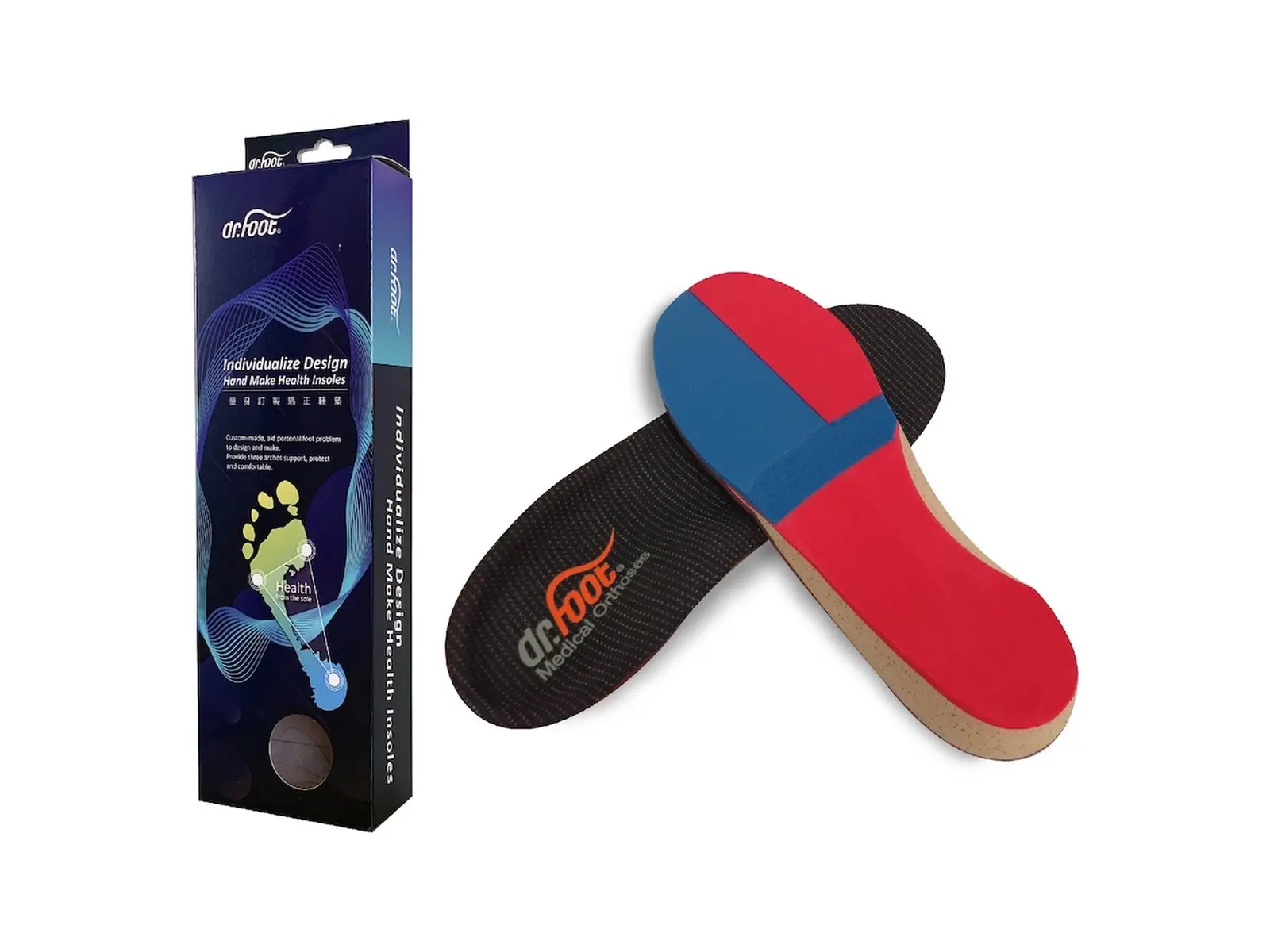
Dr.Foot Handcraft Tailored Insoles are designed with three arches mechanical support structure. They can be tailored to individual foot shapes, angles, curves, and heights. By combining forefoot, midfoot, and rearfoot zones with multi-material, multi-structure, and multi-angle production methods, these insoles meet personal needs while achieving correction, support, and comfort goals.
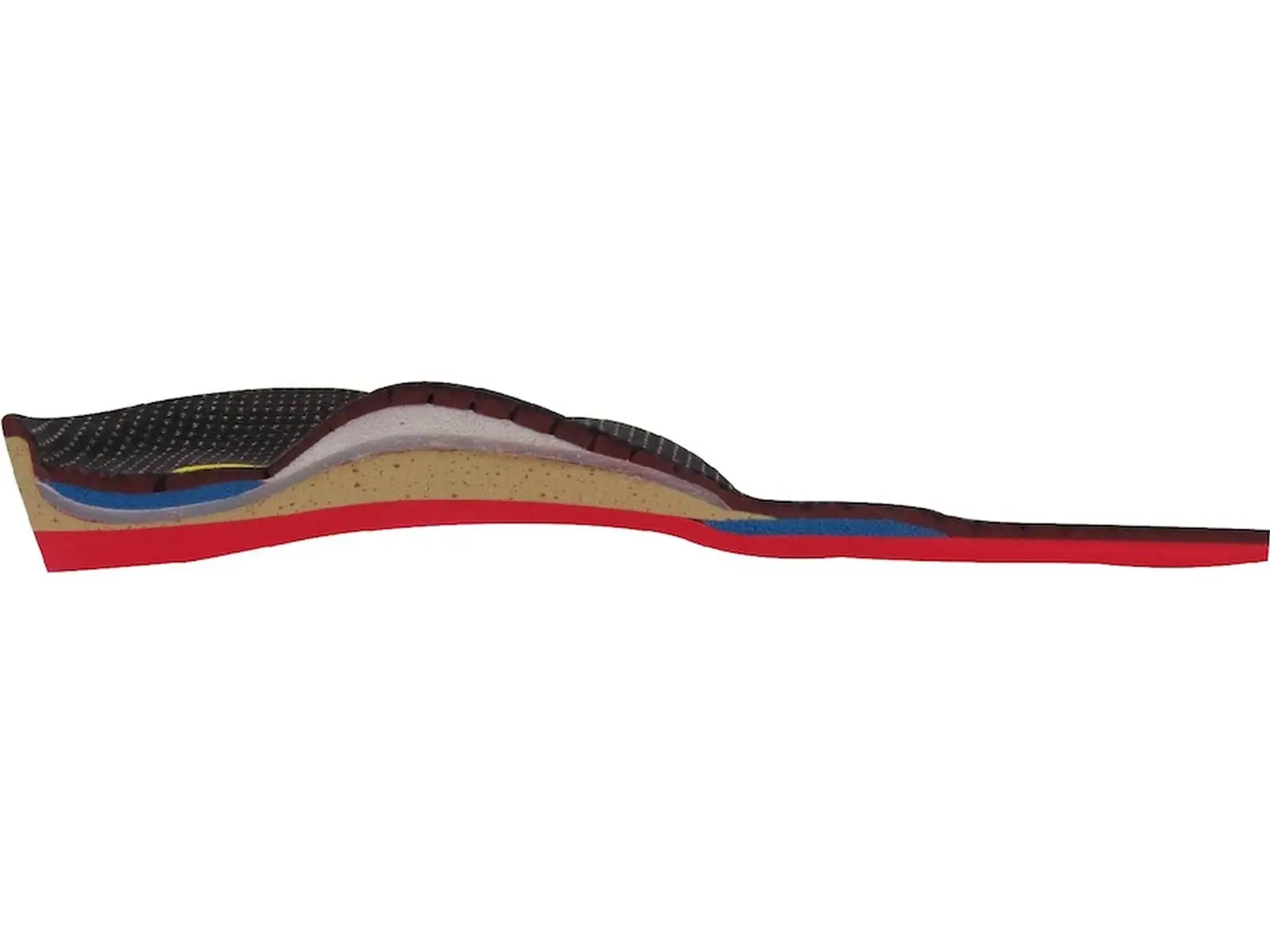
Dr.Foot insoles provides the necessary support. Shoes on the market tend to have insoles with only a single, thin layer of EVA or PU foam for decompression. Such insoles may feel comfortable initially but require more effort from the feet to push forward while walking, leading to increased fatigue over time. Proper insoles should feature a semi-rigid, thin elastic plate design for the tri-arch structure, capable of supporting body weight and the medial arch to achieve structural pressure distribution and reduce strain.
In addition to being certified by the Footwear & Recreation Technology Research Institute for its pressure-relief effectiveness, Dr. Foot insoles have been verified by clinical testing at Taichung Veterans General Hospital, proving their ability to support the midfoot structure effectively and alleviate pain. Dr.Foot Handcraft Tailored Insoles are your best choice for medical correction and sports health.
Taiwan Ministry of Health and Welfare Medical Device Manufacturing Registration Number 006850
Other countries for certification include the US PFA (Pedorthic Footcare Association).
Dr.Foot Technology Co., Ltd. Yilan Plant (Manufacturing License for Medical Device Manufacturer, issued by the Yilan County Government, with the license number MD6134000043.)
According to the Chemical Products Division of the Keelung Branch of the Bureau of Standards, Metrology, and Inspection under the Ministry of Economic Affairs, "medical insoles" have been classified as "general accessories for adult use." It has been determined that they do not fall under the category of items requiring inspection by the Bureau of Standards, Metrology, and Inspection. Therefore, no relevant certification data is available for provision.
Our company updated its process quality control system in June 2021, implementing the QMS:2021 Essential Model Quality Management System in accordance with regulations. In February 2022, we successfully passed the application for the Essential Model certification, with the approval number QMS5312.
Approved Items and Operational Scope:
1. Manufacturing, packaging, labeling, and final release of orthotic devices.
2. Manufacturing, packaging, labeling, and final release of medical imaging transmission devices.
For quality control of raw materials, semi-finished products, and finished products, the company adheres to the "Incoming Inspection Control Procedure" (Document No.: DF-QP-014), established in 2021, for execution and operational management.
Insole products are non-invasive. Therefore, raw material management focuses on physical properties—like abrasion resistance, compression resistance, hardness, and thickness—to ensure durability and comfort. For new or incoming materials, regular sampling is conducted and tested by the Footwear & Recreation Technology Research Institute, managed under the "Incoming Inspection Control Procedure" (DF-QP-014).
Dr. Foot Handcrafted Tailored Insoles are fully bespoke; Customer A’s product cannot fit Customer B. The main risk is ensuring consistency between the prescription and the finished product. To control this, the factory utilizes a four-stage inspection process: material preparation, manufacturing, quality inspection, and shipping.
Product and Recipient Mismatches: Customer names are laser-engraved on the insoles to prevent mix-ups during shipping. Store personnel inspect products upon delivery, and therapists ensure a proper fit.
Wearing Adaptability: Customers try on insoles under therapist guidance for on-site adjustments. Post-purchase issues can be resolved via follow-up evaluations and adjustments, ensuring complete satisfaction.
Standards, Metrology and Inspection (BSMI), Ministry of Economic Affairs, "medical insoles" are classified as "general accessories for adults" and are determined not to fall under the scope of mandatory inspection items regulated by the BSMI. Consequently, no relevant inspection data is available. (https://www.bsmi.gov.tw/wSite/ct?xItem=87895&ctNode=8161&mp=1)
Post-Market Safety Monitoring and Management
Since insoles are non-invasive corrective assistive devices and not orally administered medications, they do not pose the risk of "undetectable adverse drug reactions with low incidence but high severity."
The current approach involves proactive follow-up with customers. After completing insole fitting in-store, the store staff will contact the customer within two weeks to understand their usage experience. Any issues raised can be addressed immediately or an exclusive session can be arranged for evaluation and adjustment. Even if the customer does not report any issues, a follow-up visit is scheduled three months after purchase. This proactive observation and tracking are part of post-market monitoring to assess the product’s effectiveness and ensure quality.
Taichung Veterans General Hospital, Department of Rehabilitation Research Team (2013). Investigation on the Impact of Dr. Foot Arch Support Insoles on Foot Skeletal Alignment. 2013 Annual Meeting of the Society of Physical Medicine and Rehabilitation, Code 38.
Insole Structure
A.Taiwan Utility Model Patents: M436356, M539818
B.China Utility Model Patent: ZL201220004556.5
C.US Utility Design Patent: USD702,431 S
D.Japan Utility Model Patent: 3210336
Foot Scanning System
A. Taiwan Invention Patent No. I 242978
B. China Invention Patent No. CN1939210
C. Taiwan Invention Patent No. 97125358.