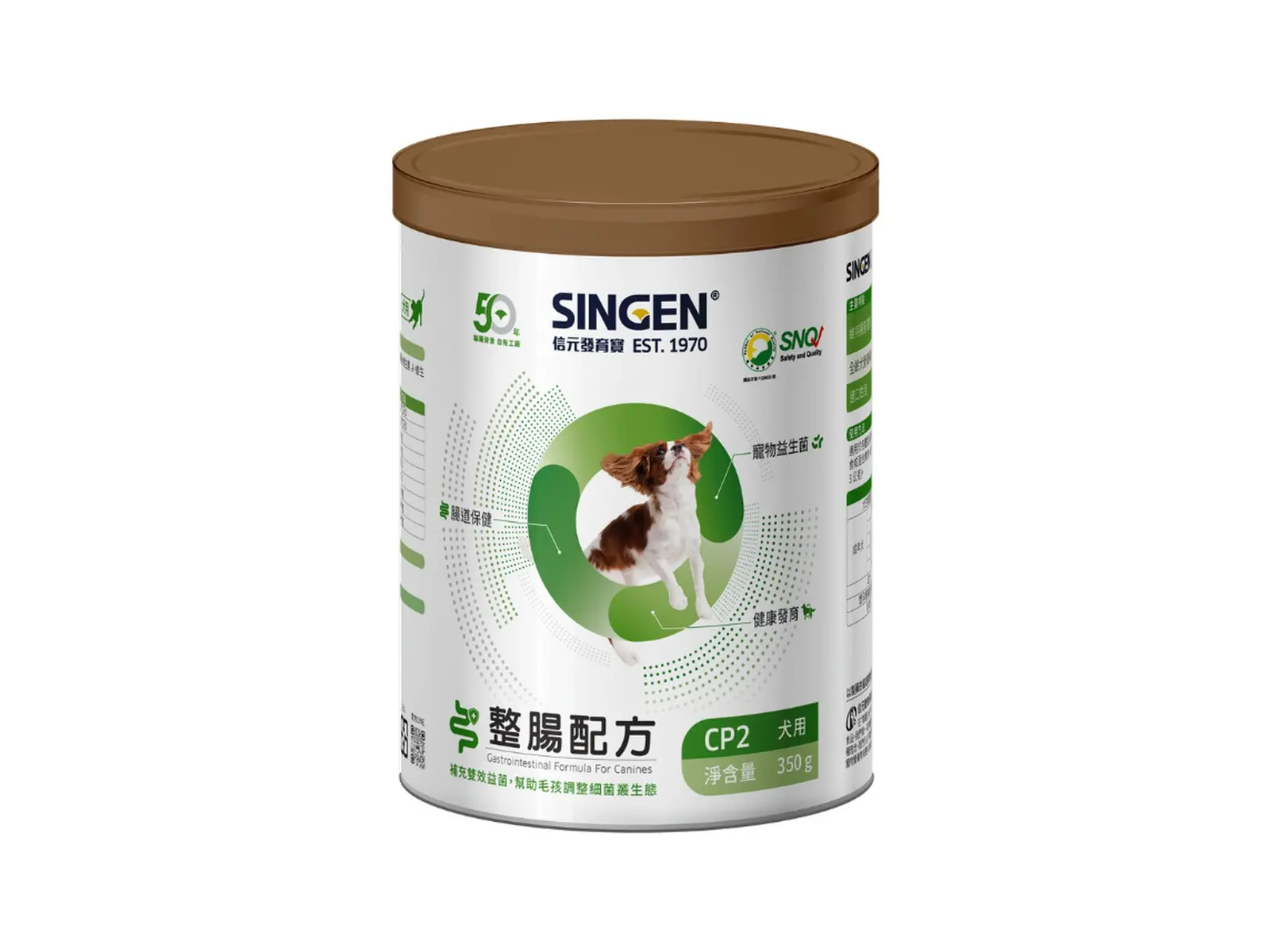
This product is formulated for canine intestinal conditioning and digestive barrier maintenance. Based on routine digestive needs, the R&D team focused on acid-resistant colonization, mucosal maintenance, and metabolic support, creating a functional supplement with high bioavailability and compliance.
1. Concept and Key Formula
To survive stomach acid and bile, this formula selects a dual-strain spore-forming blend (Bacillus coagulans & Bacillus subtilis) with strong acid resistance, delivering 2 million CFU/g.
The Bacillus subtilis is a patented strain (HU58) with re-sporulation capability to colonize the gut and modulate microbiota. It promotes short-chain fatty acids (butyric acid) to energize epithelial cells and maintain mucosal health. Paired with prebiotic fructooligosaccharides (FOS), it forms a synbiotic chain supporting digestive function.
2. Mucosal Barrier and Nutrition
To strengthen the intestinal barrier, the formula includes Hericium erinaceus extract, rich in polysaccharides, to protect the lining and support gut immunity. Essential micronutrients (vitamins A, D3, B1, B2, B6) are added to support growth, energy metabolism, and immune function.
3. Process and Application
To prevent powder inhalation and choking, this product uses micro-granulation technology. This dust-free granulated form offers high fluidity and flexible feeding (direct or mixed). Enhanced with a mild milk flavor, each can includes a scoop for precise daily dosing to achieve routine care.
The manufacturing facility implements international quality control systems from raw materials to finished products through SOPs and traceability.
1. Pharmaceutical GMP Standards
The facility holds a veterinary pharmaceutical manufacturing license and applies GMP regulations to pet supplement production, distinct from standard pet food plants:
Cross-Contamination: Facility hardware, equipment, and air filtration follow pharmaceutical standards with strict zoning to prevent contamination.
Process Control: Every batch undergoes in-process checks to ensure uniformity and stability.
2. ISO 22000 & HACCP Certifications
The facility maintains dual international food safety certifications:
ISO 22000: Operations follow SOPs covering raw material inspection, process control, sanitation, and packaging with full traceability.
HACCP: Hazard Analysis identifies biological, physical, and chemical risks, with Critical Control Points (CCPs) for continuous monitoring.
3. US FDA FSMA & Domestic Compliance
US FDA FSMA: The facility's hardware and Food Safety Plan have a record of fulfilling inspection requirements under the US FDA Food Safety Modernization Act (FSMA).
Domestic Regulations: Operations fully comply with the Animal Protection Act in Taiwan. All ingredients and nutritional labeling fulfill official declaration requirements.
Bacillus coagulans, Bacillus subtilis, Hericium erinaceus Extract, Fructooligosaccharides (FOS), Vitamin A, Vitamin D3, Vitamin B1, Vitamin B2, Vitamin B6, Milk Flavor Powder.
Active Ingredient Content (Per Gram):
Bacillus coagulans: 1.0 x 10^6 CFU
Bacillus subtilis: 1.0 x 10^6 CFU
Hericium erinaceus extract: 10 mg
Fructooligosaccharides (FOS): 10 mg
Vitamin A: 626 IU
Vitamin D3: 25 IU
Vitamin B1: 0.21 mg
Vitamin B2: 0.48 mg
Vitamin B6: 0.14 mg
Singen Animal Health Industry Co., Ltd.
Our company maintains a strict QC system across production, checking raw materials, in-process stages, and finished products via data-driven indicators.
1. Incoming Material QC
Raw Materials: Ingredients undergo COA verification and technical reviews. Admittance requires full compliance with quality standards.
Packaging & Labels: Inspected against appearance standards. Labels and boxes are reviewed for color and regulatory compliance to ensure lawful labeling.
2. In-Process & Semi-Finished QC
Process Monitoring: Includes verifying raw materials, checking parameters, and testing semi-finished traits. Automatic checkweighers ensure weight accuracy. Can-seaming and code printing are strictly checked.
Semi-Finished Testing: Sampling checks appearance, moisture, and lactic acid bacteria. Tests for E. coli, Salmonella, Listeria, and Clostridium perfringens ensure hygiene.
3. Finished Product & Warehouse
Release Check: Finished products undergo packaging checks. We verify records and authorize shipment only when all process data is correct.
Warehouse Control: Storage follows temperature and humidity checked regularly.
All records comply with GMP and ISO 22000 for full batch traceability.
1. Pathogenic Microorganisms & Toxin Testing
Pathogenic Microorganisms:
Salmonella: Negative (Not Detected).
Listeria monocytogenes: Negative (Not Detected).
Pathogenic Escherichia coli: Negative (Not Detected).
Clostridium perfringens: Negative (Not Detected).
Aflatoxins: Not Detected.
Other Mycotoxins (Fumonisin, Ochratoxin, Zearalenone, Deoxynivalenol/Vomitoxin): Not Detected.
2. Heavy Metal Testing
Total Arsenic: Not Detected.
Cadmium: Not Detected.
Lead: Not Detected.
Mercury: Not Detected.
3. Pesticides, Preservatives & Chemical Residues
Pesticide Residues (Aldrin, Dieldrin, BHC, DDT, Endrin, Heptachlor): Not Detected.
Harmful Chemical Substances (Melamine, Propylene Glycol): Not Detected.
Preservatives & Antioxidants:
Sodium Nitrite: Not Detected.
Ethoxyquin: Not Detected.
BHA: Not Detected.
Regulatory Standard: The sum of Ethoxyquin, BHT, and BHA must be below 150 ppm.
4. Environmental Radiation Testing
Radiation Testing (Cesium-134 and Cesium-137): Not Detected.
We establish a risk control mechanism covering raw materials, manufacturing, finished products, and post-market stages through assessments, inspections, and crisis protocols.
1. Preventive Risk Control
Strict facility zoning and personnel flow prevent cross-contamination:
Risk Grading: Materials undergo risk assessments and graded control. High-risk items face enhanced sampling to control quality risks.
Hygiene Maintenance: Operators perform hygiene self-checks for injuries or illness.
Staff inspect production cleanliness following the PDCA management cycle.
2. Microbial Monitoring
To verify our safety plan, QA enforces a routine environmental monitoring mechanism:
Settle Plate Testing: We conduct microbial testing in production zones and perform Trend Analysis on data.
Investigation: If data approaches control limits, we initiate root-cause investigations and corrective actions to prevent pathogen contamination.
3. Post-Market Control & Complaints
We maintain response teams for post-market anomalies, complaints, and emergencies:
CAPA & Recall: For quality deviations, root-cause analysis is conducted to formulate CAPA. Major incidents trigger product recalls with annual mock drills.
Complaints & Satisfaction: Complaints follow a standard process for logging, cause analysis, and improvement. Annual surveys ensure overall satisfaction stays above 90%.
Emergency Plan: Response plans for power outages or fires are practiced annually to minimize derivative risks.