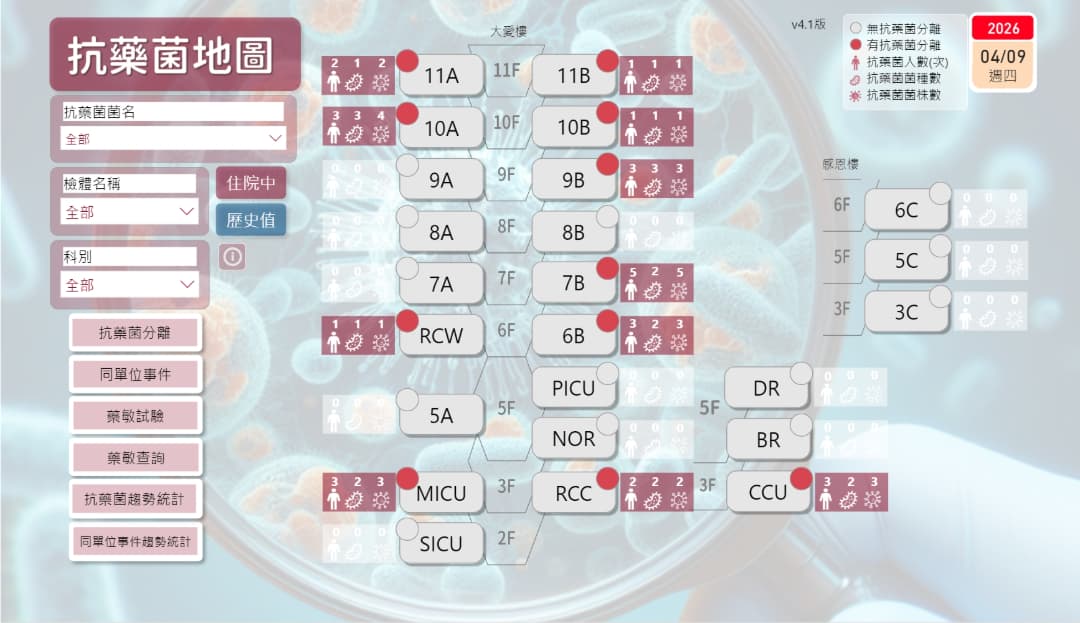
Counts of units with AMR distribution, defining impact scope
Numbers of AMR species, analyzing pathogen diversity
Numbers of AMR strains, indicating occurrence scale
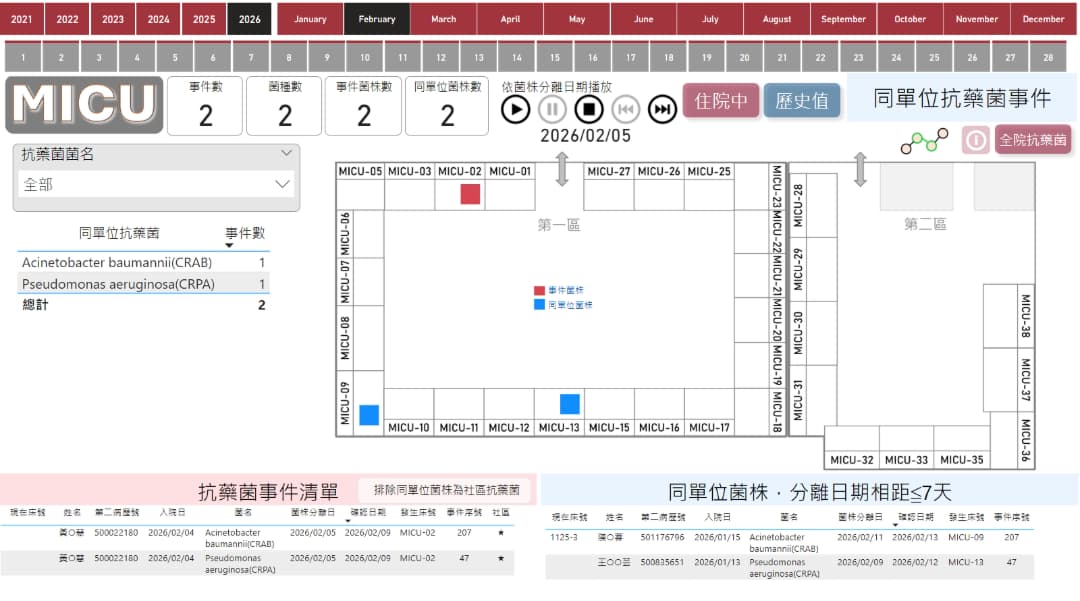
Counts of same-unit cluster events, monitoring potential clustering
Numbers of species in same-unit cluster events, characterizing pathogen diversity
Numbers of strains in same-unit cluster events, assessing transmission risk
Antimicrobial susceptibility testing data, supporting treatment decisions
AMR analysis time reduced from 59.5 to 3.3 minutes per day, a 94.5% reduction
Hospital-wide AMR incidence density decreased from 4.57 to 3.49‰, a 23.8% reduction
7-day same-unit cluster event density decreased from 1.22 to 0.84‰, a 30.9% reduction
Antimicrobial resistance and same-unit events alerted within 30 minutes
Reduced incidence density of hospital-wide AMR and same-unit events
Immediate identification of same-unit cluster events
Significantly shortened epidemiological investigation and response time
Traceable infection control analysis and response processes
Overall system satisfaction score averaged 3.23 on a 4-point Likert scale
High satisfaction with system operation among IC staff
High acceptance of decision support by clinical units
System continuously integrated into routine IC workflows
Results submitted to the International Council of Nurses (ICN)
Presented at an international conference in Finland
Shared smart AMR prevention and control practices
Promoted international exchange in infection control
Enhanced efficiency in hospital-wide AMR surveillance and cluster management by shortening data compilation time, reducing duplicated work and manpower burden, improving cross-unit collaboration consistency and replicability, and promoting smart infection control and healthcare sustainability.
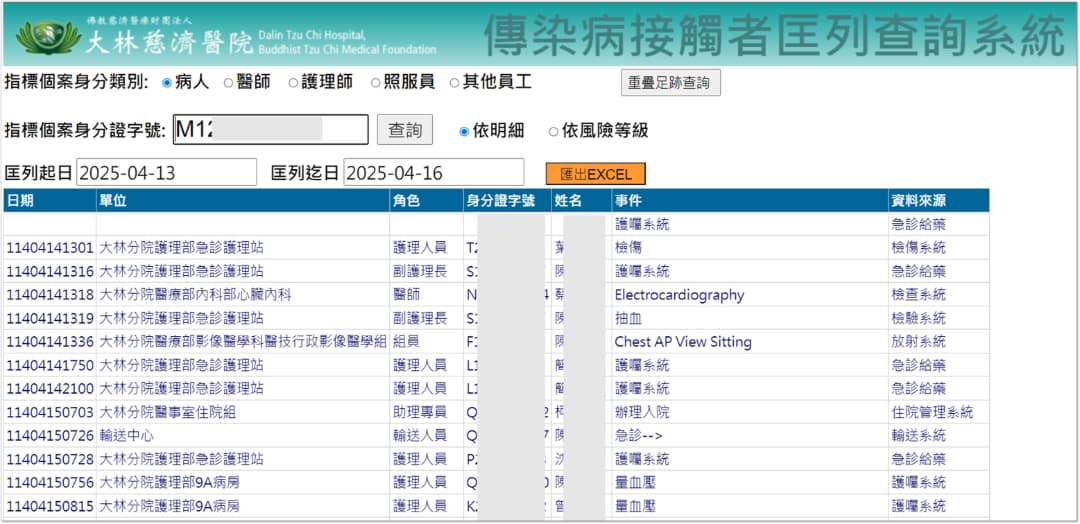
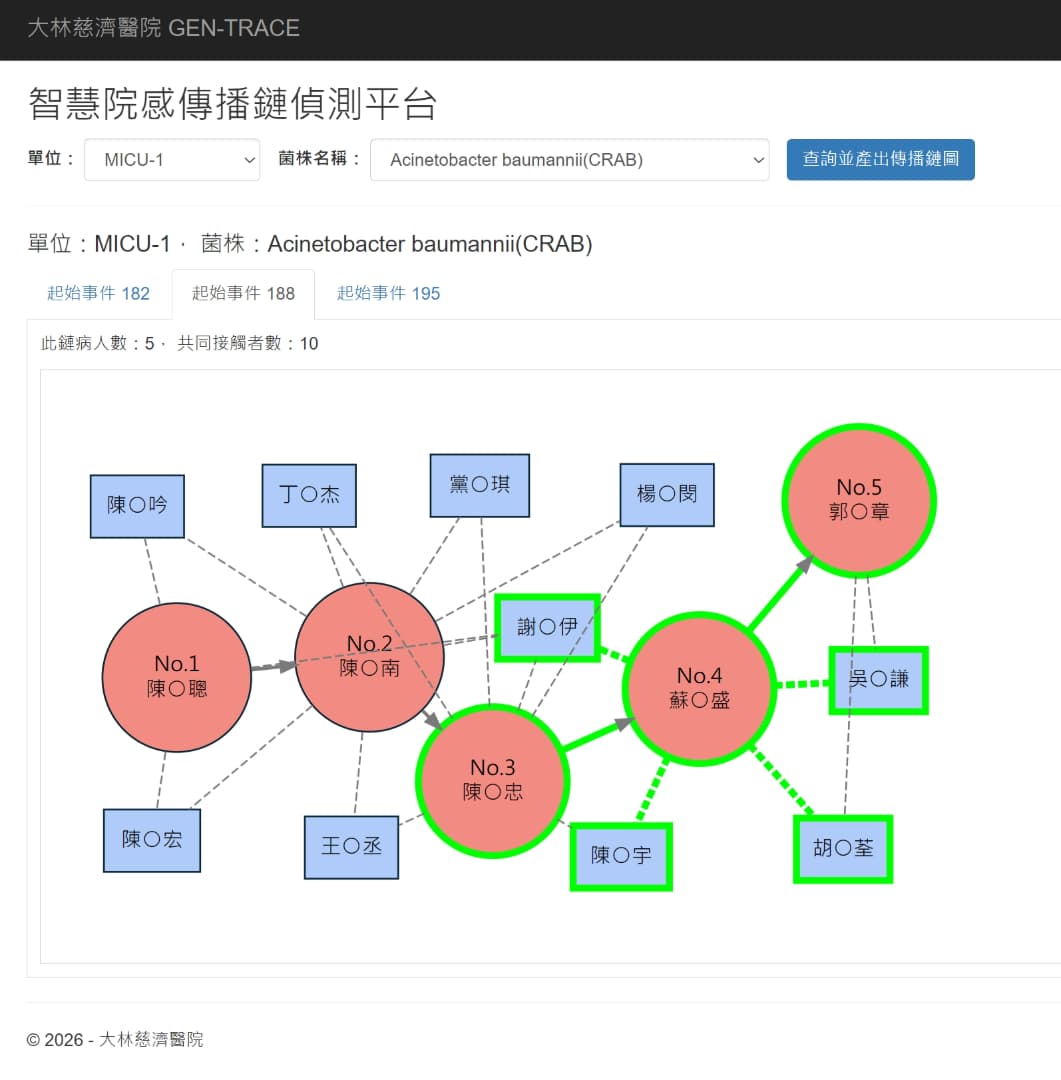
Through the first-in-practice implementation of automated same-unit event tagging, automated shared-contact comparison, and automated generation of suspected transmission chain visualizations, the system standardizes tracking workflows, supports early intervention, reduces transmission risk, and strengthens healthcare quality and patient safety.