University of Tokyo Hospital director Sakae Tanaka on AI image reading, robotic surgery and cancer genomics, and the research, talent and operational support needed to sustain them.
Besides helping to spot lung abnormalities, can a chest X-ray also hint at the risk of osteoporosis? And how does a cancer genomic analysis a hospital developed itself become a service patients can actually use?
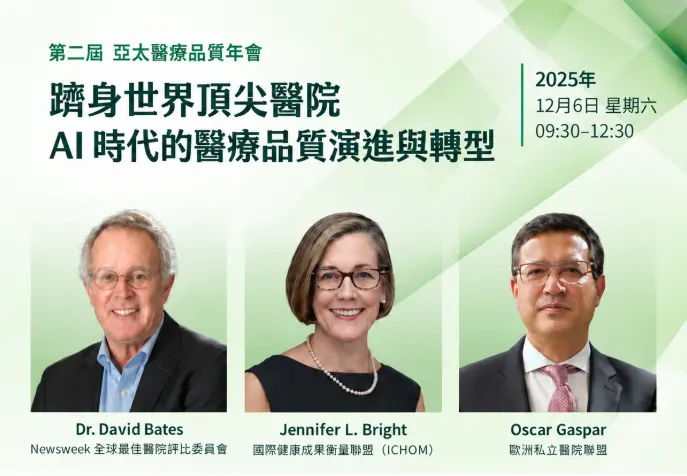
At the second Asia-Pacific Healthcare Quality Forum in December 2025, Sakae Tanaka - then director of the University of Tokyo Hospital and professor of orthopaedic surgery at the University of Tokyo - described the hospital's work in AI imaging, robotic surgery and precision cancer medicine, and the research, talent and operational support that support it.
The University of Tokyo Hospital ranked 16th in the world and 1st in Japan in the 2025 World's Best Hospitals list from Newsweek and Statista. Rankings are not everything, Tanaka said, but they reflect the commitment of colleagues and the trust patients and the international community place in the hospital.
For chest X-rays, the hospital has introduced an AI support system that marks possible abnormalities with heat maps for radiologists and clinicians to consider.
Tanaka described such tools as a second pair of eyes helping physicians review images. The system surfaces the areas that warrant attention, supporting clinicians as they identify abnormalities and interpret them.
Another study explores an extended use of the same image: estimating lumbar spine and femoral bone density with AI, and identifying osteoporosis categories. As he described it, the team assessed this not only in patients at healthcare institutions but in a general population that includes healthy people, exploring its potential as a simple screening tool.
The two applications have different clinical purposes: one helps identify suspicious findings in the image, the other tries to extract additional health risk information from an image already taken, so that a single examination can yield more clues for care.
In the operating theatre, the hospital uses robotic systems including da Vinci and the Japanese-developed hinotori, and is gradually widening their clinical use.
Tanaka emphasised that these systems are used by experienced surgeons to support finer work. Applying the technology remains closely tied to the clinical capability of the operating team.
He also noted that with Japan's ageing population, a substantial share of surgical patients are elderly, while the hospital also takes on complex needs such as organ transplantation and high-risk pregnancy. Those clinical realities are the backdrop to its continued development of advanced techniques.
In precision cancer medicine, the team has brought a cancer genomic analysis system it developed itself into clinical use. Tanaka described the system's RNA analysis capability and its inclusion in Japan's public health insurance coverage in 2023.
Once research reaches the clinic, the conditions for patients to receive the service still have to be handled. Alongside the insurance route, the hospital offers a self-pay testing option for patients who do not meet the coverage criteria, widening access to genomic analysis.
A hospital that develops an analytical tool must also build the route by which patients actually receive the test, or the work never enters the care process.
Sakae Tanaka - University of Tokyo Hospital
Tanaka framed the hospital's mission around care, research and education, and set out four directions: building safe care together with patients, developing advanced techniques, training excellent health professionals, and creating a healthy working environment.
For a university hospital, technology and talent both require sustained investment. The University of Tokyo supports research activity and infrastructure through research funding, commissioned research and industry-academia collaboration, and continues to share its published findings with the international medical community.
The working environment is part of the same picture. Health professionals need good working conditions to deliver good care, Tanaka argued, and training the next generation of professionals determines whether medical progress can be sustained.
Alongside research and technology, Tanaka was candid about the hospital's financial position: the previous fiscal year closed with a significant loss, a problem shared by many university hospitals in Japan. Reimbursement arrangements, he suggested, may need to be revisited.
Research investment and clinical operations each make their own demands on resources. University hospitals provide complex care, conduct research and train staff, and must also secure the finances that keep services running. That pressure cannot be left out of any account of how advanced medicine develops.
The University of Tokyo also shares clinical experience through observation and hands-on training for health professionals from abroad. Talking about AI, Tanaka said Taiwan's clinical applications offer things his hospital can learn from. Exchange makes practices in different healthcare settings visible, and gives each institution ideas for adapting its own practice.