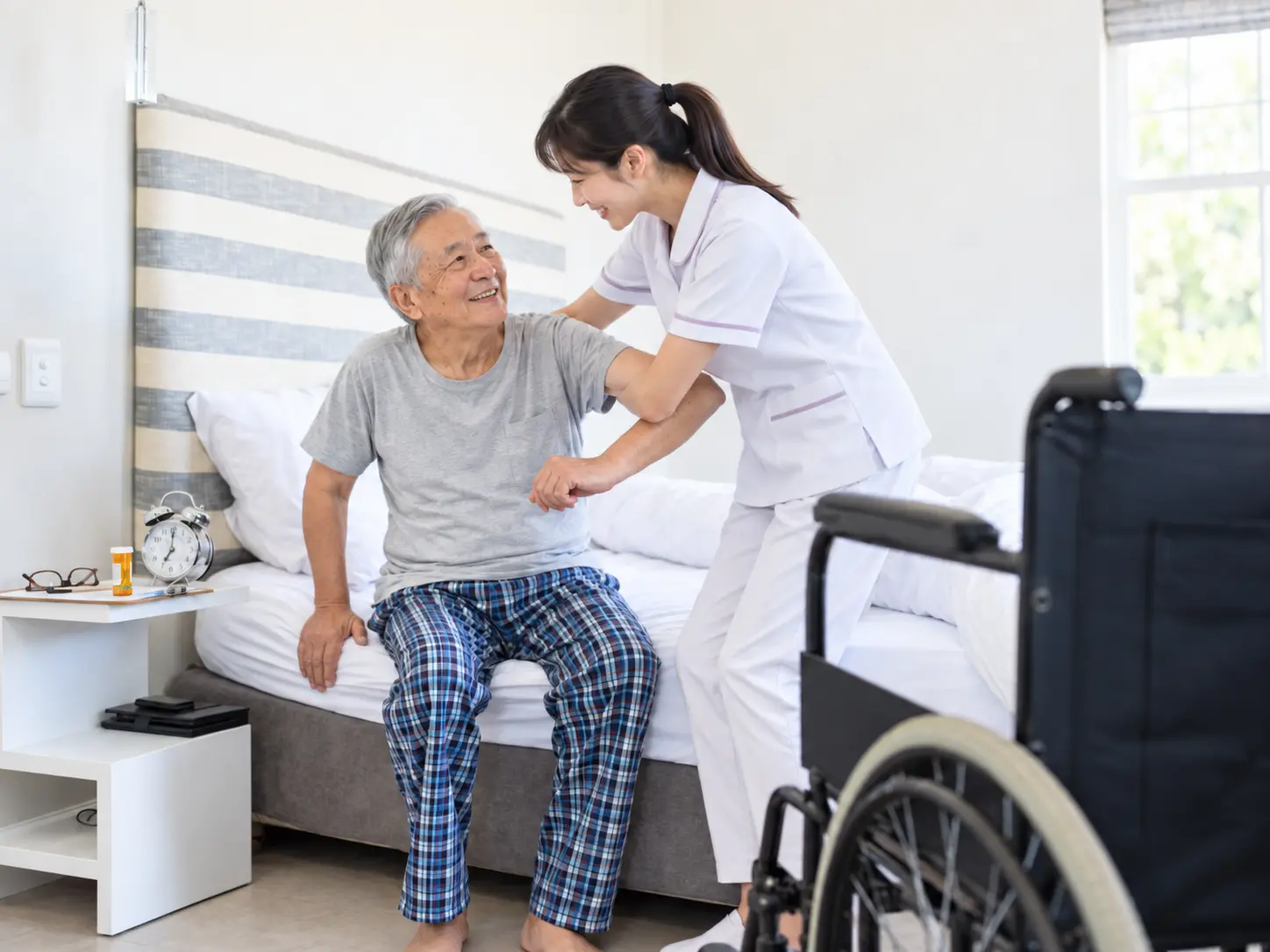
Facilities such as community-based residential long-term care institutions, welfare institutions for persons with physical and mental disabilities, and nursing homes.
Puzi Hospital serves residents of community-based residential long-term care institutions, welfare facilities for persons with disabilities, long-term care centers, nursing homes, and similar organizations through the establishment of a “Community Institutional Responsive Service Network.” This network offers comprehensive care planning that covers outpatient and inpatient services, discharge preparation and transitions, post-acute care, as well as connections to home-based functional rehabilitation, home nursing, physician home visits, and other community health services. Puzi Hospital provides a seamless, one-stop, integrated model of compassionate and comfortable care for both community and institutional settings, delivering preventive health services, slowing functional decline, and promoting the overall health and well-being of older adults.
The first rural-based comprehensive and forward-thinking rehabilitation program in Taiwan.
Application of intelligent healthcare remote monitoring in nursing home and acute care at home, as well as hospice palliative care.
Community Institutional Responsive Service Network, seamless communication.
Number of interactions via communication software: over 600 per month
Rural-based comprehensive and forward-looking rehabilitation care: 15 person-visits per year
Provides comprehensive care for 319 individuals per year.
Successfully reduced the number of hospital visits by nursing home residents by 732 per year.
Provided 623 ambulance transport services per year for rural residents
Aim to maintain an overall infection density below 0.1‰ at nursing home care.
Hand hygiene procedure accuracy and compliance rates among audited staff at nursing homes exceeded 94%.
The overall service satisfaction of nursing homes and residents' families reached 91.9%.
Medical transportation services improvement achieved a satisfaction rate of 96%.
Transportation service in responsive service network leverages the flexibility of on-demand transport to improve access to medical care. The hospital continues to seek more diverse and adaptable services to create a friendly, welcoming, and barrier-free environment.
Forward-looking rehabilitation program and integrated inpatient care provide comprehensive care services, alleviating both the caregiving and financial burdens of family members during hospitalization, which received highly positive feedback.