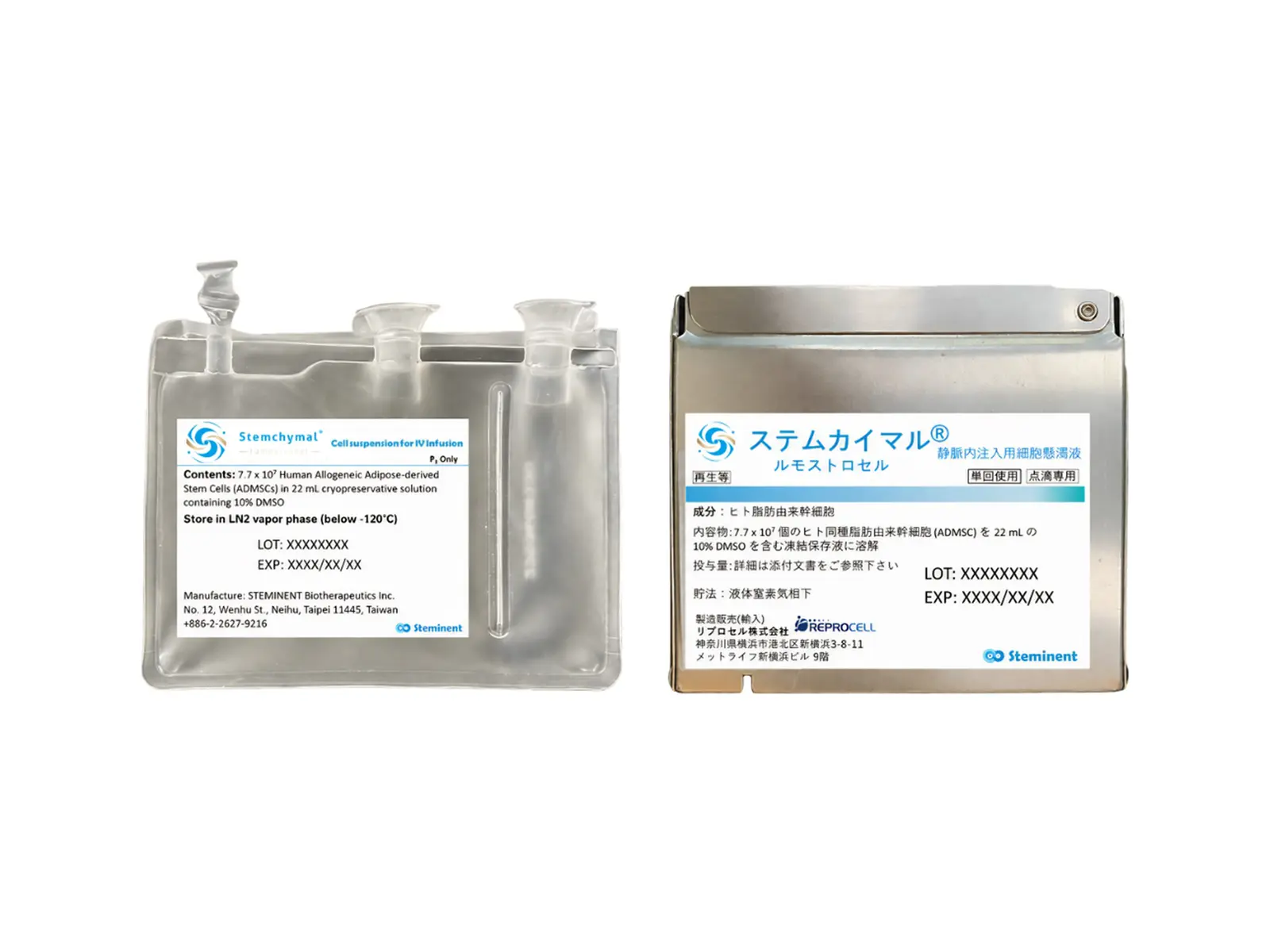
Stemchymal® is a stem cell drug product developed by Steminent Biotherapeutics to address unmet medical needs in rare neurodegenerative diseases. Built on the principles of stability, safety, and scalability, it is based on an allogeneic adipose-derived mesenchymal stem cell platform and a standardized manufacturing process covering cell sourcing, expansion, quality testing, and final product release. Stemchymal® utilizes the biological properties of mesenchymal stem cells, including their potential for immune modulation, anti-inflammatory activity, and tissue repair support. Through GMP-compliant manufacturing and a rigorous quality control system, the product is designed to ensure cell viability, purity, potency, and safety for clinical development. Compared with autologous cell preparation, the allogeneic platform allows advance manufacturing, batch control, consistent quality, and greater supply efficiency. The product focuses on rare neurodegenerative diseases with limited treatment options, progressive disease courses, and significant impact on patients’ quality of life. Through Stemchymal®, Steminent aims to translate cell therapy science into evidence-based innovative medicine, provide new therapeutic possibilities for patients with rare diseases, and support the advancement of Taiwan’s regenerative medicine and cell therapy industry.
Application in Progress
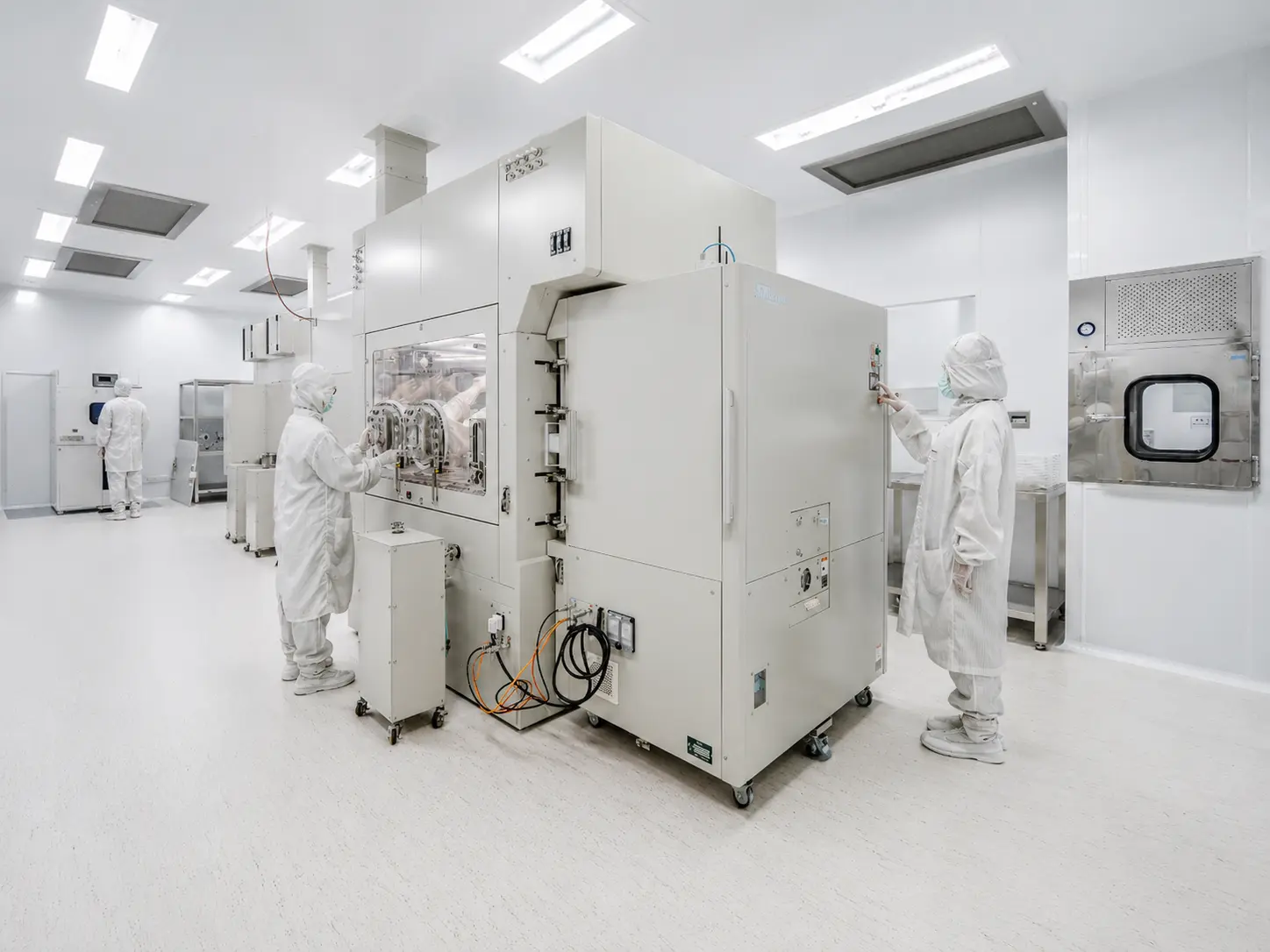
Neihu Cell Processing Facility, Steminent Biotherapeutics Inc.
From development to commercial manufacturing, Stemchymal® follows applicable requirements for cell therapy, regenerative medicine products, and GMP. A quality management and validation system covers manufacturing processes, quality control, facilities, equipment, and aseptic operations to ensure product quality, safety, and batch-to-batch consistency. During development and manufacturing, Steminent has completed process development, quality specification establishment, analytical method confirmation, stability assessment, and process validation in line with cell therapy product requirements. Routine monitoring, aseptic process validation, and continuous improvement mechanisms help ensure compliance with clinical and regulatory requirements.
For safety, the product is supported by multiple controls, from cell source management and process control to final quality confirmation before clinical use. Cell sources undergo required review procedures and donor consent, with safety confirmation conducted under applicable regulations. Clinical study results showed that intravenous administration was well tolerated, with no unexpected serious adverse events related to the product observed. After manufacturing, the product must complete release testing under established quality standards and may be used only after meeting applicable criteria. Transportation is managed through a validated cold-chain system to maintain stable product quality before clinical use.
As a cell therapy product classified as an advanced therapy medicinal product (ATMP), Stemchymal® involves high-quality requirements for cell source management, aseptic operations, low-temperature storage, and cold-chain transportation. Steminent has established a quality management system in accordance with PIC/S GMP, Japan GCTP, ICH Q9, ICH Q10, and ISO 9001, with standardized quality control and operating procedures to ensure product quality, safety, and batch-to-batch consistency. Quality control covers incoming material control, in-process control, and final product release. Incoming materials are managed through supplier qualification, source review, and quality confirmation. During manufacturing, process monitoring, environmental control, equipment management, and aseptic operation controls maintain process stability. Before release, the final product undergoes necessary testing and review based on predefined quality standards and may only be released for clinical use after meeting applicable specifications.
To maintain consistent quality, Steminent applies data-driven quality management and continuous monitoring. Quality trends, process stability, environmental monitoring, deviations, CAPA implementation, and release results are reviewed and analyzed. Through quality risk management and management review, the quality system is continuously improved, ensuring stable and compliant quality throughout development, manufacturing, and clinical application.
Steminent has established a risk management system in accordance with PIC/S GMP, ICH Q9, and ICH Q10, covering material management, process control, product release, and post-clinical-use monitoring. Through quality risk assessment, QA oversight, audits, and cross-functional collaboration, risks are identified, assessed, controlled, and monitored to ensure quality, safety, and supply stability. For raw materials and cell sources, supplier evaluation, source review, specification control, and quality confirmation reduce source variation and supply risks. During manufacturing, standardized procedures, process and environmental monitoring, equipment management, and training help maintain stable operations. Before release, the product is reviewed under quality standards and may be released for clinical use only after meeting specifications.
As Stemchymal® is a sterile live-cell product, aseptic assurance and contamination control are key priorities. GMP-based strategies for sterile material management, cleanroom maintenance, operational control, environmental monitoring, and cleaning ensure a controlled environment. The company maintains quality feedback, deviation management, root cause analysis, CAPA, and management review mechanisms. When abnormalities occur, investigations and corrective actions are initiated based on risk level, with follow-up on effectiveness. These measures support product quality and safety throughout development, manufacturing, and clinical use.
Marketing Authorization Application in Progress
Our team has long been dedicated to cell therapy research for spinocerebellar ataxia (SCA) and related rare neurological diseases, with results consistently recognized by the international academic community. In 2017, we published a Phase I/IIa clinical trial of mesenchymal stem cell (MSC) therapy for SCA in Cell Transplantation, and in 2023 contributed a chapter to Trials for Cerebellar Ataxias reviewing the translational journey of MSC therapy for polyglutamine-type SCA from bench to bedside. Research on our product Stemchymal® has further expanded to acute lung injury and Huntington's disease, with findings presented at the 2024 Annual Meetings of the Taiwan Society for Regenerative Medicine and the Taiwan Neurological Rare Disease Society, highlighting its anti-inflammatory and antioxidative properties. In 2025–2026, we presented at the World Orphan Drug Conference and ISCT Annual Meetings, sharing clinical experience in a U.S. SCA type 3 patient and Phase II trial lessons learned. Our latest preclinical data confirm that adipose-derived MSCs improve motor function, reduce neuroinflammation, and decrease mutant protein levels in SCA3 mice — findings accepted for publication in the International Journal of Stem Cells (in press), reinforcing the scientific basis for future clinical trials.
Our team currently holds three core patent family portfolios, providing comprehensive intellectual property protection for the treatment of polyglutamine (PolyQ) diseases. The application patent for "A Therapy for Polyglutamine (PolyQ) Diseases" has been granted in multiple countries and regions, including Taiwan, the United States, Japan, Australia, China, and Macau, with patent validity extending to 2037. Divisional applications in China, Hong Kong, South Korea, and the European Union are currently under examination. In addition, the process patent for "QUADRI Positive Stromal Cells (QPSCs) for better cell protection & Immunomodulation" has been granted in Taiwan, remaining valid until 2035. A third composite patent covering materials, processes, and applications for "Methods for Treating Spinocerebellar Ataxia and Novel Adipose Tissue-Derived Mesenchymal Stem Cells" has been filed in Taiwan, the United States, the European Union, Japan, South Korea, China, Australia, Canada, Singapore, and Thailand, actively expanding the scope of global patent protection.