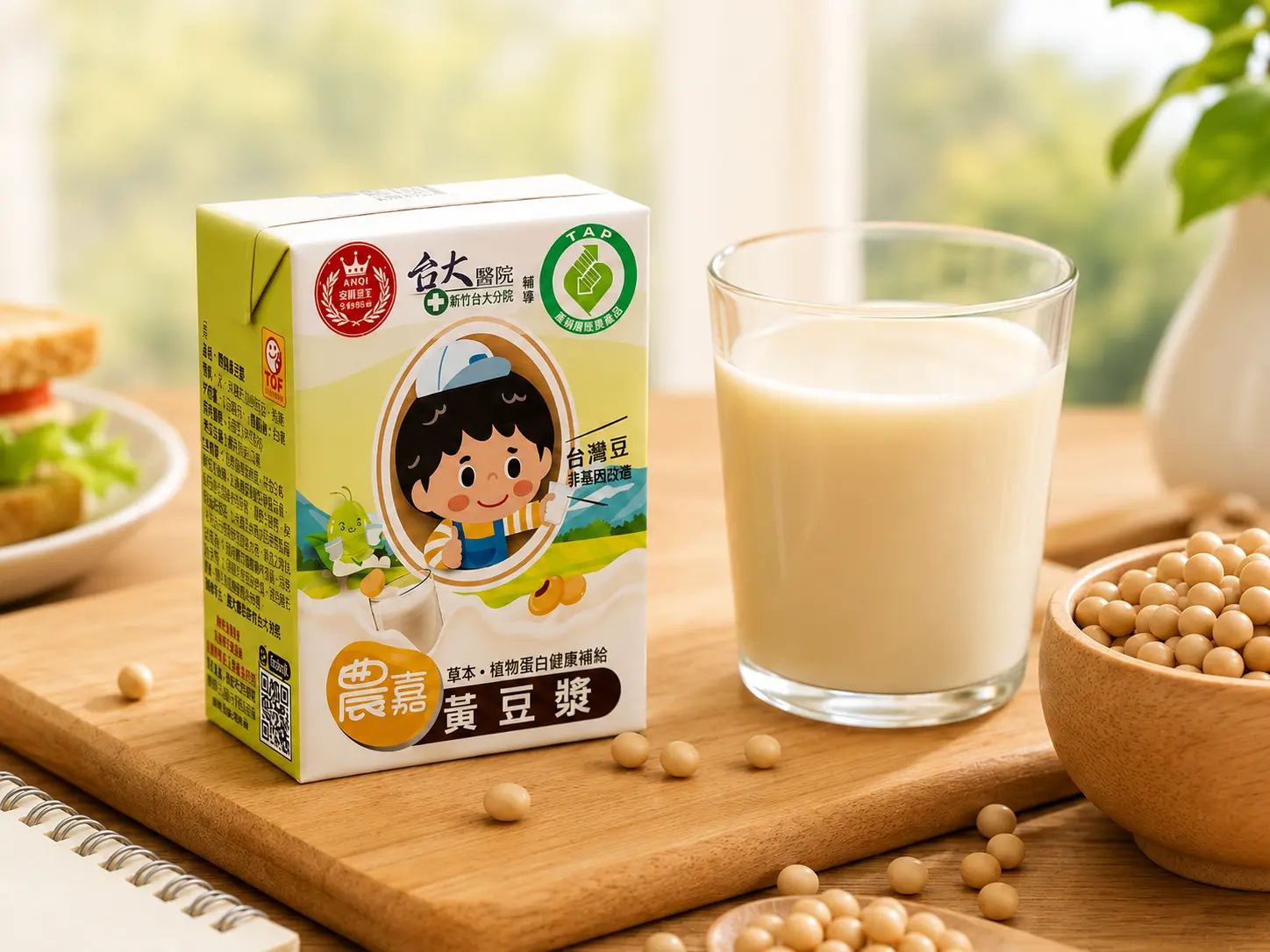
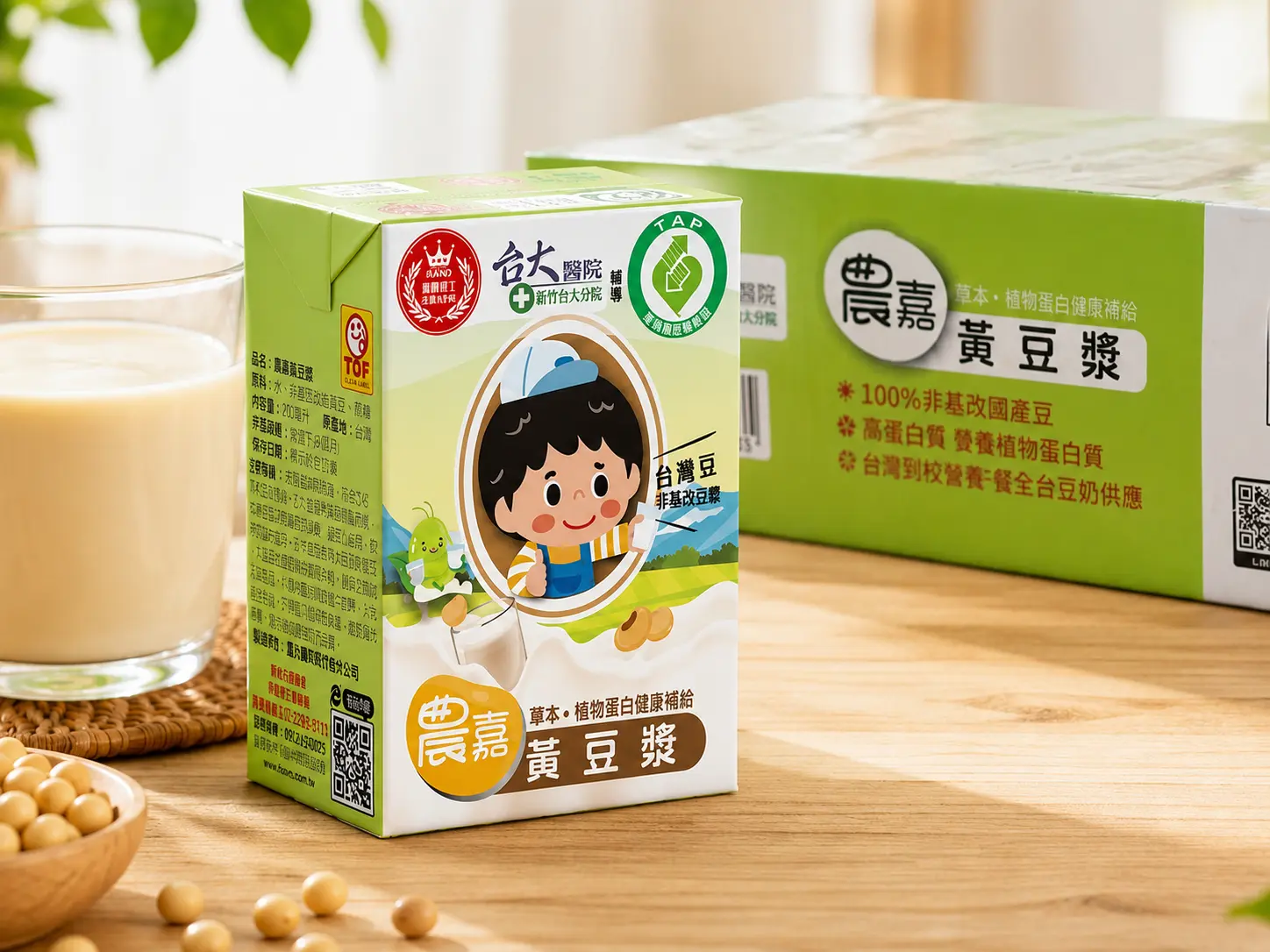
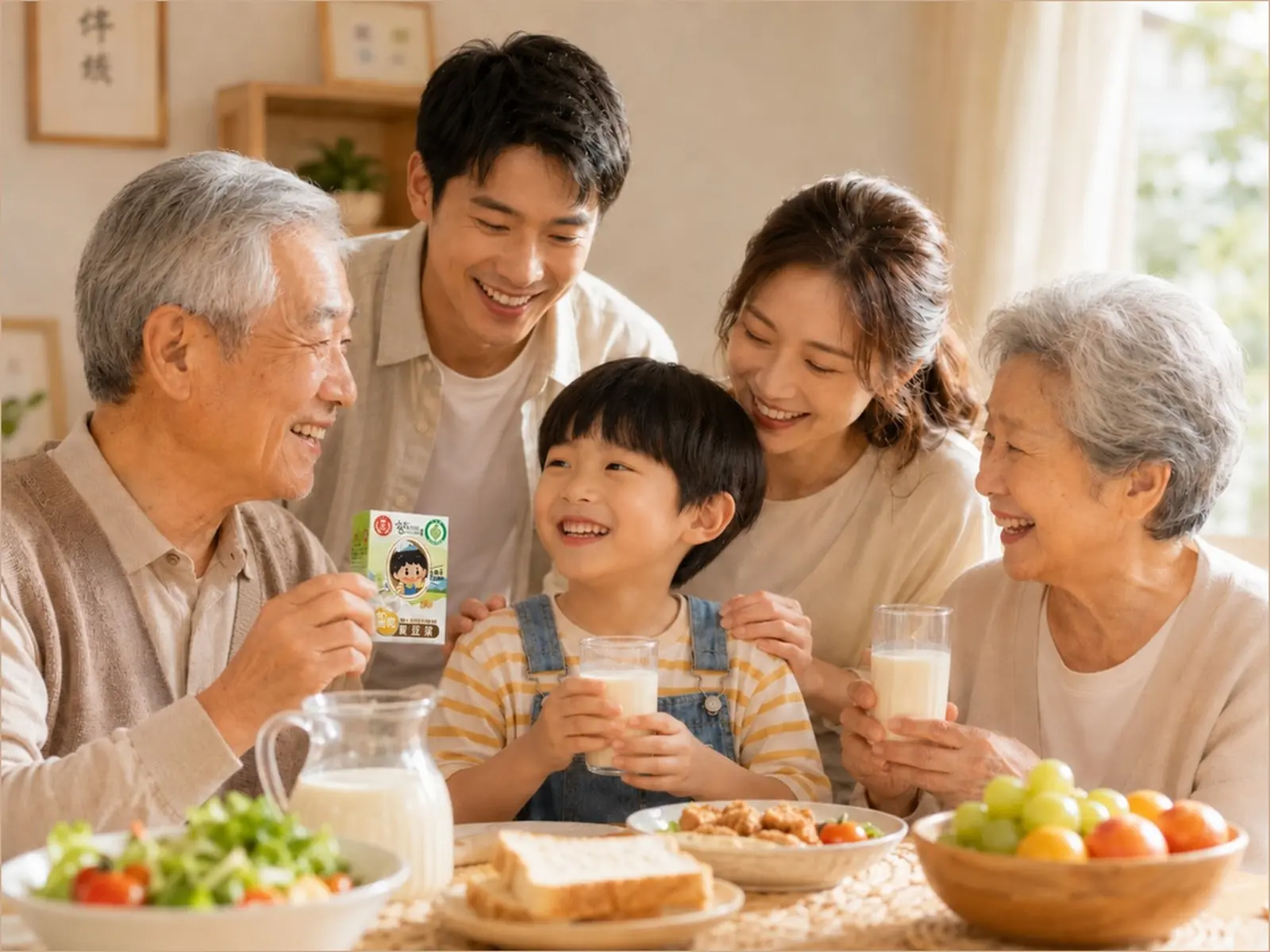
The core philosophy of Nong-Jia Soy Milk is to "enable every family member to safely replenish high-quality protein daily." Made from 100% domestic, non-GMO, and traceable soybeans, it highlights clear origins and a transparent supply chain to support local agriculture. Co-designed with professional dietitians from NTU Hospital Hsinchu Branch, the formulation targets global family needs: muscle maintenance for seniors, growth nutrition for children, and energy for professionals. It features a low-sugar, smooth, and clean taste that is easy for kids and gentle on seniors, serving as a convenient source of premium plant protein. Our specialized manufacturing process ensures total quality stability through strict screening, washing, soaking, grinding, boiling, filtering, homogenization, sterilization, and packaging. This releases the full natural aroma while maximizing shelf life. Batch management and traceability records guarantee complete food safety, making it ideal for homes, schools, offices, and medical channels. Nong-Jia Soy Milk is the ultimate nutritional supplement for the whole family. It is a wholesome breakfast, a fulfilling meal replacement, and a vital source of strength for seniors, seamlessly blending health, safety, and local values.
soy、sucrose
Each serving contains 7 grams of protein.
Kano Agricultural Producers’ Cooperative
Nongjia Soy Milk implements a QC system spanning "Incoming, Process, Semi-Finished, and Finished Release" stages to ensure safety via data-based indicators.Raw material inspection: Ensures 100% domestic ingredients, utilizing non-GMO traceable soybeans alongside qualified sugar, water, and packaging. Checks focus on certificates and shelf life, with testing for moisture, pesticides, and microbes. Key metrics include material acceptance and traceability completion rates.Process Control: Regulates sorting, washing, soaking, grinding, cooking, filtering, homogenization, sterilization, and filling under SOPs. QA staff monitor hygiene, soaking time, sealing, and thermal parameters. Any deviation halts the batch immediately. Key metrics include sterilization compliance and filling accuracy rates.Semi-Finished Product Inspection: Prior to filling, the liquid is verified for color, aroma, pH, sweetness, solids, and protein. Key metrics include pH stability range and sweetness standard deviation.Finished Product & Shipment Release: Every batch undergoes microbial and physicochemical testing. Sample retention is enforced for tracking. Releases are approved only after full QA record validation. Key metrics include finished product and microbial compliance rates.Data Management & Improvement: Inspection results are converted into traceable indicators (defect, complaint, and return rates). Cross-functional task forces analyze trends or anomalies immediately to minimize food safety risks.
Dithiocarbamates Testing (BellCERT)
410 Pesticide Residue Multi-Screen Ox (BellCERT) Enterobacteriaceae Testing (Intertek)
Aflatoxins Testing (Intertek)
Heavy Metals Testing (Intertek)
Traceability Certification for Raw Materials (Blue Magpie Certifications, Inc.)
Traceability Certification for Processing Facilities (National Chung Hsing University)
Nongjia Soy Milk implements a robust risk control system based on four principles: source control, process monitoring, finished product inspection, and post-market tracking. Measures include self-inspection, quality assurance (QA) patrols, batch records, sample retention, and dedicated response teams. At receiving, the company verifies all raw materials. Using 100% domestic, non-GMO, traceable soybeans, it checks supplier data, certificates, batch numbers, and appearance. Third-party testing for moisture, pests, pesticides, and microbes is conducted as needed. Defective materials are isolated or returned. During processing, QA staff patrol personnel hygiene, equipment cleanliness, temperatures, and sealing to prevent contamination or under-sterilization. Critical steps like cooking, sterilization, and filling are strictly recorded. At the finished product stage, each batch is inspected for seal integrity, labeling, shelf life, and sensory quality, alongside lab testing for microbes, protein, sugar, and pH. Products are released only after all records comply. Post-market, distribution is tracked via batch numbers. If issues arise, a cross-functional team handles cause analysis, product recalls, or channel notifications to ensure food safety and maintain brand trust.