All patients who seek medical care at our hospital
Medication services are indispensable components of modern healthcare systems, directly impacting the safety and efficacy of treatments. According to statistics from Taiwan Patient Safety Reporting System under the Ministry of Health and Welfare, medication-related adverse events have consistently ranked as the top category of medical adverse events since 2008 (comprising 29-35%), predominantly attributed to human factors. Moreover, the Institute of Medicine in the United States emphasized patient-centered care as the cornerstone of all healthcare quality improvements in their landmark 2001 report "Crossing the Quality Chasm". Therefore, in modern healthcare systems, the importance of establishing a seamless, efficient, and patient-centric medication service process using information technology and smart devices is increasingly recognized.
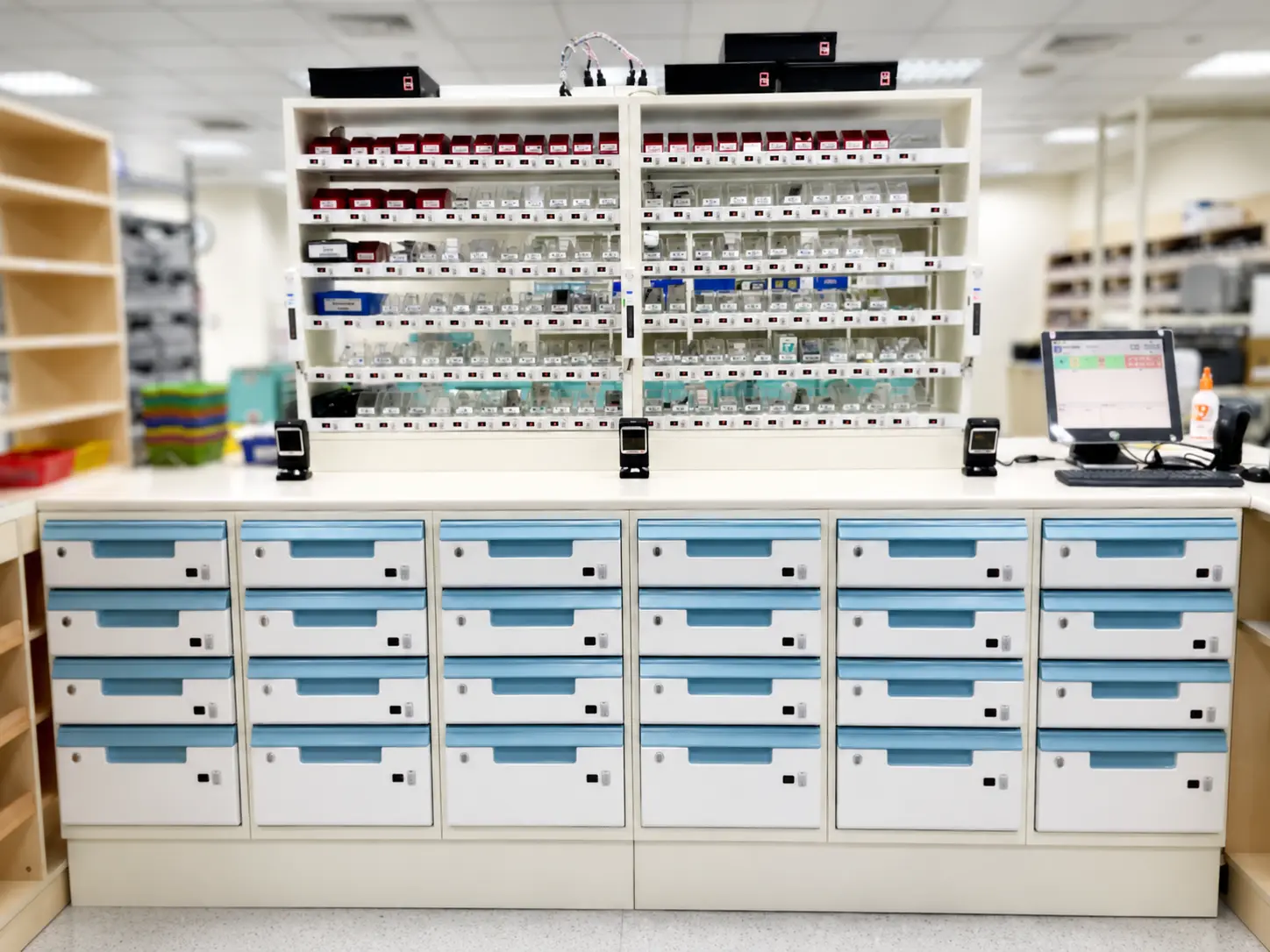
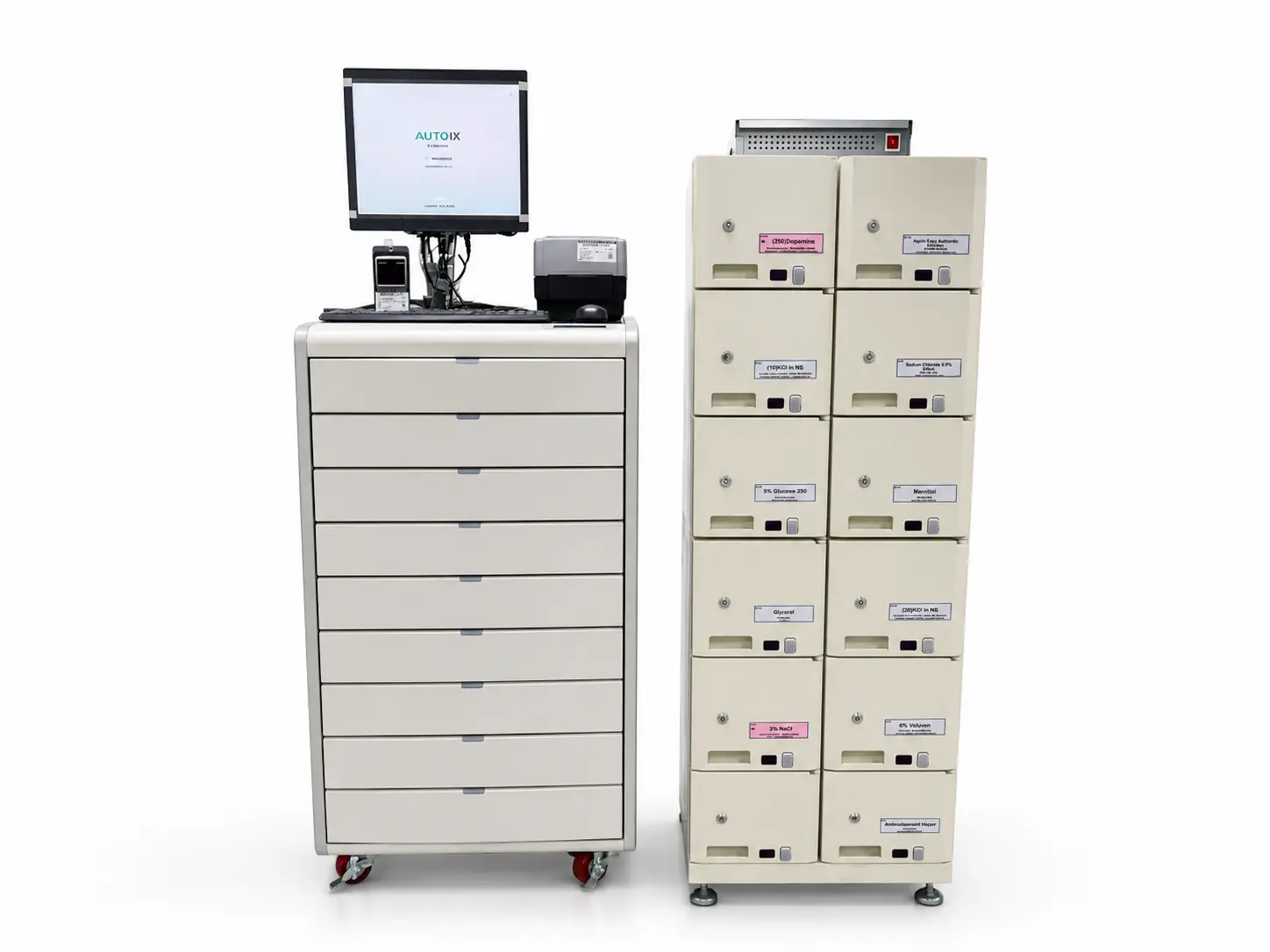
Achieve highly automated pharmaceutical care services to improve medication management efficiency and reduce human errors.
Self-developed closed-loop replenishment system—medication inventory management: automatic requisition and automatic replenishment to ensure uninterrupted supply.
Strengthen system interoperability to improve overall healthcare efficiency and safety.
Enhance the sharing and accuracy of patients’ medical information through information integration.
Visualized display: real-time access to patients’ medication information.
Visualization management across the entire workflow.
Guideline-based antibiotic selection to support evidence-based treatment.
Evidence-based standardization of cancer treatment plans.
Smart compounding system for special preparations.
Automated unit-dose tablet packaging.
One-stop management of controlled drugs, covering inventory receipt, dispensing, stocktaking, and register records.
Dynamic backend label management with dual verification during dispensing.
Multiple verification checkpoints to prevent medication dispensing errors.
Smart pneumatic tube system with dedicated positioning chip technology: accurate and rapid delivery with enhanced efficiency.
Burden-free medication return process.
Continuous refrigerator temperature monitoring system.
The on-time medication delivery rate reached 100%.
Nearly 50% potential questionable prescriptions were identified.
The acceptance rate of pharmacists’ intervention recommendations for doubtful prescriptions reached 88%.
The volume of manually dispensed prescriptions decreased sharply by nearly 90%.
The acceptance rate of drug interaction alerts in the computerized physician order entry system remained above 95%.
The interception rate of duplicate medication orders remained above 20%.
Inappropriate antibiotic use decreased by 42%.
Prescriptions inconsistent with clinical guidelines decreased by 31%.
Prescriptions requiring dosage adjustment decreased by 30%.
Antibiotic overuse decreased by 53%.
Pharmacists’ dispensing error rate decreased by 67%.
Medication administration error events among nursing staff remained below 2 cases per year, and the medication administration error rate among nursing staff decreased by 88.89%.
Errors in controlled-drug register entries were prevented at a rate of 100%.
The time required for STAT prescription pickup was effectively shortened from 829.2 seconds to 23.4 seconds.
The number of additional urgent medication pickup requests decreased sharply by 76%.
Paperless workflow: Paper consumption decreased from 35 boxes per quarter to 0 boxes per quarter, and total costs for paper and ink cartridges decreased by 35%.
Medication events during the dispensing stage: 1.7% (Taiwan Patient Safety Reporting System: 14.3%).
Medication events during the administration stage: 0.6% (Taiwan Patient Safety Reporting System: 22.2%).
Overall satisfaction of nursing staff with the smart medication cabinet: 88 points.
Inpatient satisfaction remained above 90 points.
• Acceptance rate of drug interaction alerts among physicians: 97.8% (Kingdom of Saudi Arabia: 58%)
• Medication administration error rate among nurses decreased by 88.9% (The Ohio State University Wexner Medical Center, USA: decreased by 80.7%)
• Outcomes of implementing smart medication cabinets
Medication retrieval time decreased by 97.2% (Taichung Veterans General Hospital: decreased by 95.2%; Taipei Medical University Hospital: decreased by 88.4%)
Manual dispensing workload decreased by 88.5% (Taichung Veterans General Hospital: decreased by 67.9%; Taipei Medical University Hospital: decreased by 60.1%)
Additional urgent medication retrieval requests by transport staff decreased by 75.7% (Taipei Medical University Hospital: decreased by 69.1%)
Nursing staff satisfaction: 88% (Taichung Veterans General Hospital: 82.5%; Taipei Medical University Hospital: 80%)
2024 FAPA Asian Congress of Pharmaceutical Sciences
Smart Pneumatic Delivery System: Error-Free Express, Doubling Efficiency.
Agile Development in Enhancing Medication Safety and Efficiency.
Improving Medication Safety: Dispensing Errors Addressed by Dual Verification Mechanisms with Smart Devices and Information Systems.
Establishing a Platform for Enhanced Clinical Trial Management through Integrating Existing Systems Enhancing Medication Management: Digital Transformation in Controlled Drugs Handling.
Investigation of Prescription Module Integrity for Different Injection Methods in a Regional Hospital.
2022 International Healthcare Summit: Effectiveness Analysis of Using Autocomplete to Assist in Documenting Adverse Drug Reactions and Drug Allergies.
2022 Joint Annual Conference of Taiwan Pharmaceutical Associations: Evaluation of Smart Medication Cabinets for the Management of Immediate-Use Medications in a Neurosurgical Intensive Care Unit.
2021 Joint Annual Conference of Taiwan Pharmaceutical Associations.
Preliminary Evaluation of the Effectiveness of a Drug Interaction Alert System.
Improving the Documentation of Adverse Drug Reaction Records Using an Information-Based Autocomplete Function.
Evaluating the Effectiveness of Autocomplete in Documenting Adverse Drug Reaction and Allergy Records.