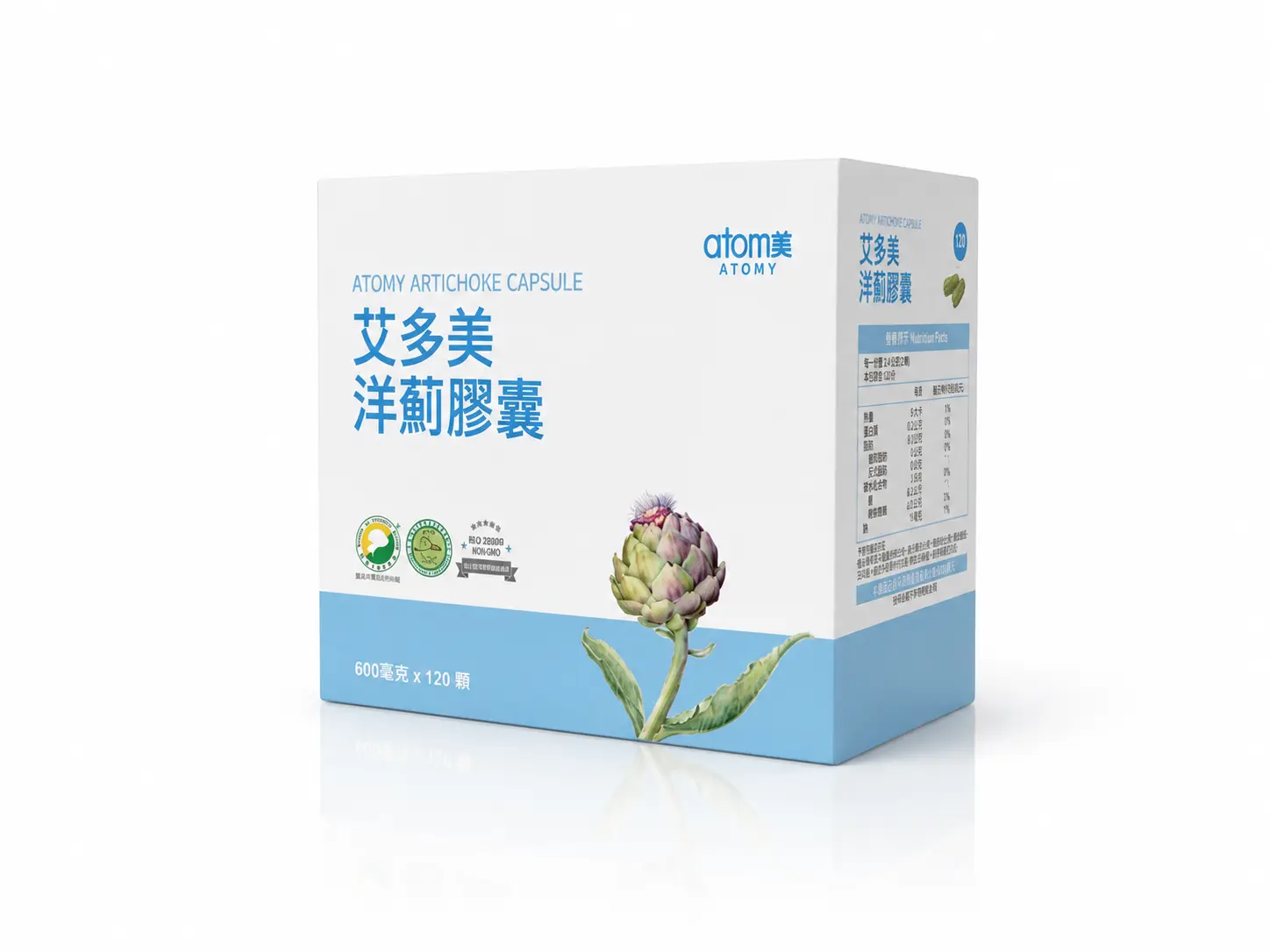
Atomy Artichoke Capsule is formulated with artichokes cultivated by Taiwan Tianjian Biotechnology. Developed with a focus on natural wellness, product safety, and daily health maintenance, the product combines selected plant-based ingredients with modern manufacturing technology to provide daily nutritional support. Artichoke has long been used in foods and wellness products in Europe and other countries, and naturally contains phytochemicals including polyphenols, flavonoids, chlorogenic acid, and phenolic compounds. The product is manufactured using low-temperature grinding technology to help preserve the natural nutrients and characteristics of the artichoke while maintaining product quality and stability. The artichokes are cultivated under organic farming management following GAP standards without the use of chemical fertilizers, herbicides, or synthetic pesticides. Tianjian Biotechnology has more than 15 years of experience in organic cultivation and quality management. The manufacturing process and quality systems have obtained ISO 22000, HACCP, HALAL, and SNQ certifications to ensure product safety and quality consistency. In addition, Tianjian Biotechnology has collaborated with academic institutions on research projects related to plant nutrition and ingredient applications. Developed with a simple formulation concept, Atomy Artichoke Capsule is designed for daily nutritional supplementation and health maintenance while promoting a natural and balanced lifestyle.
Atomy Artichoke Capsule is formulated with artichokes cultivated by Taiwan Tianjian Biotechnology. The product is developed with a focus on natural wellness, quality assurance, and daily health maintenance. Artichoke has long been used in foods and wellness products in Europe and many countries, and contains naturally occurring phytochemicals including polyphenols, flavonoids, chlorogenic acid, and phenolic compounds. One of the distinctive characteristics of artichoke is its content of plant-derived compounds such as phenolic acids, flavonoids, and terpenes, including naturally occurring luteolin and apigenin. Some compounds exist in water-soluble glycoside forms, which are considered important characteristics of the artichoke plant source. The product is manufactured using low-temperature grinding technology to help preserve the natural nutrients and characteristics of the artichoke while maintaining product quality and stability. The artichokes are cultivated under organic farming management following GAP standards without the use of chemical fertilizers, herbicides, or synthetic pesticides. Tianjian Biotechnology has more than 15 years of experience in organic cultivation and quality management. The manufacturing process and quality systems have obtained ISO 22000, HACCP, HALAL, and SNQ certifications to ensure product safety and quality consistency.
Artichokes, lactose
Total Polyphenol Content: 922.58 mg/100g (Reference: Pourmorad F., Hosseinimehr S. J., Shahabimajd N. 2006. Antioxidant activity, phenol and flavonoid contents of some selected Iranian medicinal plants. African Journal of Biotechnology, 5(11): 1142–1145.) Total Flavonoid Content: 282.03 mg/100g (Reference: Chang C.C., Yang M.H., Wen H.M., Chern J.C. 2002. Estimation of Total Flavonoid Content in Propolis by Two Complementary Colorimetric Methods.) Chlorogenic Acid: 0.67 mg/g (Reference: Journal of Food and Drug Analysis, 10(3): 178–182. Chlorogenic acid, Cryptochlorogenic acid, and Neochlorogenic acid analysis based on AOAC Official Methods 957.04 and 957.05.)
Quality control procedures are implemented throughout the entire production process of Atomy Artichoke Capsule, from raw material cultivation to final product release, to ensure product safety, consistency, and quality stability. The artichoke raw materials are cultivated under organic farming management without the use of chemical pesticides, herbicides, or synthetic fertilizers. Regular monitoring and pesticide residue testing are conducted to ensure raw material safety and quality. Upon receiving raw materials, inspections are performed according to standard operating procedures, including appearance evaluation, specification verification, and review of supplier COA (Certificate of Analysis) documentation. Third-party laboratory testing is also conducted as part of the quality assurance process. Raw materials, intermediates, and finished products are stored under controlled temperature and humidity conditions to maintain product stability and quality. During production, intermediate and finished products undergo quality inspections, including ingredient analysis, microbiological testing, and specification verification. Batch management and traceability systems are implemented to ensure product consistency. The manufacturing and quality management systems are operated in compliance with organic certification standards and internationally recognized food safety systems, including ISO 22000 and HACCP.
Third-party safety and quality testing is conducted to ensure product safety and quality consistency. Both raw materials and finished products are tested for pesticide residues to confirm compliance with food safety standards. Heavy metal testing is also performed, including lead (Pb), cadmium (Cd), mercury (Hg), arsenic (As), and copper (Cu). Microbiological testing includes total plate count, Escherichia coli (E. coli), coliform bacteria, and mold testing as part of routine hygiene and quality management procedures. All testing is conducted by qualified third-party laboratories in accordance with relevant food safety regulations and quality standards.
A comprehensive risk management and quality control system is implemented throughout raw material receiving, manufacturing, finished product inspection, and post-market management to ensure product safety, stability, and quality consistency. During raw material receiving, supplier COA (Certificate of Analysis) documents are reviewed and verified against product specifications according to standard operating procedures. In the manufacturing process, records and audits are conducted not only for raw materials, but also for packaging materials, aluminum foil rolls, capsule filling weights, and related production parameters to ensure process stability and batch consistency. After production, retention samples from each batch are preserved for quality tracking and risk management purposes. These samples support product traceability, inspection, and investigation in the event of any quality concern or abnormal situation. The overall manufacturing and quality management system is operated in accordance with relevant food safety regulations and internal quality assurance standards.