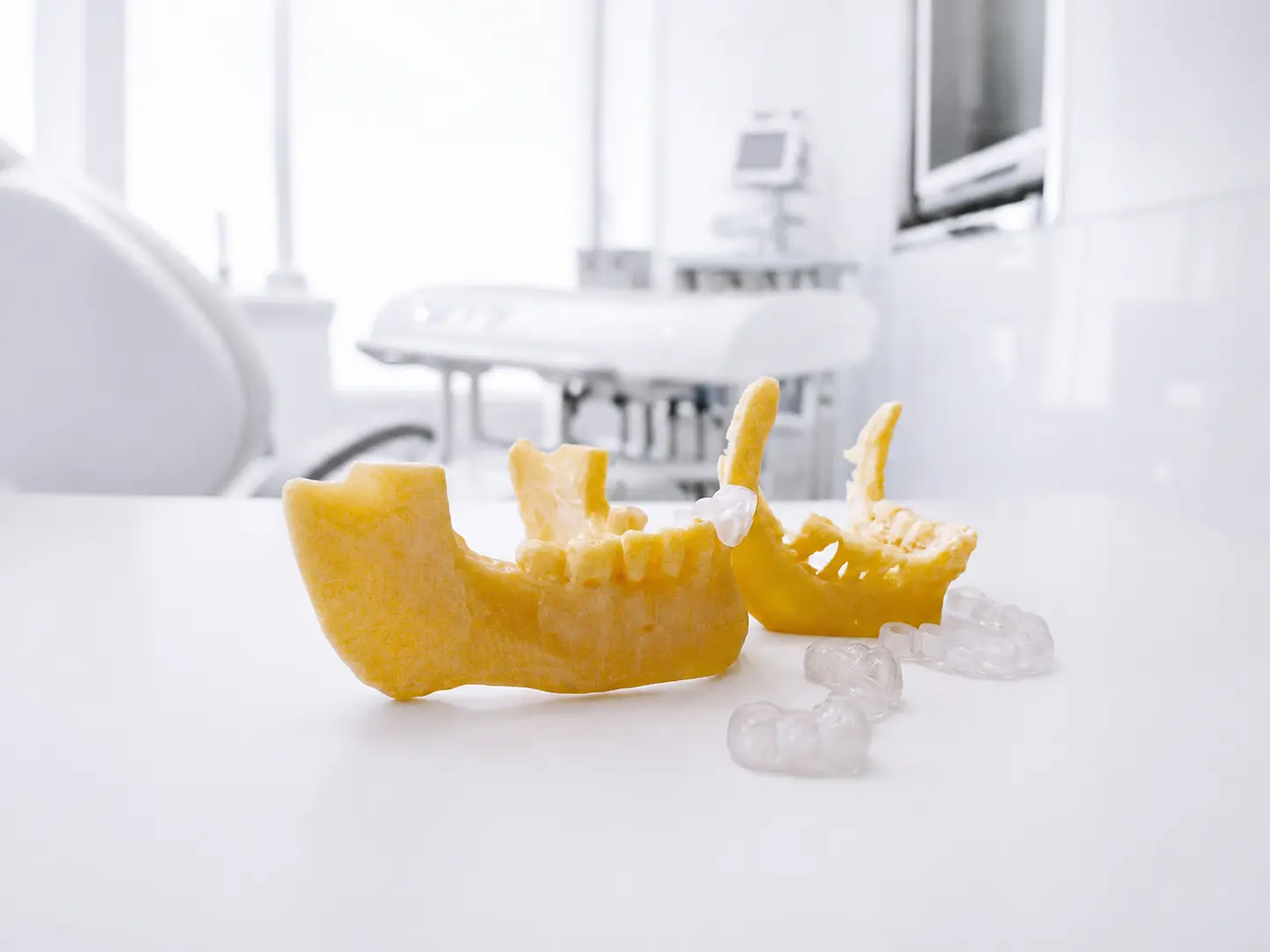
Dental implants involve using titanium dental roots (implants) that can integrate with the bone. These are placed into the bone in areas of tooth loss to support the prosthetic tooth above. A computed tomography (CT) scan is first conducted, and the results are imported into a 3D dental implant system. The computer then displays the condition of the alveolar bone, allowing precise design and measurement based on bone density, width, and depth. This helps determine the length, width, and angle of the implant. Using 3D printing technology, the patient’s alveolar bone model is printed, enabling a clear explanation of the condition and whether bone grafting is necessary. It can even facilitate preoperative simulation surgery, allowing the patient to understand their conditions and the treatment process. Moreover, by combining 3D printing with the latest navigation software, surgical guides are created. These guides minimize the need for large incisions, requiring only small openings to place the implants accurately in the pre-planned positions. This shortens surgery time, reduces patient anxiety, pain, and surgical risks, and improves the success rate of dental implant procedures.
N/A
N/A
N/A
The workflow for 3D-printed dental surgical guides includes CT imaging, importing STL files into software, designing implant positions (depth and angle), software auto-generating the surgical guide model, and exporting files to a 3D printer for production. Quality control in this process ensures the proper functioning of 3D printing equipment and the materials used. The materials must be certified by the Taiwan Food and Drug Administration (TFDA) to ensure that the surgical guides comply with regulatory standards.
Before performing a dental implant procedure, the surgical guide is tested on the patient’s alveolar bone model (plaster or 3D-printed model). This step verifies whether the 3D-printed guide fits accurately in the patient’s oral cavity and ensures that inserting and removing the guide from the model does not cause it to jam or break. This inspection checks the quality of the guide. If any issues arise, the guide will be reprinted and corrected to ensure its successful use during the dental implant surgery.
N/A
N/A
N/A