Depression, treatment-resistant depression & anxiety
PTSD
High risk of suicidal ideation
High-risk in community and long-term care settings
Users of online health screening platforms
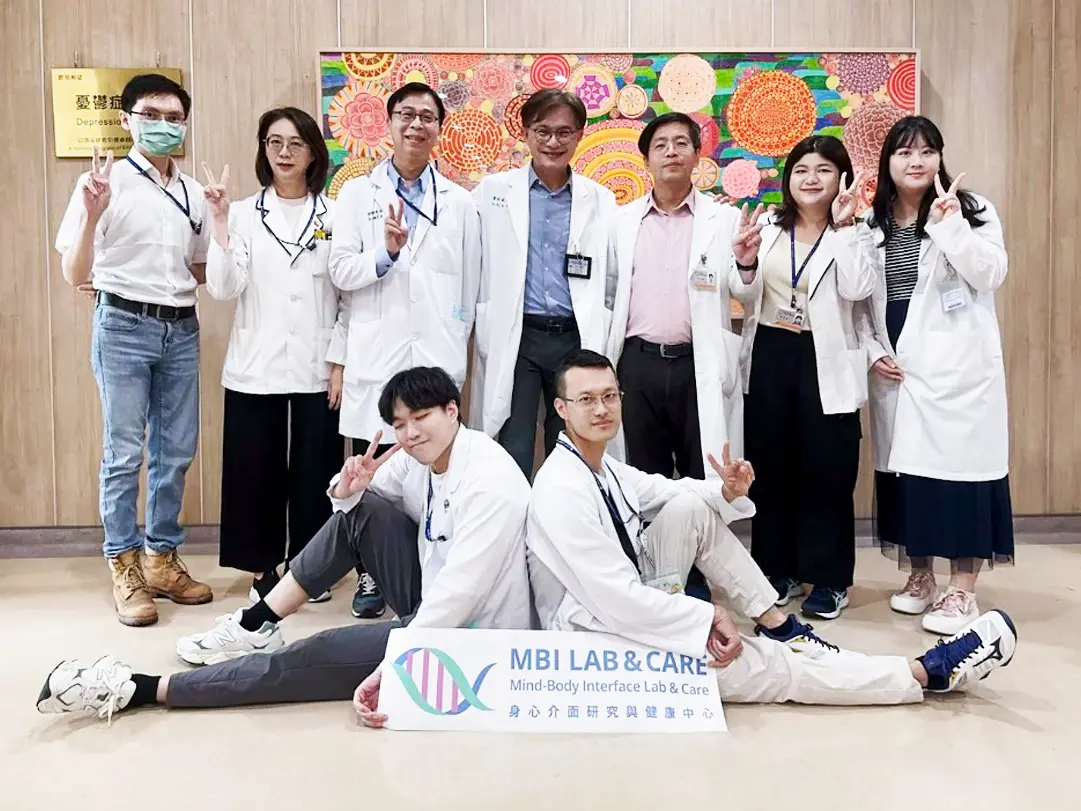
The Mind-Body Interface Research Center and Depression Center at Tainan Municipal An-Nan Hospital, China Medical University, led by Professor Kuan-Pin Su, has established a scalable and replicable hospital–community care model to address Taiwan's suboptimal depression treatment and high relapse rates caused by early follow-up discontinuation. By adopting MBC, the center integrates standardized scales (HAM-D, PHQ-9, BDI) with multimodal data (wearable devices, HRV, EEG) for longitudinal tracking across symptom, physiological, and behavioral domains, enhancing clinical decision-making. Treatments are stratified based on biopsychosocial needs, offering personalized, evidence-based interventions including accelerated theta-burst TMS , CES, tPBM, traditional Chinese acupuncture, and internationally recognized Omega-3 fatty acid therapy. To improve continuity of care and patient engagement, the center developed a digital mental health assessment platform and online self-care programs. This approach achieved exceptional follow-up rates of 86% at 1 month, 63% at 3 months, and 51% at 6 months, significantly outperforming national insurance benchmarks. Furthermore, patient satisfaction reached 94–96%, and suicidal ideation markedly declined, with the proportion of patients reporting no suicidal thoughts increasing from 51% to 79%. Aligned with national health policies, the center continues to advance a sustainable, precise, and patient-centered model of integrated mental healthcare.
MBC (Measurement-Based Care) model
Leading nutritional and transcranial magnetic stimulation therapies
Providing integrated healthcare services to deliver personalized care plans
Traditional Chinese medicine and acupuncture
Non-invasive brain stimulation therapy
Online mental and behavioral health screening platform
Outpatient services for over 3,000 cases
More than 300 patients have received rTMS services
2024 TMS treatments: 1,395 sessions
2025 TMS treatments: 941 sessions
A total of 6,674 screenings were conducted via the online screening platform
One-month follow-up rate 86% (NHI 52%)
Three-month rate 63% (NHI 18%)
Six-month rate 51%
A reduction in suicidal ideation was observed after nutritional therapy, improving from
51% to 79%
Outpatient cases undergo standardized psychological assessments
Implement shared decision-making (SDM)
Standardization of Repetitive Transcranial Magnetic Stimulation (rTMS) Treatment
Protocols
A multi-channel outpatient follow-up reminder system (integrating LINE messaging,
phone calls, and in-clinic reminders)
Standardized assessments before, during, and after treatment
Overall satisfaction 95%
Staff attitude 96%
Timeliness 96%
Environment comfort 96%
Physician communication 92%
Adequate consultation time 92%
Professor Su Kuan-Pin has served as a member of the Presidential Office Health
Taiwan Promotion Committee since 2024
21st Yu-Hsiang Tech Award
Intl guidelines: ISNPR/WFSBP/CANMAT
Ranked joint first globally in Omega-3 research within the field of depression
Ranked 4th worldwide and 1st in Taiwan among institutions conducting Omega-3
research
Taiwan Clinical TMS Society Best Paper
Provision of precision, personalized healthcare plans
Promotion of population-wide mental health prevention strategies
Collaboration with primary care clinics, long-term care facilities, and social welfare
organizations
Development of standardized integrated care processes