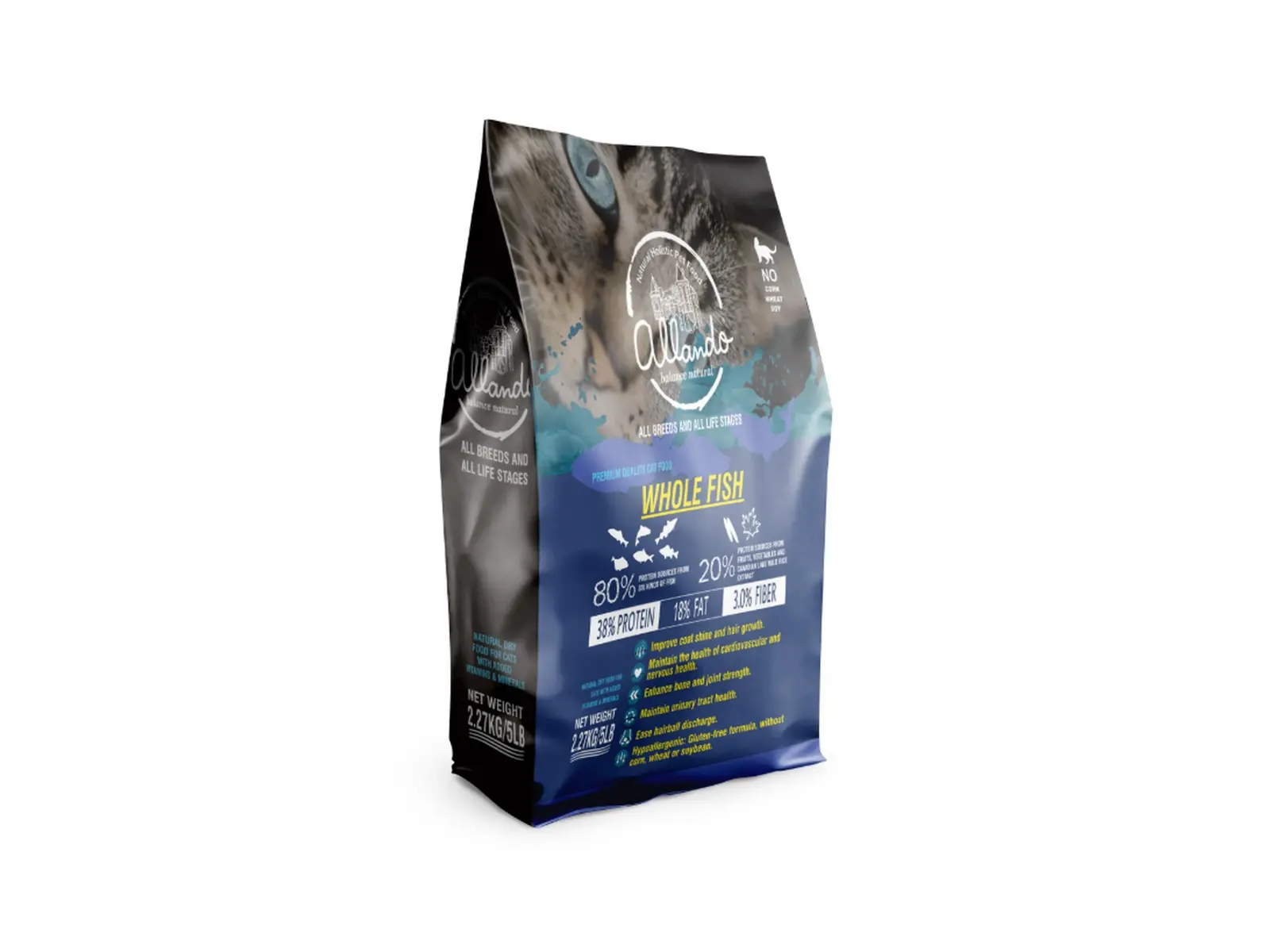
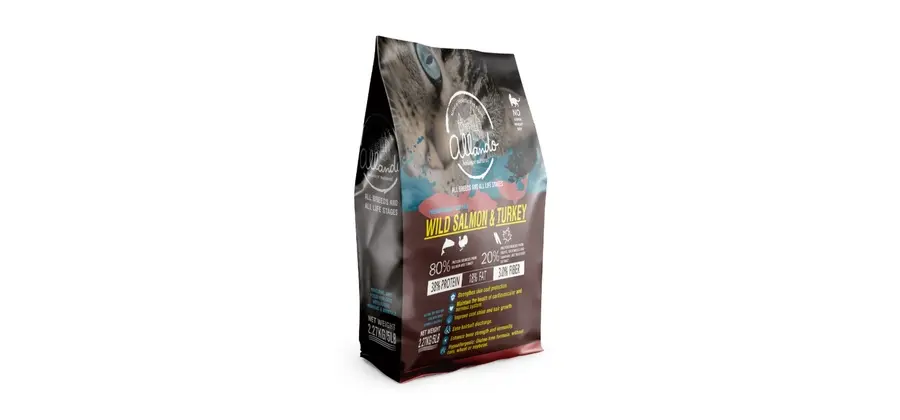
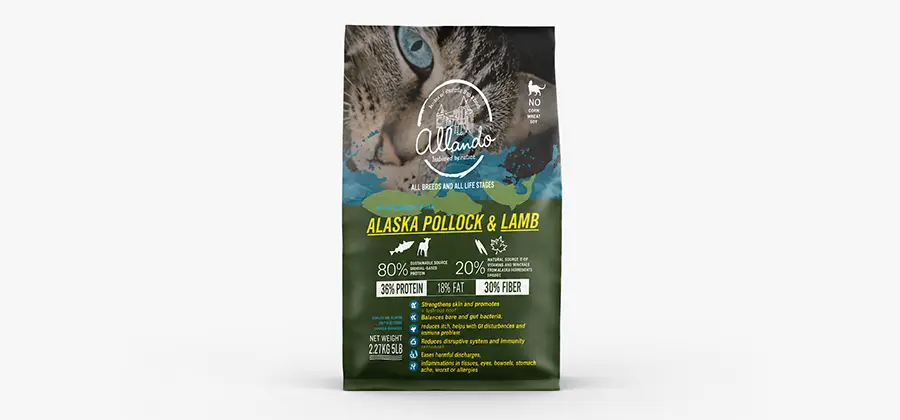
A reasonable allocation of a balanced diet. That is to say both protein and fat are the main energy sources, along with a perfect ratio of vitamins and other minerals will fulfill what’re the cats’ nutritional needs.
Diversification intake. Allando Cat Foods containing multiple meats as the main diet, also with fruits and vegetables, not only to satisfy the appetite, but to offer a complete natural diet from abundant recipes.
Fresh and natural ingredients. Natural ingredients are what we prepared for them. Meat, vegetables and other ingredients are selected through a rigorous screening, including the origins, the harvest season and all other particular details are to follow Allando delicious healthy key eating: "fresh."
Low on salt, magnesium, fat & carb. Cats cannot digest exceeds carbohydrate. Allando cat food is not only low carb, but also low salt, low fat and low magnesium, which reduce the burden on the cat's body.
Boneless herring, boneless bonito fish, boneless salmon, boneless pollock, boneless halibut, boneless perch, salmon oil, Canadian lake wild rice extract, low-temperature baked whole flaxseed, chickpea, carrot, beetroot, cranberries, spinach, apples, pumpkin, broccoli, peas, green lentils, blueberries, spirulina, minerals (iron, copper, zinc, manganese, selenium, iodine), multivitamin (vitamin A, vitamin B1, vitamin B2, vitamin B5, vitamin B6, vitamin B9, vitamin B12, vitamin D3, vitamin E, vitamin C, biotin), yeast extract, yucca schidigera extract.
Crude Protein 38% min|Crude Fat 18% min|Crude Fiber 3% max|Crude Ash 9% max|Moisture 10% max|Taurine 0.2% min|Calcium 1.2% min|Phosphorus 0.9% min|Calories 4000 kcal/kg
Key Points of Quality Control Implementation
Raw Materials, Additives, and Packaging Materials All incoming materials are inspected for appearance, quality, and compliance with specifications. Inspections include checks for spoilage, clumping, foreign matter, nutritional composition, and aflatoxins where applicable.
In-Process Control Production processes are monitored to ensure product consistency and minimize cross-contamination risks. Each batch is documented through production and inspection records to maintain full traceability.
Finished Product Verification Finished products are evaluated for food safety, labeling compliance, packaging integrity, and shelf-life requirements. Routine testing is conducted in an in-house laboratory, with regular third-party verification through SGS. Product identification and traceability procedures are established throughout the production chain. 4. Environmental and Sanitation Monitoring Workplace sanitation programs and inspection records are maintained. Environmental monitoring includes airborne microbial testing, personnel hand-swab testing, potable water analysis, and equipment sanitation verification using Aerobic Plate Count (APC) testing.
Major Quality Control Checkpoints
Raw Material Receiving:insects, aflatoxins, spoilage, rancidity, foreign matter.
Cooling Process: microbial contamination.
Finished Product Packaging: microbial contamination.
Secondary Counting of Finished Products: microbial contamination.
Quality & Safety Testing: SGS-verified quality control, heavy metals, pesticide residues, preservatives and antioxidants, and hazardous chemical substances. Nutritional composition testing including moisture, ash, crude protein, crude fat, calcium, phosphorus, and crude fiber is conducted by the Foray Forage Laboratory.
Our company has established a risk management system covering raw material receiving, manufacturing, finished products, and post-market activities. Through internal testing, quality inspections, traceability programs, and cross-functional teamwork, potential risks are identified and controlled to ensure product safety, quality, and regulatory compliance. All raw materials, additives, and packaging materials are inspected upon receipt to verify quality and conformity with specifications. Additional testing may be conducted for higher-risk materials when required. During production, operations are managed according to established SOPs. Quality Assurance personnel perform routine inspections to verify process control, equipment sanitation, and contamination prevention measures. Finished products undergo quality verification based on risk assessment programs, including nutritional, microbiological, packaging, and labeling checks. Complete batch records and traceability systems are maintained, and products are released only after Quality Assurance approval. Following market release, customer feedback, complaint handling, product traceability, and recall procedures are used to monitor potential risks. In the event of a quality issue, a cross-functional task force is assembled to conduct investigations, implement corrective actions, and support continuous improvement.