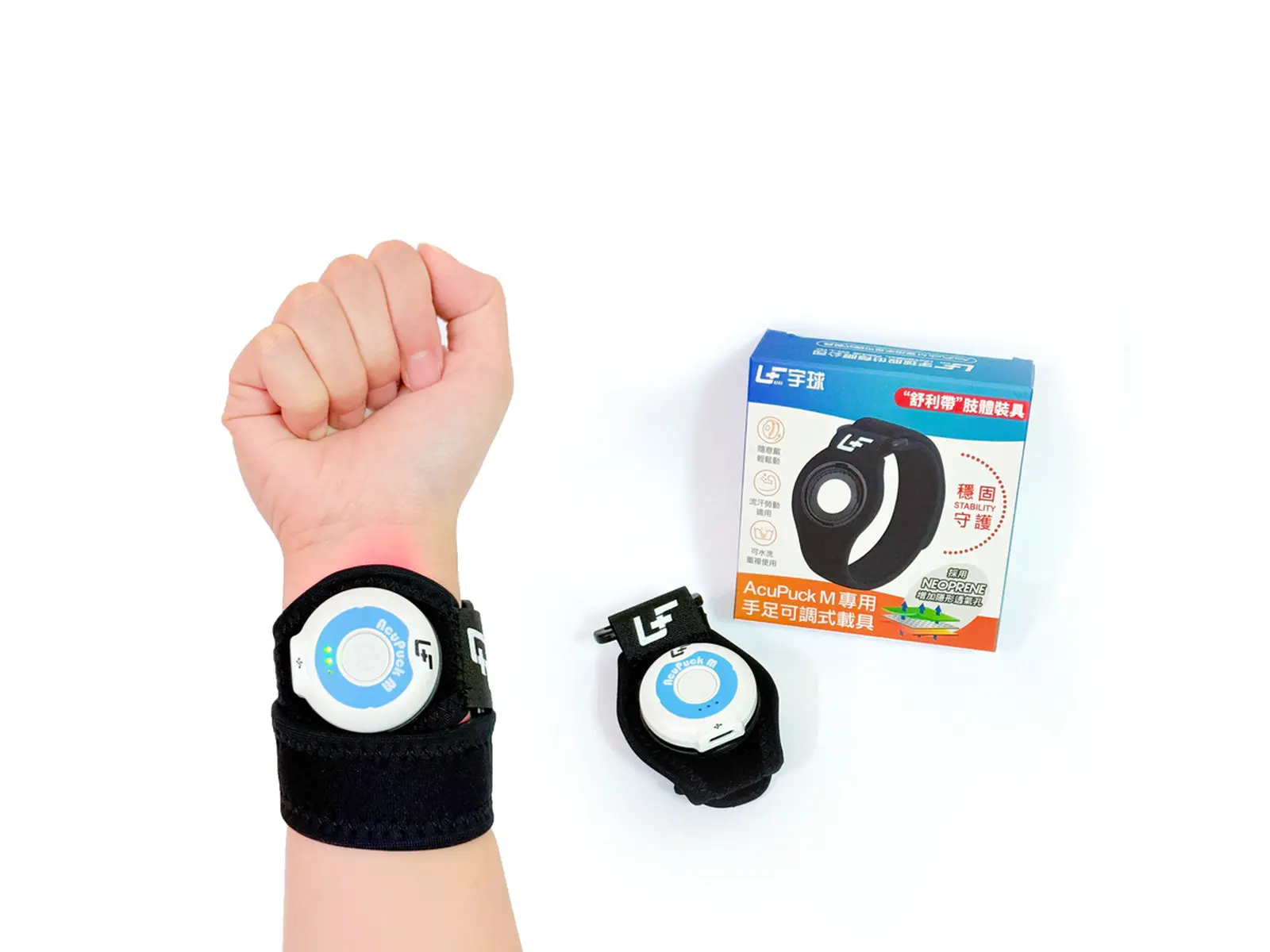
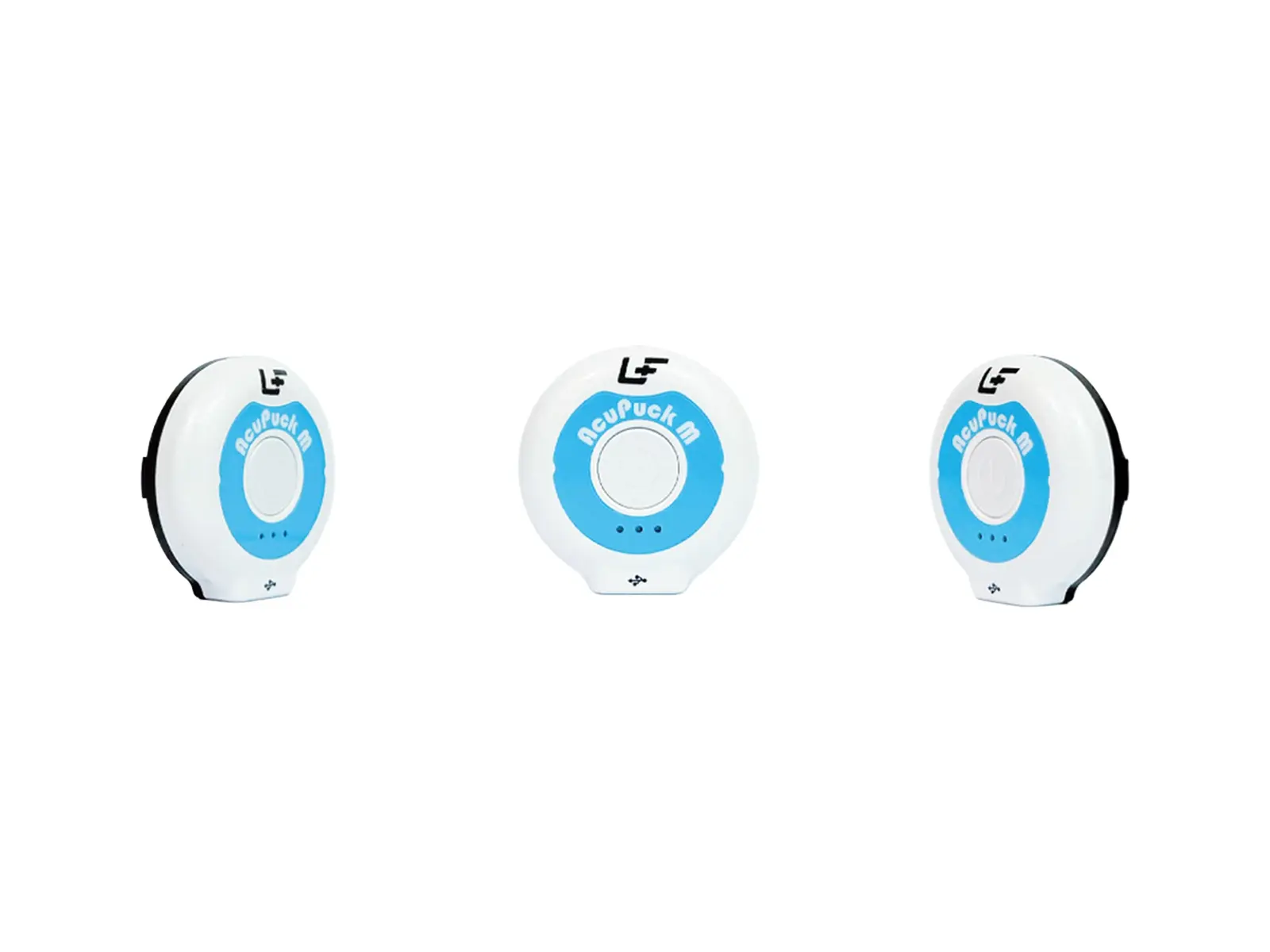
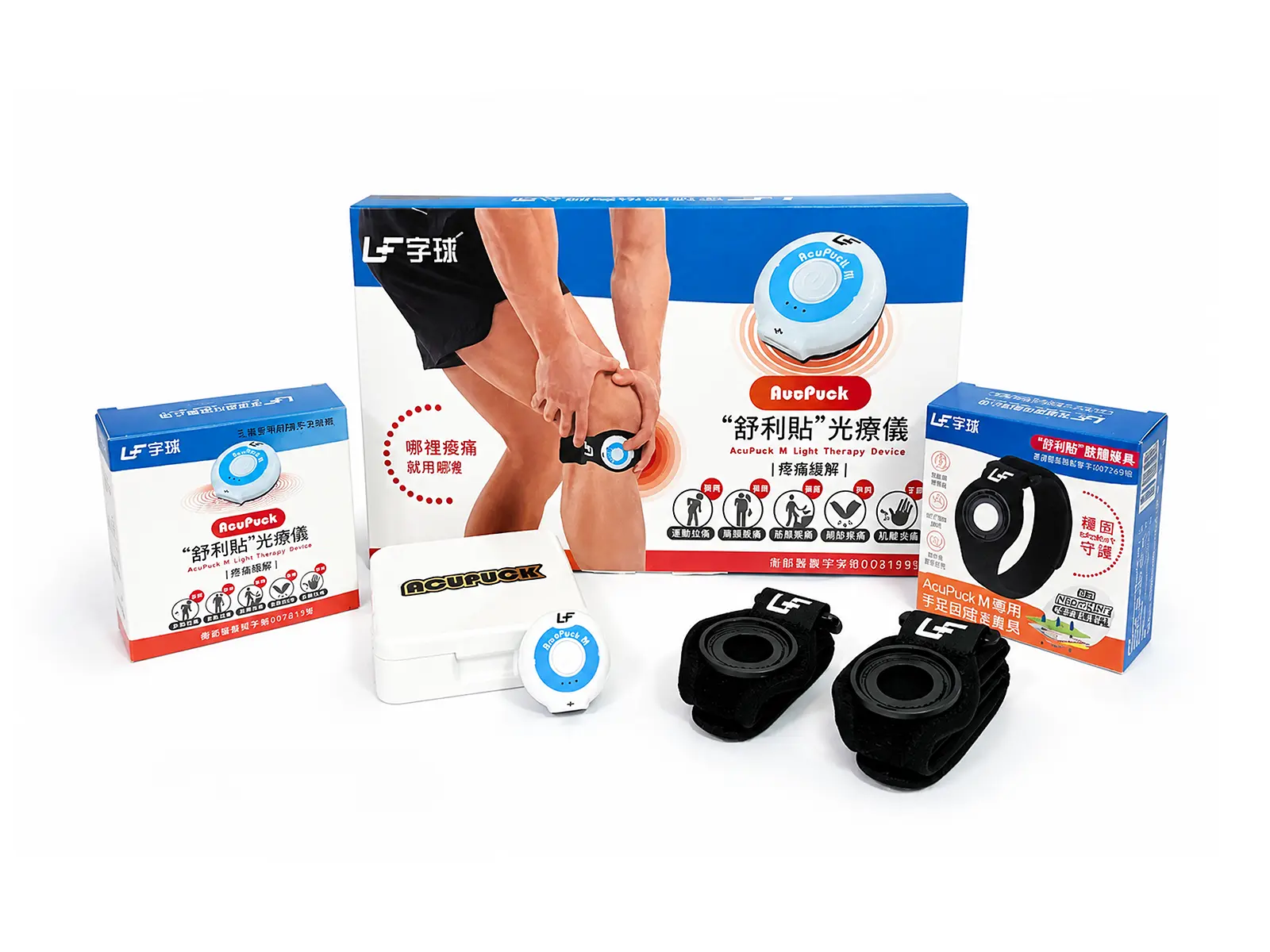
The Acupuck M light therapy device employs a non-invasive, specific wavelength of red light energy, leveraging the principles of Photobiomodulation Therapy, to act upon the afflicted area, thereby manifesting a capacity to facilitate local blood circulation. The red light, with its remarkable ability to penetrate deep within the dermal, stimulates the intracellular chromophores, initiating the activation of adenosine triphosphate (ATP) energy metabolism within the cells, consequently propelling cellular invigoration and regeneration. This Photobiomodulation Therapy stands proficient for minor muscle and joint pain, concurrently serving as an efficacious adjunctive treatment for pain management.
The merit of the light therapy device transcends its therapeutic efficacy; it also encompasses its petite and portable attributes, enabling its convenient usage whenever the need arises for pain alleviation. This product boasts exclusive phototherapy control patented technology (Patent No.: I694847) and a distinctive patented structure (Patent No.: I714808), assuring both the effectiveness of treatment and safety. Additionally, the Acupuck M light therapy device can be in conjunction with a specialized, adjustable limb orthosis, granting enhanced flexibility and ease of application, thereby facilitating precise alleviation therapy for diverse areas of discomfort.
Ministry of Health Medical Device Registration No. 007298
GCSOL Tech Co., Ltd.
The Acupuck M Light Therapy device is classified as a Class II medical electrical device. Its hardware, software, and product realization were developed in compliance with applicable regulatory requirements.
Third-party testing confirmed electrical safety, EMC, household medical device requirements, and photobiological safety in accordance with IEC 60601-1, IEC 60601-1-2, IEC 60601-1-11, and IEC/EN 62471.
Usability engineering was completed per IEC 62366-1, IEC 62366-2, and IEC 60601-1-6. Software validation, based on IEC 62304 and TFDA Medical Device Software Validation Guidelines (2017), demonstrated compliance with Class B user needs and was approved during registration review.
Biocompatibility assessment, based on ISO 10993:2018, provided sufficient evidence to justify exemption from cytotoxicity, skin irritation, and skin sensitization testing.
After inspection and registration by the Ministry of Health and Welfare, the device obtained a Class II medical device license.
Quality control for Acupuck M Light Theropy device is primarily based on ISO 13485 and the QMS quality system requirements of the Taiwan Ministry of Health and Welfare. Regular internal audits and third-party external audits are conducted to ensure the effective operation of the system and to provide high-quality phototherapy devices. The raw material, semi-finished product, and finished product quality inspection and monitoring system, under the procedures of ISO 13485 and QMS, details each piece of equipment, key control points, and related record forms based on QA engineering drawings. Appropriate work instructions are established. Based on risk management requirements, circuit boards and charging boards are identified as critical components, assembly torque is a key process parameter, and illuminance is a key performance indicator for finished product inspection. All process control points and all inspection records for each batch are monitored according to the DMR and DHR catalogs, and a record report (process control report) with acceptance standards and test results is generated to ensure stable process and continuous production of compliant products.
In accordance with ISO 14971:2019, the company establishes and implements a risk management plan from the design and development stage onward. Risk analysis, evaluation, control, and review are carried out throughout the entire product lifecycle, including design and development, manufacturing processes, pilot runs, mass production, and post-market surveillance, in strict compliance with applicable regulatory requirements. Risk assessment is conducted before and after risk control measures are applied. Through design verification and validation, the company confirms that all risk control measures are effectively implemented and that any residual risks remain within acceptable limits. Risk management reviews further conclude that the plan has been properly executed, the overall residual risk is acceptable, and suitable methods are in place to collect and feed post-market and production information back into the risk management system, including annual risk management reviews and PMS risk analysis. In line with ISO 14971:2019, ISO 13485, and the quality management system, the company performs risk assessment and clinical evaluation across the entire quality system and product lifecycle, including post-market production and monitoring, to proactively prevent potential crises. Preventive and corrective action procedures, feedback mechanisms, early warning systems, reporting processes, and product recall standards are all established within the quality system. Any abnormal events are monitored and managed in accordance with the Medical Device System Anomaly Control Process under corrective and preventive action procedures. Relevant feedback is recorded in the ECR and risk management system, and anomaly reporting drills are conducted regularly. These measures ensure that, in the event of an incident, the system can respond rapidly and effectively, control the crisis, limit the spread of harm, and prevent recurrence.
In accordance with ISO 14971:2019, a risk management plan is established from the design and development stage and applied throughout the entire product lifecycle, including production, pilot runs, mass production, and post-market surveillance. Risk analysis, evaluation, control, and review are performed in compliance with regulatory requirements. Design verification and validation confirm that risk control measures are effectively implemented and that residual risks remain acceptable. Risk management reviews further confirm proper implementation of the plan and the collection of post-market and production feedback for continuous improvement. In alignment with ISO 13485 and the QMS, risk assessment and clinical evaluation are conducted to proactively prevent potential crises. Corrective and preventive action procedures, feedback, early warning, reporting, recall, and anomaly control mechanisms are established to ensure rapid response, effective harm control, and prevention of recurrence.
Since entering the field of PBM (Photobiomodulation) technology, our company has simultaneously advanced research and development activities and intellectual property deployment. Through the implementation of the SBIR program, we have established quantitative evaluation indicators for the pain-relief efficacy of light therapy. Based on these indicators, we have continuously carried out product design and development, functional verification, and related testing, thereby gradually building a comprehensive light therapy control technology and database system. This has served as the core foundation for product technology optimization and the further development of subsequent applications. The patents directly related to this product are as follows:
Control Method for Light-Emitting Device: Taiwan Invention Patent, Patent No. I694847 2.Control Method for Light Therapy Device: China Invention Patent, Patent No. 2019105716260
Control Method for Light Therapy Device: U.S. Patent, Patent No. 11160993
Light Therapy Device: Taiwan Invention Patent, Patent No. I714808
Light Therapy Device: China Utility Model Patent, Patent No. 210821082064